NVIDIA DLSS 5 Uses Generative AI to Bring Hollywood-Level Graphics to PC Games
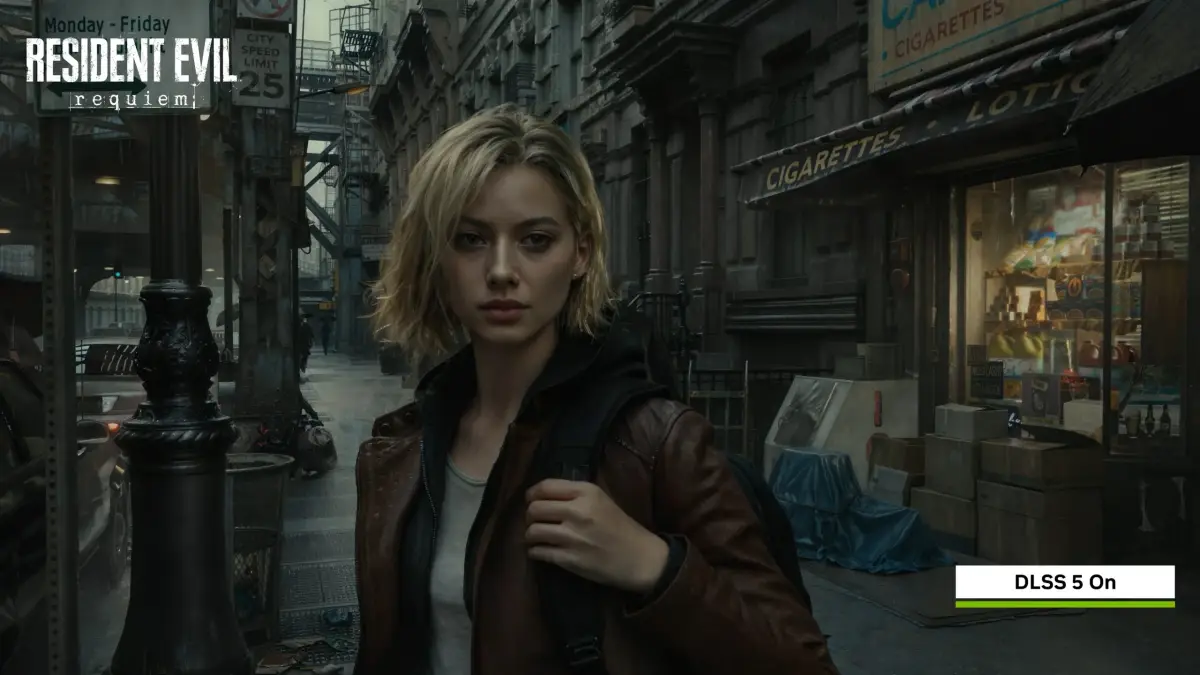
NVIDIA unveiled DLSS 5 at its GTC 2026 conference on March 16, introducing a real-time neural rendering model that applies AI-generated lighting and materials to game frames. The technology, which the company calls its biggest graphics advancement since real-time ray tracing debuted in 2018, is scheduled to launch this fall with support from major publishers including Bethesda, CAPCOM, Ubisoft, and Warner Bros. Games.
DLSS 5 marks a fundamental shift in what NVIDIA's upscaling technology does. Previous versions of DLSS focused on boosting performance — upscaling resolution and generating additional frames so games could run faster without proportional hardware costs. DLSS 5 goes further by actively altering the visual fidelity of each frame, adding what NVIDIA describes as photoreal lighting previously achievable only in offline Hollywood VFX rendering.
How DLSS 5 Actually Works
The system takes a game's rendered color data and motion vectors as input for each frame. An AI model trained to recognize scene elements — characters, hair, fabric, skin, environmental lighting conditions — then processes that data and outputs an enhanced image with improved subsurface scattering, fabric sheen, and light-material interactions.
Crucially, DLSS 5 is not generating new scene content. The game engine still builds the 3D world and renders the frame conventionally. The AI model acts as a post-processing pass that replaces the original lighting and material properties with its own interpretation, anchored to the source geometry and motion data. NVIDIA says this keeps output deterministic and temporally stable — meaning consistent from frame to frame rather than generating unpredictable variations.
According to NVIDIA's official announcement, the technology runs at up to 4K resolution for interactive gameplay. However, Digital Foundry's early analysis noted that the current demo required two RTX 5090 GPUs, with one card dedicated entirely to DLSS 5 processing. NVIDIA has stated the fall 2026 release version is expected to run on a single RTX 50-series GPU, though minimum requirements have not been confirmed.
Confirmed Games and Developer Support
NVIDIA has secured early commitments from nine major publishers and studios. The initial lineup of supported titles includes Resident Evil Requiem, Starfield, Assassin's Creed Shadows, Hogwarts Legacy, EA SPORTS FC, Phantom Blade Zero, The Elder Scrolls IV: Oblivion Remastered, Delta Force, and NARAKA: BLADEPOINT, among others.
Developers retain control over how aggressively DLSS 5 modifies their game's visuals. NVIDIA says the tool offers adjustable intensity, color grading, and masking controls, allowing artists to determine exactly where and how enhancements are applied. Integration uses the existing NVIDIA Streamline framework already employed by DLSS and Reflex.
The feature will also be entirely optional for players, who can enable or disable it from settings menus.
Community Reaction Has Been Sharply Divided
While NVIDIA positioned DLSS 5 as a watershed moment — CEO Jensen Huang called it "the GPT moment for graphics" — the gaming community's response has been notably hostile. NVIDIA's YouTube reveal trailer accumulated thousands of negative comments within hours of posting, according to multiple reports from outlets including Technology.org and TweakTown.
The primary concern centers on character faces. Before-and-after comparison images showed faces that appeared significantly altered from the original art, pushing into what observers described as uncanny valley territory. Environmental and lighting improvements received more favorable reactions, but the face rendering became the focal point of backlash.
Some industry commentators have pushed back against the outrage. The demos are early, running on pre-release hardware and software, and NVIDIA has months of optimization ahead before the fall launch. Digital Foundry described the lighting transformations in those same demos as impressive, even while acknowledging the polarizing reception.
Why It Matters
DLSS 5 represents a philosophical pivot for NVIDIA's consumer graphics strategy. For eight years, DLSS earned goodwill by doing something straightforward: making games run better. DLSS 5 is attempting something more ambitious and more contentious — making games look different.
If NVIDIA can refine the output quality by launch, particularly around human faces, DLSS 5 could establish a new category of AI-assisted graphics enhancement that closes the gap between real-time and offline rendering. If it can't, the technology risks becoming the most high-profile example of unwanted AI intervention in creative media.
There is also a hardware question worth watching. DLSS 5 appears to be exclusive to RTX 50-series GPUs at launch, with no confirmed support for older RTX cards. That makes it both a showcase feature for NVIDIA's latest silicon and a potential selling point — or a limitation, depending on adoption.
What to Watch Next
NVIDIA is showing live DLSS 5 demos at GTC this week. The fall 2026 launch window leaves roughly six months for the company to address the visual concerns raised by the community. Gamers considering an RTX 50-series purchase may want to wait for final, shipping-quality comparisons before drawing conclusions from pre-release footage.
For the latest DLSS 5 comparison screenshots and video demos, visit the official NVIDIA announcement.
Related reading
Frequently Asked Questions
What is NVIDIA DLSS 5?
DLSS 5 is a real-time neural rendering model NVIDIA unveiled at GTC 2026 on March 16. It applies AI-generated lighting and materials to game frames, which the company calls its biggest graphics advance since real-time ray tracing arrived in 2018.
How is DLSS 5 different from earlier DLSS versions?
Earlier versions were about performance — upscaling resolution and generating extra frames so games ran faster. DLSS 5 actively changes the visual fidelity of each frame, adding photoreal lighting of a kind previously limited to offline Hollywood VFX rendering.
When does DLSS 5 launch?
NVIDIA scheduled DLSS 5 for release in the autumn following its March 2026 announcement.
Which games will support DLSS 5?
NVIDIA named Bethesda, CAPCOM, Ubisoft and Warner Bros. Games among the publishers supporting it at launch, with specific titles to follow.
Is DLSS 5 just upscaling?
No. Upscaling remains part of the DLSS family, but DLSS 5 adds a generative step that alters lighting and materials in the frame itself. It changes how the image looks, not only how many frames per second you get.