Ryzen 5 5500F Is $99 and Ryzen 5 7500 $189 as AMD Refreshes Budget CPUs
AMD launched two budget desktop processors on September 10: the Ryzen 5 5500F at $99 and the Ryzen 5 7500 at $189. Both are six-core, twelve-thread chips, both ship with a cooler in the box, and both are listed as globally available on AMD's own product pages, with US retailers taking orders from launch day.
The timing is not accidental. Memory prices have climbed sharply this year, and a DDR5 kit can now cost more than the processor it sits beside. Both of these chips are aimed at builders who have watched that happen and want the CPU line of the budget to stop hurting.
Ryzen 5 5500F: a $99 six-core on AM4
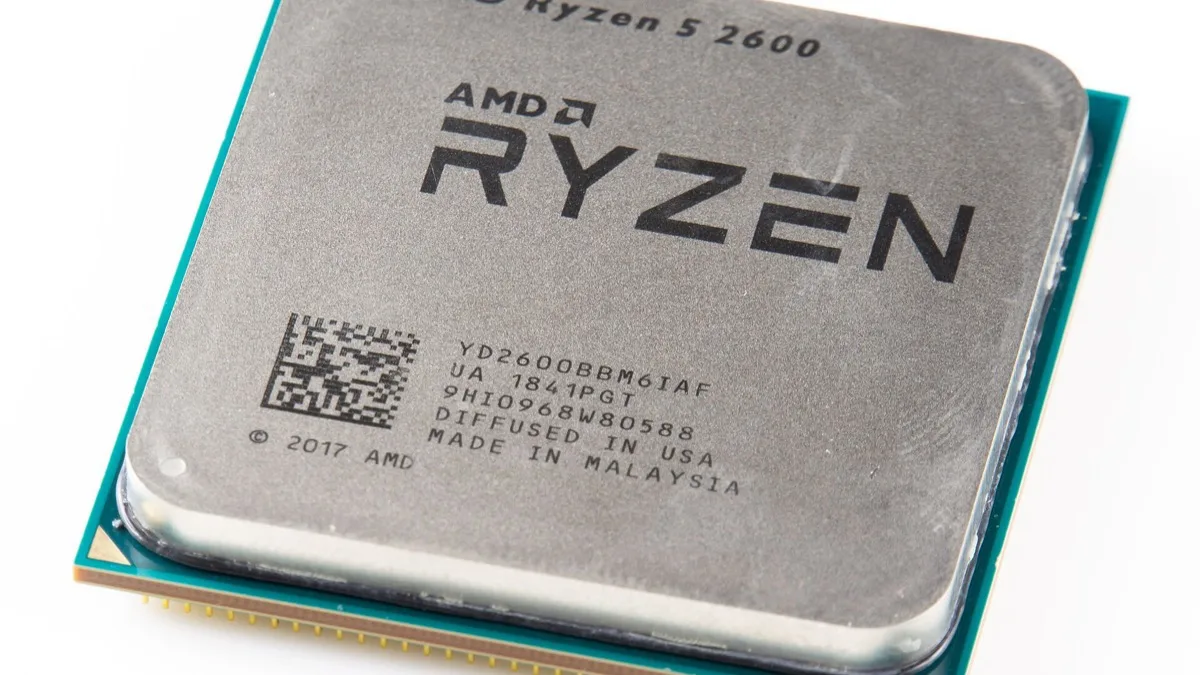
The Ryzen 5 5500F is a Zen 3 part built on the Vermeer chiplet design, and it lands on the AM4 socket almost exactly ten years after AMD introduced it. AMD's spec sheet lists 6 cores and 12 threads, a 3.0 GHz base clock and a 4.4 GHz boost, 3MB of L2 and 16MB of L3 cache, a 65W TDP, and DDR4-3200 support across 20 usable PCIe 4.0 lanes.
Worth untangling, because it has been reported inconsistently: against the Ryzen 5 5600, the 5500F keeps the same 4.4 GHz boost clock. What it gives up is 500 MHz of base clock and half the L3 cache, 16MB against 32MB. The "F" suffix marks the absence of integrated graphics, so a discrete card is mandatory.
It is not the same silicon as the older Ryzen 5 5500, which comes from the monolithic Cezanne family and is capped at PCIe 3.0. The 5500F's PCIe 4.0 support is the practical difference, since it unlocks faster SSDs and full bandwidth for a modern graphics card.
Ryzen 5 7500: the 7500F with a display output
The Ryzen 5 7500 is the more straightforward of the pair. It is the three-year-old Ryzen 5 7500F with integrated Radeon graphics switched on, and every other specification is identical: 6 cores and 12 threads, 3.7 GHz base, 5.0 GHz boost, 6MB L2, 32MB L3, 65W, DDR5-5200, and 24 usable PCIe 5.0 lanes on AM5.
Set expectations on that iGPU. It is two graphics cores running at 2,200 MHz, which is enough to drive a monitor, run a desktop and handle everyday work. It is not a gaming solution. The value is in not needing a discrete card at all to get a machine to POST and display — useful when graphics card prices are where they are.
Compatibility, coolers and what you actually need
AMD lists a Wraith Stealth cooler in the box for both processors, which removes a $25-to-$40 line item from a budget build. Both chips are also unlocked for overclocking.
- Ryzen 5 5500F (AM4) — supported on X570, X470, X370, B550, B450, B350 and A520 boards, with DDR4 memory.
- Ryzen 5 7500 (AM5) — supported on A620, B650, B650E, X670, X670E, B840, B850, X870 and X870E boards, with DDR5 memory.
If you are dropping the 5500F into an older 300-series or 400-series board, check the manufacturer's CPU support list and update the BIOS before you swap chips. A board shipped years ago will not recognise a processor released this week without that firmware.
Which one makes sense
The split is really about memory cost, not the processors. The 5500F sits on DDR4, which has stayed comparatively cheap, so a complete AM4 build lands well under what the equivalent AM5 machine costs today. The 7500 buys you a modern platform with an upgrade path and PCIe 5.0, but binds you to DDR5 pricing.
Neither chip changes AMD's performance story. They change its entry price, at a moment when the rest of a build has been getting more expensive — CPU pricing elsewhere is moving the other way, with Intel set to raise processor prices in October, while budget graphics cards have taken their own hikes. On the memory side, the squeeze has been sharp enough that Framework recently cut RAM prices and refunded earlier buyers.
Frequently Asked Questions
How much do the Ryzen 5 5500F and Ryzen 5 7500 cost?
The Ryzen 5 5500F is $99 and the Ryzen 5 7500 is $189. Both launched on September 10, 2026 and are listed by AMD as globally available, with US retailers stocking them from launch day. Both prices include a bundled Wraith Stealth cooler.
Does the Ryzen 5 5500F have integrated graphics?
No. The 'F' suffix in AMD's naming means integrated graphics are disabled, so you need a discrete graphics card to get any display output. If you want a chip that can drive a monitor on its own, the Ryzen 5 7500 is the one to choose, though its two graphics cores are meant for desktop use rather than gaming.
What is the difference between the Ryzen 5 7500 and the Ryzen 5 7500F?
Integrated graphics, and nothing else. Both are six-core, twelve-thread Zen 4 chips with a 3.7 GHz base clock, a 5.0 GHz boost, 32MB of L3 cache and a 65W TDP on the AM5 socket. The Ryzen 5 7500 adds two Radeon graphics cores running at 2,200 MHz for display output.
Which motherboards support the Ryzen 5 5500F?
It is an AM4 processor, and AMD lists support on X570, X470, X370, B550, B450, B350 and A520 chipsets with DDR4 memory. On older 300-series and 400-series boards you will usually need a BIOS update before the chip is recognised, so check your board maker's CPU support list first.
Is the Ryzen 5 5500F the same as the Ryzen 5 5500?
No, they are different chips despite the similar names. The 5500F is a Zen 3 Vermeer part with a chiplet design and PCIe 4.0 support, while the older Ryzen 5 5500 uses the monolithic Cezanne die and is limited to PCIe 3.0. That PCIe generation gap affects SSD and graphics card bandwidth.