Apple Tests Four-HomePod Surround Sound in audioOS 27 Beta 8
Code inside audioOS 27 beta 8 describes a four-speaker HomePod surround setup, with tuning files that name front-left, front-right, rear-left and rear-right positions. Apple has announced nothing, and there is currently no way to configure four HomePods this way in the Home app or on an Apple TV.
What the beta code describes
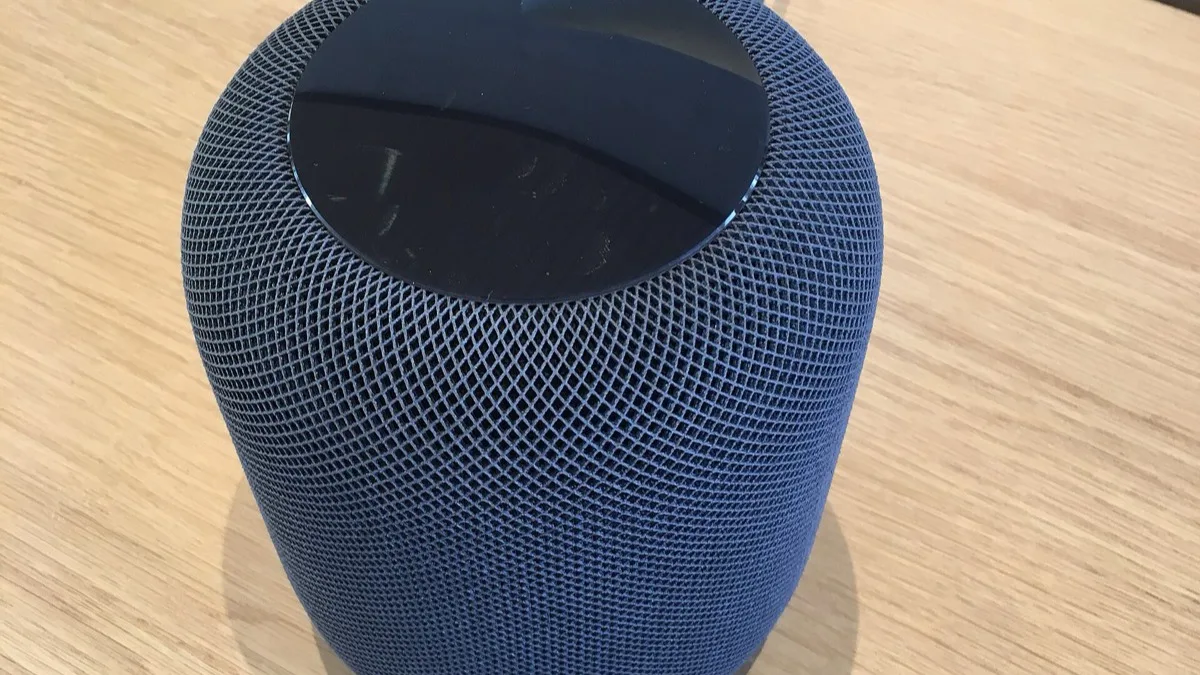
The references sit in tuning data aimed at the second-generation HomePod. Alongside the four speaker positions, the code covers automatic room calibration, speaker-position mapping, timing alignment between units, bass management, EQ and dialogue enhancement — the standard building blocks of a real surround system rather than a marketing label.
Processing appears to change with the source. Movies and multichannel audio get dialogue handling, dynamic range control and an immersive spatial mix; music is treated differently. In the described layout the front pair carries the main soundstage while the rear units fill the room, handle ambience, and take system sounds and Siri responses.
A second feature: Party Mode
The same beta carries a mode intended for a stereo pair rather than a four-speaker set. It spreads audio into a more diffuse field across the room instead of aiming it at one seat, which is the opposite of what home-theatre tuning normally tries to do. For a room full of people and a playlist, that is the more useful trade.
An unknown speaker in the tuning files
The most interesting line is a tuning profile that pairs two second-generation HomePods with two units from a hardware family identifier that has not appeared before. That is not a HomePod model anyone can buy today. It could point to a refreshed HomePod mini, a third-generation HomePod, or an audio product Apple has not shown — but the code alone does not say which, and nobody should treat a hardware identifier as a confirmed product.
What HomePod home theatre can do right now
None of this is available. Today's setup is capped at two speakers, and it works like this:
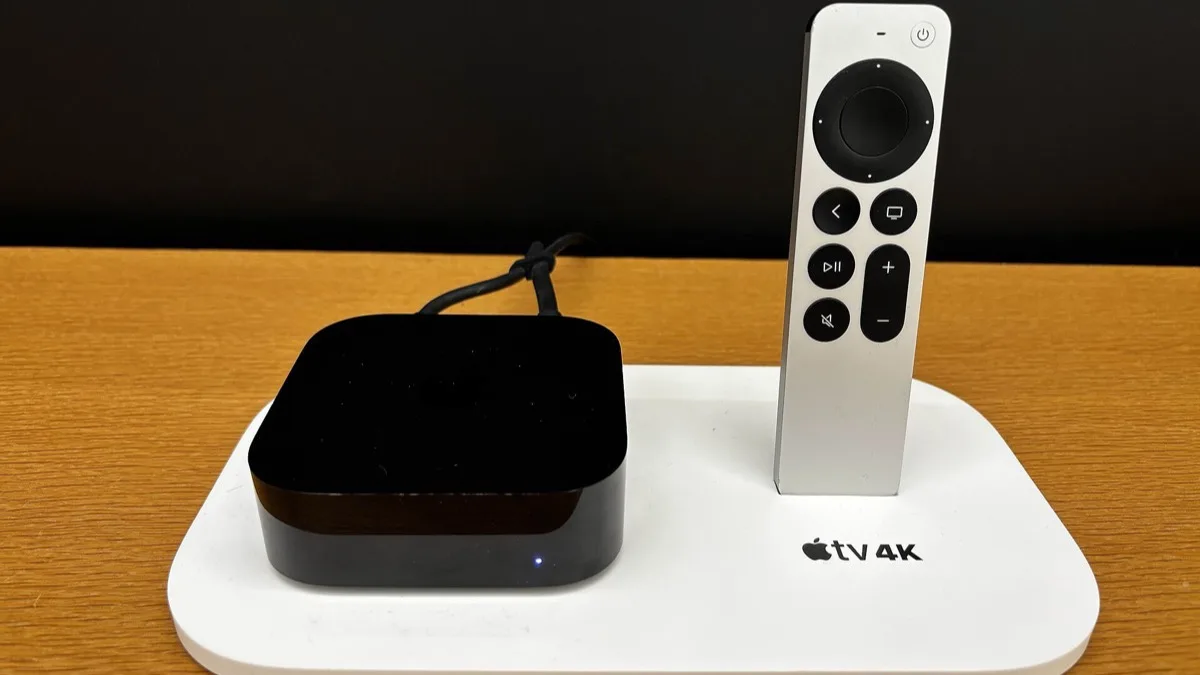
- You need an Apple TV 4K and two HomePods of the same model — two HomePod minis, or two full-size HomePods. Mixed pairs are not supported.
- Both speakers must be stereo-paired and assigned to the same room as the Apple TV in the Home app.
- On the Apple TV, open Settings → Video and Audio → Audio Output and select the pair. Once set, the HomePods handle all Apple TV audio, including Dolby Atmos content.
- Rear channels are virtualised from the two front speakers. There are no physical surround speakers in the current arrangement.
That gap is exactly what the beta code would close: real rear channels from real speakers behind you, calibrated as a set.
How much weight this deserves
Treat it as a credible sign of internal testing and nothing more. Features have shipped from findings like this before, and features have also sat in beta code for years and quietly disappeared. Three things argue for caution here: the Home app has no interface for it, Apple has made no statement, and the tuning profile leans on hardware that does not exist publicly.
The last point is the one worth watching. If the four-speaker layout is tied to an unreleased speaker, the feature would most likely arrive with that hardware rather than in a routine audioOS 27 point release. Anyone buying HomePods today should buy for what the two-speaker setup already does, not for a surround mode that has never been announced. Betas are also a moving target — the same cycle that produced these strings is the one we tracked through the iOS 27 and tvOS 27 public betas, and code has come and gone between seeds before. A separate set of findings pointing at a new Apple TV 4K and Siri Remote sits in the same category: interesting, unconfirmed, and dependent on hardware Apple has not launched.
If it does ship, it changes what a HomePod is for. A pair of speakers becomes an entry point to a system you extend rather than replace — and that is a different buying decision from the one on offer today.
Frequently Asked Questions
Can you use four HomePods as a surround system right now?
No. Apple's HomePod home theatre setup is limited to two speakers of the same model paired with an Apple TV 4K. The Home app and Apple TV offer no way to assign rear HomePods, and the four-speaker layout exists only as references inside audioOS 27 beta code.
Which HomePod models does the audioOS 27 beta code refer to?
The tuning references target the second-generation HomePod. One profile also pairs two of those with speakers from a hardware family identifier that has not been seen before, which does not match any HomePod currently on sale.
What is HomePod Party Mode?
Party Mode is an unannounced option found in the same beta, aimed at a stereo HomePod pair rather than a four-speaker set. Instead of focusing sound on one listening position, it spreads audio into a more diffuse field across the room.
How do I set up HomePods with an Apple TV today?
Stereo-pair two identical HomePods in the Home app and assign them to the same room as your Apple TV 4K. Then on the Apple TV go to Settings, Video and Audio, Audio Output, and select the pair. The speakers then handle all Apple TV audio, including Dolby Atmos.
Will four-speaker HomePod surround definitely ship?
There is no guarantee. Apple has not announced it, no interface exists to configure it, and the tuning profile depends on hardware that has not been released. Features found in beta code have shipped before, and others have been removed without ever appearing.