HII Commits Up to $900M to Path Robotics and GrayMatter for Navy Shipbuilding

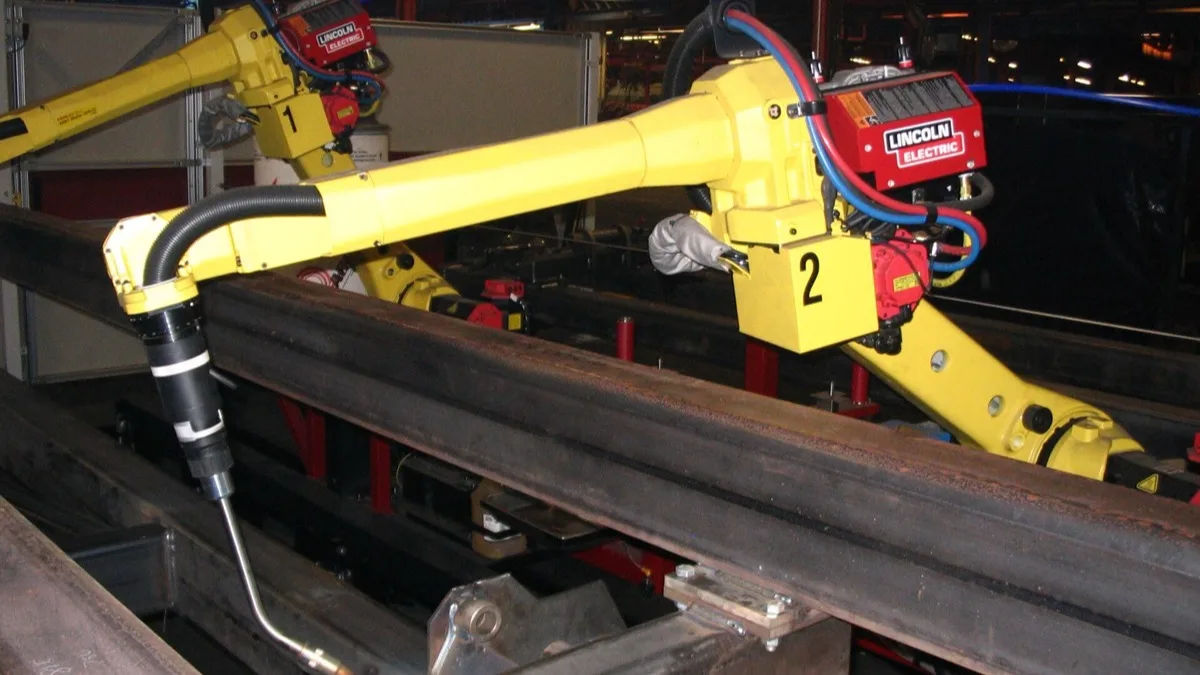
Shipbuilder HII has signed a Path Robotics HII deal worth up to $900 million over seven years, alongside a companion agreement with GrayMatter Robotics, to bring autonomous welding and surface-finishing robots onto U.S. Navy shipbuilding programs. The performance-based agreements, announced today, cover work on aircraft carriers, submarines, destroyers, amphibious ships, future frigates and unmanned surface vessels.
The deals fall under HII's HYPR (High-Yield Production Robotics) program, launched in April to push adaptive automation into naval fabrication work that has traditionally resisted robots because of how much it varies from hull to hull.
What the Path Robotics HII deal actually covers
HII intends to award up to $600 million in shipbuilding work to Columbus-based Path Robotics, with the remainder going to GrayMatter Robotics, contingent on both companies hitting defined technology and manufacturing readiness milestones. Eric Chewning, HII's executive vice president, framed it as a shift in how the company automates: "Together, we are defining a new approach to robotics in shipbuilding: automation that can adapt to extreme levels of complexity, mix, and size."
Path Robotics builds two products relevant here:
- Obsidian — the company's foundation AI model for welding, trained on tens of millions of welded inches, built to adapt in real time to part-to-part variation rather than following a fixed weld path.
- Rove — a mobile system that pairs Obsidian with a quadruped robot platform, letting the welding AI move around large, immovable assemblies like hull sections instead of requiring the workpiece to come to a fixed robot arm.
GrayMatter Robotics, for its part, supplies autonomous sanding, coating and inspection systems under what it calls Factory SuperIntelligence, claiming up to 12x the throughput of manual surface prep work.
Why a quadruped welding robot makes sense on a ship
Legged robots keep showing up in industrial settings for a simple reason: a wheeled or fixed robot needs flat, clear ground, and a shipyard rarely offers that. The same appeal is what drives AndroidHire's own humanoid and quadruped robot directory, where machines like the Unitree Go2's full specifications show how compact four-legged platforms are increasingly built to carry payloads and tools across uneven terrain, not just walk around a demo floor. Path Robotics hasn't named its quadruped supplier publicly, but the pairing of a legged base with a welding head follows the same logic — go to the work, rather than force the work to a stationary machine.
HII says it plans to outsource more than 2.5 million shipbuilding hours in 2026, a 30% increase over 2025, as it leans further into this kind of distributed, robot-assisted production.
How this compares to the rest of the robotics industry's momentum
The agreement lands in the same week Unitree completed its Shanghai IPO at a roughly $9 billion valuation, underscoring how much capital is now flowing into physical robots across very different corners of the industry — from humanoids aimed at homes and warehouses to purpose-built welding platforms aimed at aircraft carriers. Not every robot getting funded this year is designed to look human or even walk on two legs; plenty of the real money, like this one, is going toward robots built to do one dirty, repetitive job extremely well.
Shipbuilding has been one of the harder industries to automate precisely because so little of it repeats. A commercial car factory welds the same joint on thousands of identical frames; a Navy destroyer or submarine involves one-off structures, tight tolerances and access points that change from hull to hull. That is the specific problem Obsidian is built to address — adapting its weld path in real time instead of relying on a pre-programmed motion — and it is why HII is willing to commit performance-based dollars rather than a flat purchase order.
Neither Path Robotics nor GrayMatter Robotics has released full technical specifications for its hardware — both companies market the software layer (Obsidian, Factory SuperIntelligence) more than the physical platforms, which is typical for this segment of industrial robotics. AndroidHire will update this piece if either company publishes detailed hardware specs.
Related reading
Frequently Asked Questions
How much is the HII Path Robotics deal worth?
HII has committed to award up to $600 million in shipbuilding work to Path Robotics and the rest of a combined $900 million package to GrayMatter Robotics, spread across seven years and contingent on both companies meeting performance milestones.
What does Path Robotics' Rove system do?
Rove pairs Path Robotics' Obsidian welding AI with a quadruped robot platform, letting an autonomous welding head move across large, immovable ship structures like hull sections rather than requiring the part to be brought to a fixed robot arm.
What does GrayMatter Robotics build?
GrayMatter Robotics makes autonomous systems for surface preparation, coating and inspection, marketed under the name Factory SuperIntelligence, which it says can deliver several times the throughput of manual sanding and finishing work.
What is HII's HYPR program?
HYPR, or High-Yield Production Robotics, is a program HII launched in April 2026 to accelerate the use of adaptive automation across U.S. Navy shipbuilding, including aircraft carriers, submarines, destroyers, amphibious ships, frigates and unmanned surface vessels.
Which Navy programs will use these robots?
The agreements target work across HII's shipbuilding portfolio, including aircraft carriers, submarines, destroyers, amphibious ships, future frigates and unmanned surface vessels.