Puffin Browser in 2026: How the Cloud Browser Works, Pricing, and Whether It's Worth It
Puffin Browser is a cloud-based browser from CloudMosa that renders web pages on remote servers instead of on your phone, then streams a compressed copy to your device. That single design choice is what makes it fast on weak hardware and stingy with data, gives it a strong security layer, and also creates the privacy questions that follow it around. The short answer for 2026: Puffin is a niche tool that's genuinely useful on old or low-RAM Android phones and on Android TV, but the mobile browser is now ad-supported unless you pay a low-cost subscription, it no longer runs Adobe Flash, and mainstream browsers like Chrome, Brave, and Opera beat it for everyday use.
In a hurry? Jump to How it works · Pricing · Flash status · Security & privacy · Alternatives · Verdict · FAQ
What is Puffin Browser?
Puffin Browser is a remote, cloud-based web browser developed by CloudMosa, Inc., an American mobile technology company founded in 2009 by Shioupyn Shen. The first version launched in late 2010, and the browser passed 100 million accumulated users in 2018. Unlike Chrome, Safari, or Firefox, which render web pages directly on your device, Puffin offloads almost all of that work to CloudMosa's servers and sends your device a lightweight, compressed version of the finished page.
You'll find Puffin across a wide range of platforms: Android, Windows, macOS, Android TV, and constrained hardware like Raspberry Pi and set-top boxes. The iOS story has been rockier — Apple has limited new updates to Puffin's iOS browser on the App Store, so iOS users are typically pointed to Puffin Cloud Browser instead.
It also helps to know that "Puffin" is not one app but a small family of them, which is a frequent source of confusion:
- Puffin Cloud Browser / Puffin Web Browser — the everyday browser most people mean when they say "Puffin."
- Puffin Incognito Browser — a privacy-first mobile build that clears all tabs, cookies, and caches on exit and blocks camera, microphone, and location permissions. It deliberately drops upload, download, and copy functions.
- Puffin Secure Browser — a Windows and macOS desktop product aimed at security-conscious users and businesses that want every session isolated in the cloud.
- Puffin TV Browser — a remote-friendly build for Android TV.
How does Puffin Browser work?
A normal browser talks to a website's servers directly. You type a URL, your phone fetches the HTML, CSS, JavaScript, and images, and your phone's own processor does the work of building the page on screen.
Puffin flips that around. When you open a page, the request goes to CloudMosa's cloud servers first. Those servers fetch and fully render the page — running the JavaScript, loading the images, building the layout — then transmit a compressed, pre-rendered copy down to your device. In CloudMosa's own framing, roughly 95% of the work (the actual HTML rendering) happens in the cloud, while your device handles only the last ~5%: rasterizing and displaying the finished stream. Each session runs inside a disposable cloud sandbox that is created fresh and destroyed when you close it.
That architecture has three practical consequences:
- Speed on weak devices: heavy rendering happens on powerful servers, so old or low-RAM phones load complex sites faster than they could on their own.
- Lower data use: because the page is compressed before it reaches you, you download far fewer bytes — CloudMosa claims savings of up to around 90% on typical browsing.
- A built-in barrier: malicious scripts execute in the cloud sandbox, not on your phone, so a lot of web-based threats never touch your device.
The trade-off is that all your traffic passes through CloudMosa's servers, which behaves a lot like a proxy in the middle. That's where the privacy conversation starts — more on that below.
Puffin Browser pricing in 2026: is it free?
This is the single most misunderstood thing about Puffin, so let's be clear. The mobile app is free to download and you can still browse with it for free — but the free tier is now ad-supported and has no ad blocker. To remove ads and unlock the extra features (ad blocking and other paid perks), you take a low-cost subscription. According to Puffin's own support materials, the paid pricing breaks down like this:
| Plan | Price | Best for |
|---|---|---|
| Daily (prepaid) | $0.05 / day | One-off or occasional use |
| Weekly (prepaid) | $0.25 / week | Short trips, light users |
| Monthly (postpaid) | $1.00 / month | Regular users (best value) |
| Desktop | ~$2 / month or ~$12 / year | Windows / macOS users |
A few things worth knowing: the monthly postpaid plan comes with Android's standard 7-day free trial, the older yearly mobile plan has been discontinued, and the exact price you pay varies slightly by country because of taxes, exchange rates, and Google Play's regional pricing. The separate "Puffin Browser Pro" paid app was retired and folded into this subscription model, so don't go hunting for a one-time-purchase Pro version anymore. On desktop, Puffin is a paid product from the start.
If your only reason for wanting Puffin was a free data-saving browser, note that Opera's built-in data savings and Chrome's Lite behavior now cover most of that gap without a subscription.
Does Puffin still support Adobe Flash?
No — and this is the other big myth. Adobe officially discontinued Flash Player at the end of 2020, and Puffin dropped its cloud Flash support afterward. For years, "run Flash on your phone" was Puffin's headline feature, because it executed Flash on its servers and streamed the result to devices that couldn't run it natively. That era is over.
CloudMosa has shifted toward separate cloud-gaming and legacy-content products for old Flash titles rather than baking Flash into the main browser. If you specifically need to play old Flash games, that's a different product — not something the standard Puffin Web Browser delivers in 2026. For modern Android gaming, you're far better served by native titles; see our roundups of the best MMORPG games for Android and best offline football games.
Key features of Puffin Browser
1. Fast browsing on low-end hardware
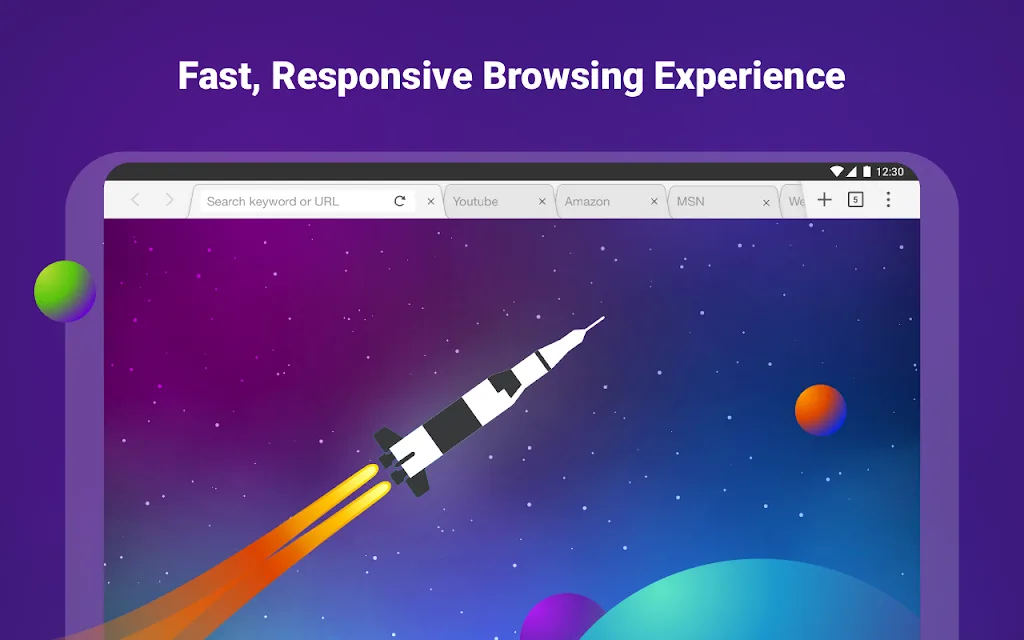
Because the cloud does the heavy lifting, Puffin can feel snappy on budget and older phones that struggle with modern, script-heavy websites. The catch: this advantage shrinks or disappears on a current flagship phone with a strong CPU and a fast connection, where local rendering is already plenty fast.
2. Aggressive data compression
Puffin's proprietary compression can dramatically cut how much data you download, which is its strongest real-world selling point. If you're on a tight prepaid plan or roaming, downloading a compressed copy of a page instead of the full thing genuinely saves money.
3. Cloud-isolated security
Running pages on remote servers keeps malicious code off your device. Independent reviewers score its security architecture highly — it behaves somewhat like an enterprise remote-isolation browser, which is unusual in the consumer space.
4. Built-in ad blocking and a download manager
The current builds include an ad blocker and a download manager, and on desktop you can push downloads straight to cloud storage. If ad-heavy mobile games are your real frustration, a dedicated tool can help more than a browser — see our guide to the best free apps to remove ads from Android games.
5. Mobile gaming controls (gamepad + virtual trackpad)
One genuinely distinctive feature: the mobile app offers an on-screen gamepad with customizable controls and a virtual mouse cursor/trackpad. That gives you a near-desktop pointing experience and makes browser-based games far more playable on a touchscreen.
Also Read: Google Chrome vs Brave Browser: Which Should You Use?
Puffin on mobile vs. desktop vs. TV
Puffin is really three different experiences depending on the platform, and they're not equally good.
| Version | Strengths | Weaknesses |
|---|---|---|
| Mobile (Android) | Data compression, gamepad + trackpad, fast on old phones, ad blocker (paid) | Free tier is ad-supported, battery drain |
| Desktop (Windows/macOS) | Server-side rendering, save downloads straight to Dropbox/Google Drive/OneDrive | Slow in benchmarks, no extensions, no tab sync, only 5 search engines, paid |
| Android TV | Remote-friendly UI, good for video and casual surfing on a big screen | Limited compared to a real desktop browser |
The desktop version is the weak link
Puffin shines on mobile but feels bare-bones on desktop. It defaults to Google and only lets you pick from Google, Yahoo, Yandex, Bing, and NAVER, with no way to add your own search engine (so DuckDuckGo fans are out of luck). Tab management is rudimentary — no pinning, stacking, or a dropdown of open tabs — and there are no extensions or cross-device sync. In Speedometer benchmarks, independent testers at Cloudwards clocked Puffin desktop around 49.5 runs per minute versus roughly 121 for Chrome and about 95.5 for Firefox, so it's noticeably slower for everyday browsing. The one nice touch is download handling: you can save a file locally or push it straight to Dropbox, Google Drive, or OneDrive.
Puffin TV Browser
On Android TV, Puffin is genuinely handy. A remote-friendly interface plus cloud rendering makes it a decent way to surf the web, watch video, and reach sites your smart TV's built-in apps don't cover.
Is Puffin Browser secure and private? Can it be traced?
Security and privacy are two different questions with Puffin, and the honest answer is that it's strong on one and only middling on the other.
On security, Puffin does well. Because pages render in the cloud and each session lives in a disposable sandbox that is destroyed on exit, malware and malicious scripts are isolated away from your device. Reviewers consistently rate its security architecture highly — Cloudwards scored it around 90/100 ("excellent").
On privacy, it's more complicated and reviewers land closer to 80/100 ("good, not great"). Every page you visit passes through CloudMosa's servers, and Puffin has historically added an X-Forwarded-For (XFF) header to requests that can include your device's IP address — so websites can still see information tied to you, and CloudMosa itself sees your traffic. CloudMosa says it keeps standard web logs (source IP, URLs, HTTP headers, and timestamps) and deletes those logs after 180 days, while keeping no persistent copy of your page content on its servers. So yes, your browsing can be traced — both by Puffin's servers, which see everything in transit, and, via the forwarded IP, by the sites you visit. It is not an anonymity tool.
If your goal is real privacy or anonymity rather than speed, a cloud browser that routes all your traffic through one company's servers is the wrong tool. A dedicated VPN is a better fit — see our picks for the best VPN apps for Android.
It's also worth knowing that Puffin is blocked or unavailable in several regions, including China, Iran, Qatar, the UAE, and many UK ISPs, precisely because of how it tunnels traffic.
Puffin Browser: pros and cons
Pros
- Fast on weak hardware: cloud rendering helps old, low-RAM, or budget phones load heavy sites.
- Big data savings: compression can cut data use sharply — great for limited plans and roaming.
- Strong device-side security: threats execute in a disposable cloud sandbox, not on your phone.
- Unique gaming controls: on-screen gamepad and virtual trackpad for mobile.
- Wide platform support: Android, Windows, macOS, Android TV, Raspberry Pi, set-top boxes.
Cons
- Free tier is ad-supported: browsing is free but shows ads with no ad blocker; removing ads and unlocking extras costs about $1/month on mobile, ~$2/month on desktop.
- Privacy trade-off: all traffic flows through CloudMosa; IP can be forwarded; not anonymous.
- No Flash anymore: the original headline feature is gone.
- Weak desktop browser: slow benchmarks, no extensions, no tab sync, only five search engines.
- Battery drain: constant streaming and decoding can use more power than a local browser.
- Regional blocks: unavailable in several countries and many UK ISPs.
Best Puffin Browser alternatives in 2026
Puffin fills a narrow niche. For most people, one of these will be a better daily driver:
| Browser | Best for | Why pick it over Puffin |
|---|---|---|
| Google Chrome | All-around use | Fast, reliable, huge extension and sync ecosystem, free. |
| Brave | Privacy + ad blocking | Blocks ads and trackers by default, no central proxy, free. |
| Mozilla Firefox | Privacy + control | Strong anti-tracking, open source, rich add-ons, free. |
| Opera | Data saving + VPN | Built-in free VPN, ad blocker, and data-saver mode — much of what Puffin charges for, free. |
Related reading: if you're choosing between the two most popular free options, our head-to-head on Google Chrome vs Brave Browser breaks down which one fits you. And whatever you settle on, keep it updated — browsers ship critical security patches constantly, as our report on Chrome's 429 security fixes shows. If data and privacy are the real concern, pair any free browser with one of the best VPN apps for Android.
How we evaluated Puffin Browser
We installed Puffin's current mobile and desktop builds and used them as everyday browsers on both a budget Android phone and a modern handset to feel where the cloud-rendering advantage actually shows up. We compared its loading behavior and data usage against Chrome, Brave, and Opera on the same sites and connections, walked through the live subscription flow to confirm the daily, weekly, and monthly pricing, and checked the trial terms. For performance and security claims we cross-referenced independent Speedometer benchmarks and security/privacy scoring from Cloudwards, and we verified the Flash status, search-engine list, logging policy, and regional availability against CloudMosa's own support documentation. Where a precise figure couldn't be confirmed, we left it out rather than guess. Re-checked in September 2026: no material changes to pricing, Flash status, or platform support since our last review.
How to download and set up Puffin Browser
Getting started takes a couple of minutes on any platform:
- Download and install. Grab Puffin from the official Puffin website, the Google Play Store (Android), or your platform's app store. On Android TV, install it from the TV's Play Store.
- Subscribe to remove ads (optional). You can browse for free with ads, or pick a daily, weekly, or monthly plan to remove them and unlock extras. The monthly plan ($1) is the best value for regular use and includes a 7-day trial.
- Set your preferences. Choose a search engine, toggle the ad blocker, set your data-compression level, and connect cloud storage (Dropbox, Google Drive, or OneDrive) if you want direct download saving.
- Enable mobile controls. If you'll play browser games, turn on the gamepad and virtual trackpad in settings.
- Start browsing. Type a URL and Puffin handles the rest in the cloud.
Bottom line: should you use Puffin Browser in 2026?
Puffin is a clever, specialized tool — not a default browser for most people. Use it if you have an old or low-end Android phone that chokes on modern sites, you're trying to stretch a strict data plan, or you want a capable browser on Android TV. In those cases the cloud rendering and compression earn their $1/month.
Skip it if you're on a modern flagship phone, you care about privacy and anonymity, you need extensions or cross-device sync, or you were hoping for free Flash support — none of those fit Puffin in 2026. For everyday browsing, Chrome, Brave, Firefox, and Opera are faster, more flexible, and free. And if the privacy angle was your real concern, a free, ad-blocking browser like Brave paired with a proper VPN gives you a better, cheaper setup than routing everything through one company's cloud.
Frequently Asked Questions
Is Puffin Browser free in 2026?
Partly. The mobile app is free to download and you can browse for free, but the free tier is ad-supported with no ad blocker. A low-cost subscription removes the ads and unlocks extra features: $0.05/day, $0.25/week, or $1/month, with a 7-day trial on the monthly plan; prices vary slightly by country. The desktop version is paid from the start at roughly $2/month or $12/year.
Does Puffin Browser still support Adobe Flash?
No. Adobe discontinued Flash Player at the end of 2020, and Puffin dropped its cloud Flash support afterward. CloudMosa now handles legacy Flash content through separate cloud-gaming products, not the main Puffin Web Browser, so the feature that made Puffin famous is gone in 2026.
Can Puffin Browser be traced?
Yes. All your traffic passes through CloudMosa's cloud servers, which keep standard web logs (IPs, URLs, headers, timestamps) and delete them after 180 days. Puffin has also added an X-Forwarded-For header that can expose your device's IP to websites. It is not an anonymity tool, so use a VPN if you need real privacy.
Is Puffin Browser secure?
For device security, yes. Pages render in a disposable cloud sandbox that is destroyed on exit, so malware and malicious scripts are isolated away from your phone, and reviewers rate its security architecture around 90/100. The trade-off is privacy: all traffic flows through CloudMosa's servers, so it scores lower (about 80/100) on anonymity.
How does Puffin Browser work?
Instead of rendering pages on your device, Puffin sends your request to CloudMosa's servers, which fetch and fully render the page (roughly 95% of the work), then stream a compressed copy back to you. Your device only handles the final display step. This speeds up browsing on weak hardware and cuts data use, but routes all traffic through Puffin's cloud.
What is the difference between Puffin Cloud Browser and Puffin Incognito Browser?
Puffin Cloud Browser (also called Puffin Web Browser) is the everyday browser with downloads, copy, and full features. Puffin Incognito Browser is a privacy-first build that clears all tabs, cookies, and caches when you exit and blocks camera, microphone, and location permissions, but it deliberately disables upload, download, and copy functions.
What are the best alternatives to Puffin Browser?
Google Chrome for all-around use, Brave for privacy and built-in ad blocking, Firefox for anti-tracking control, and Opera for a free built-in VPN and data saver. All are free and, for most people, faster and more flexible than Puffin, especially on modern phones.
Why is Puffin Browser slow on desktop?
Because every page round-trips to CloudMosa's cloud and back, desktop Puffin posts weak benchmark numbers. Independent Speedometer tests clocked it around 49.5 runs per minute versus roughly 121 for Chrome and 95.5 for Firefox. On a modern PC with a fast connection, a local browser is simply quicker for daily use.