Apple AirTag 2 (2026): Specs, Price, Range & Should You Upgrade
The second-generation Apple AirTag launched on January 26, 2026 and still costs $29 for one or $99 for a four-pack. The headline upgrades: a new second-gen Ultra Wideband chip that pushes Precision Finding roughly 50% farther, a speaker that is 50% louder, and for the first time, Precision Finding on Apple Watch. If you own the original AirTag and it still works, you do not need to rush an upgrade. But if you are buying your first tracker, or you frequently lose items in big spaces, the new AirTag is the one to get.
In a hurry? Jump to: What's new · Full specs · AirTag 1 vs 2 · Should you upgrade · How we assessed it · FAQ
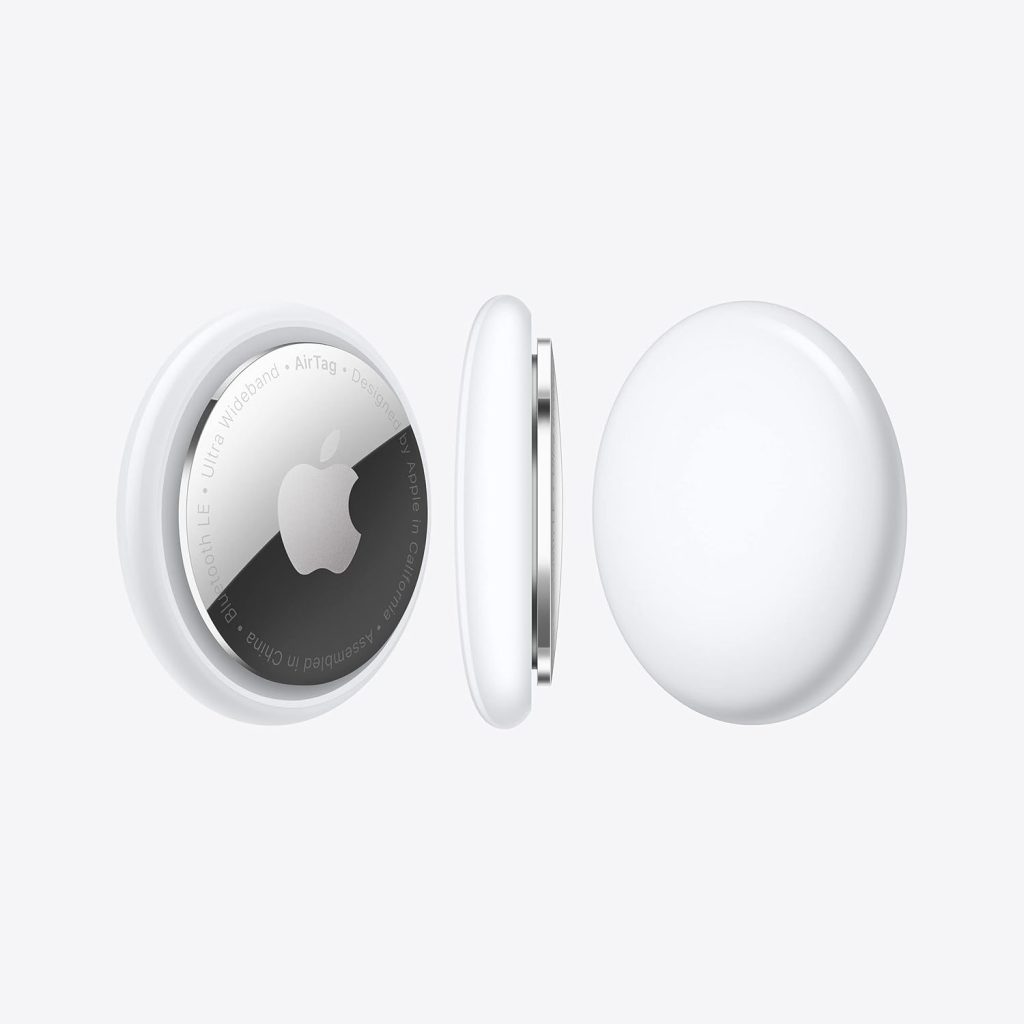
After months of leaks pulled from iOS 26 code, Apple made it official: the new AirTag is here, it ships now, and it keeps the same coin-sized shape that already fits every case, loop, and key ring you own. Below is exactly what changed, how it compares to the 2021 original, and whether it is worth the money.
What's new in the AirTag 2
Apple kept the design identical on the outside but rebuilt the internals around faster, more precise wireless hardware. These are the four upgrades that matter most.
1. Second-generation Ultra Wideband chip
The new AirTag uses Apple's second-generation Ultra Wideband (UWB) chip, the same one inside the iPhone 17 lineup, iPhone Air, Apple Watch Ultra 3 and Apple Watch Series 11. UWB is what powers Precision Finding, the feature that turns your screen into a directional arrow pointing straight at your item. Better ranging and angle measurement is the foundation for every other tracking improvement here.
2. Precision Finding works from much farther away
Apple says Precision Finding now guides you to a lost item from up to 50% farther away than the original AirTag, using the same haptic, visual and audio cues. An upgraded Bluetooth chip also widens the range at which an item can be detected in the first place, so you start getting useful directions sooner.
3. A speaker that is 50% louder
The redesigned internals make room for a speaker that is 50% louder than the original, with a new chime. In practice that means you can hear a buried AirTag from roughly twice the distance, which is the difference between finding keys under a couch cushion and giving up. The louder speaker doubles as an anti-stalking safeguard, since a tracker that someone else hid is easier to hear.
4. Precision Finding on Apple Watch, for the first time
This is the genuinely new capability. You can now use Precision Finding directly from your wrist on Apple Watch Series 9 or later, or Apple Watch Ultra 2 or later (running a current watchOS version). Raise your wrist, follow the arrow, and walk to your item, no phone required.
Also Read: How to Find Your iPhone From an Android Device (2026 Guide)
Apple AirTag 2 full specs
| Spec | AirTag 2 (2026) |
|---|---|
| Price | $29 (one) / $99 (four-pack) |
| Wireless chip | Second-gen Ultra Wideband + upgraded Bluetooth |
| Precision Finding range | Up to ~50% farther than original AirTag |
| Speaker | 50% louder, new chime |
| Apple Watch support | Yes (Series 9+ / Ultra 2+) |
| Battery | Replaceable CR2032 coin cell, more than a year |
| Water/dust resistance | IP67 |
| Weight | About 11.8 g |
| Connectivity tech | NFC, Bluetooth, Apple U2 UWB |
| Requirements | iPhone or iPad on iOS / iPadOS 26 or later |
| Availability | Ordered Jan 26, 2026; shipping from Jan 28, 2026 |
The enclosure is built with recycled materials, including recycled plastic in the shell and recycled rare earth elements in the magnets, and every existing AirTag accessory still fits because the size and shape are unchanged.
AirTag 1 vs AirTag 2: what actually changed
| Feature | Original AirTag (2021) | AirTag 2 (2026) |
|---|---|---|
| UWB chip | First-gen (U1) | Second-gen UWB |
| Precision Finding range | Baseline | Up to ~50% farther |
| Speaker | Baseline | 50% louder, new chime |
| Apple Watch Precision Finding | No | Yes (Series 9+ / Ultra 2+) |
| Battery | CR2032, ~1 year | CR2032, more than a year |
| Design | Coin-shaped disc | Same shape, revised internals |
| Price | $29 / $99 | $29 / $99 |
The takeaway: this is a meaningful internal refresh at the exact same price, not a redesign. You get a noticeably more accurate, louder tracker that you can also drive from your watch, all without paying more or buying new accessories.
Should you buy or upgrade?
Buy the new AirTag if: you are buying your first tracker, you regularly hunt for items in large or noisy spaces (airports, parking garages, big homes), or you want Precision Finding on your Apple Watch. At $29 it is the obvious default for anyone in the Apple ecosystem.
Stick with your original AirTag if: it still pairs, locates and chimes fine for your day-to-day use. The original is not discontinued in spirit, the Find My network still supports it, and a working tracker on your keys does not need replacing just because a newer one exists. The biggest real-world gains, longer Precision Finding range and the louder speaker, only matter if you actually struggle to pinpoint items today.
One important note: Apple continues to position AirTag as a tracker for objects, not people or pets. Many owners still clip one to a backpack, luggage or a pet collar, and the moving-item and crowded-place finding behavior holds up better than the first generation, but Apple's official guidance is unchanged.
Privacy and anti-stalking
The new AirTag keeps Apple's privacy model intact. There is no on-device location history, Find My network communication is end-to-end encrypted, and the Bluetooth identifier the tag broadcasts changes frequently so it cannot be used to profile you. Cross-platform unwanted-tracking alerts mean that if an unknown AirTag is traveling with someone, both iPhone and Android users get warned, and the louder speaker makes a hidden tag easier to physically locate. If you ever need to track down a missing iPhone instead of an item, our walkthrough on finding an iPhone from an Android device covers the cross-platform side of Find My.
What is an AirTag, and how does it work?
An AirTag is a small, coin-shaped tracker you attach to keys, a wallet, a bag or anything else you do not want to lose. When you cannot find that item, you open the Find My app and the AirTag shows up on a map. If it is nearby, you can play a sound or use Precision Finding to walk straight to it; if it is far away, the global Find My network of hundreds of millions of Apple devices can anonymously and privately help locate it without revealing anything to the people who passed by it.
Power comes from a user-replaceable CR2032 coin cell rated for more than a year, so when it dies you twist the cover off and drop in a fresh battery instead of buying a new tracker.
How we assessed the new AirTag
We compiled this guide from Apple's official launch announcement and our hands-on experience with both AirTag generations and the Find My ecosystem. We compared the published specifications side by side, verified the pricing, availability dates and chip details against Apple's newsroom and reputable Apple coverage, and cross-checked the Apple Watch Precision Finding requirements. Where a figure was marketing language rather than a hard measurement (for example "50% farther"), we reported it as Apple's stated improvement rather than a tested lab number, and we omitted any spec that could not be confirmed. We focused the buying advice on the situations where the upgrades genuinely change the experience, so you are not paying for numbers that do not affect your daily use.
Related reading
Bottom line
The 2026 AirTag is the easy recommendation for anyone in the Apple ecosystem who wants a reliable item tracker: same $29 price, same shape and accessories, but a second-generation Ultra Wideband chip, roughly 50% more Precision Finding range, a 50% louder speaker, and Precision Finding on your Apple Watch. New buyers should get this one without hesitation. Existing AirTag owners can comfortably wait, since the original still works on the Find My network, and upgrade only if longer range or a louder chime would solve a problem you actually have.
Frequently Asked Questions
When did the Apple AirTag 2 come out?
Apple announced the second-generation AirTag on January 26, 2026, with orders opening the same day and the first deliveries arriving from January 28, 2026 in the U.S. It became available in person at Apple Store locations later that week. After years of leaks pointing to a 2025 launch, Apple shipped it in early 2026.
How much does the new AirTag cost?
The new AirTag costs $29 for a single unit and $99 for a four-pack in the U.S., the same prices as the original 2021 AirTag. Apple also offers free personalized engraving. Keeping the same price while upgrading the internals makes it one of the better value updates Apple has shipped recently.
What is the difference between AirTag 1 and AirTag 2?
The AirTag 2 adds a second-generation Ultra Wideband chip that extends Precision Finding range by up to about 50%, a speaker that is 50% louder with a new chime, and Precision Finding support on Apple Watch for the first time. The outer design, coin shape, replaceable CR2032 battery and $29 price are unchanged, so all your existing accessories still fit.
Does the AirTag 2 work with Apple Watch?
Yes. For the first time, you can use Precision Finding directly from Apple Watch Series 9 or later, or Apple Watch Ultra 2 or later, running a current watchOS version. You raise your wrist and follow an on-screen arrow to your item without needing your iPhone in hand.
Is it worth upgrading from the original AirTag?
If your original AirTag still pairs, locates and chimes fine, there is little urgency to upgrade, since it remains fully supported on the Find My network. Upgrade if you frequently struggle to pinpoint items in large or noisy spaces, or if you want the louder speaker and Apple Watch Precision Finding. For first-time buyers, the new model is the clear choice at the same $29 price.
What iPhone do I need for the new AirTag?
You need an iPhone (or iPad) running iOS or iPadOS 26 or later and signed into an Apple Account with iCloud. To get the full benefit of the improved Precision Finding range, an iPhone with Apple's newer Ultra Wideband hardware helps, but the AirTag still works for basic finding and Find My location on supported devices.
How long does the AirTag 2 battery last and can I replace it?
The new AirTag is powered by a standard, user-replaceable CR2032 coin cell rated to last more than a year. When it runs low, you twist off the cover and drop in a fresh battery rather than buying a whole new tracker, which keeps long-term ownership cheap.
Can I use an AirTag to track my pet or luggage?
Many people clip an AirTag to luggage, bags or a pet collar, and the new model handles moving items and crowded places better than the original. However, Apple officially positions AirTag as a tracker for objects, not people or pets, so use it with that guidance in mind. For luggage specifically, AirTag integrates with the Find My Share Item Location feature that a growing number of airlines support.