iPhone 14 Pro Max vs iPhone 15 Pro Max (2026): Which Is Worth Buying?

For American buyers in 2026, the iPhone 15 Pro Max is the smarter buy of these two used flagships: its A17 Pro chip and 8GB of RAM unlock Apple Intelligence, while the iPhone 14 Pro Max is permanently locked out of it. If you skip AI features and want to save money, the iPhone 14 Pro Max still delivers a near-identical screen, the same 48MP main camera, and excellent everyday speed for roughly $100–$200 less on the US used market.
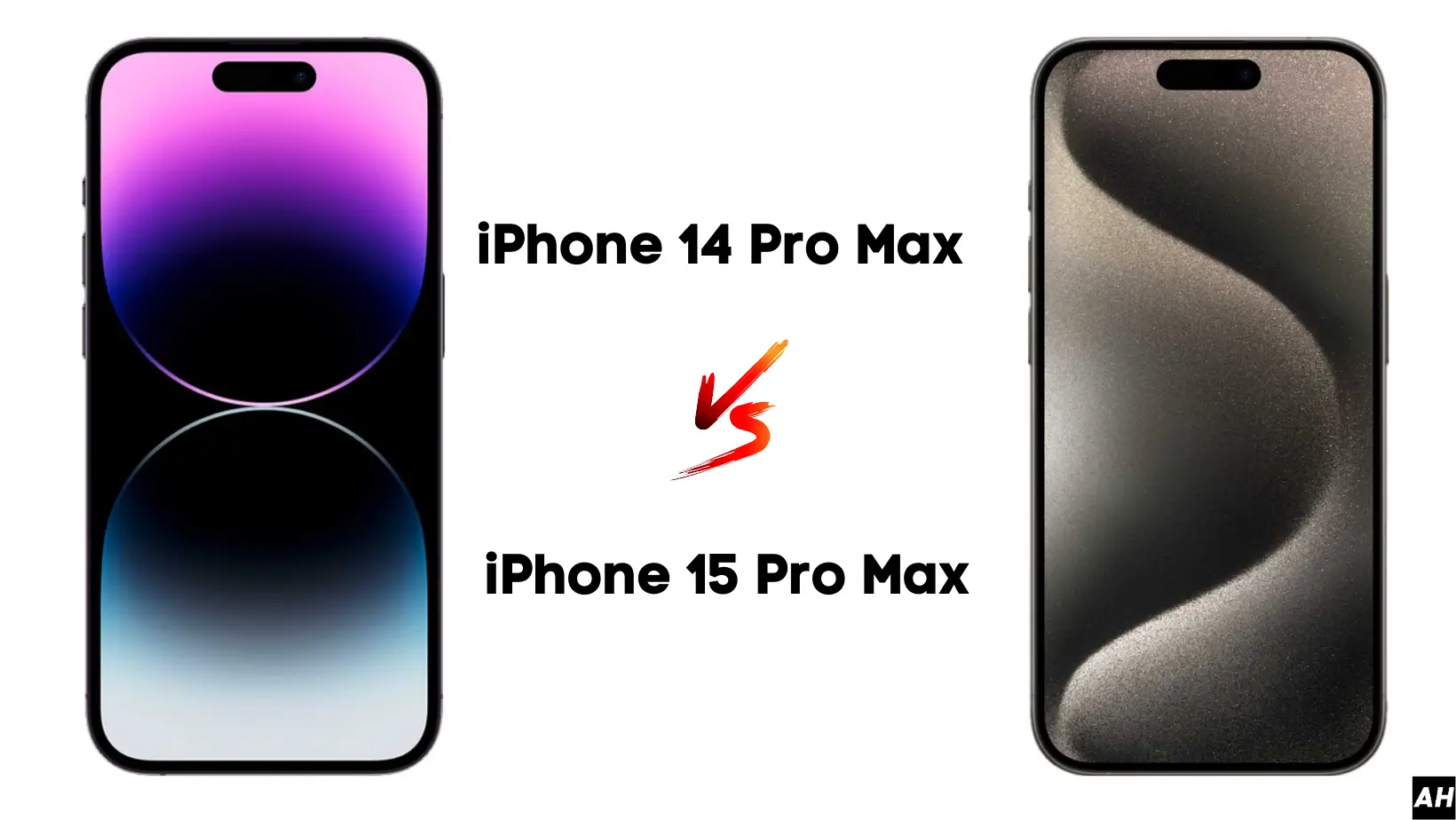
Apple no longer sells either phone new, so in the US this comparison comes down to used and refurbished value on marketplaces like Swappa, Back Market, Amazon Renewed, and Best Buy Outlet — plus what Verizon, AT&T, and T-Mobile will give you in trade-in credit. This guide covers what you gain by paying more for the 15 Pro Max, what you safely lose by saving on the 14 Pro Max, and the US-only quirks (eSIM-only design, mmWave 5G, carrier locks) you need to check before buying either.
In a hurry? Jump to: Quick verdict · Full specs table · Apple Intelligence · Update timeline · Cameras · Battery & charging · US prices & carrier deals · US buying checklist · FAQ
Quick Verdict: Which One Should You Buy?
Here is the short answer before the deep dive:
- Buy the iPhone 15 Pro Max if you want Apple Intelligence, a 5x optical zoom for distant subjects, USB-C, a lighter titanium body, and the longest possible software support window. It is the more future-proof phone.
- Buy the iPhone 14 Pro Max if you want the lowest price for a flagship-class iPhone, don't care about AI features, and value the same gorgeous 6.7-inch display and 48MP camera for less.
iPhone 15 Pro Max: pros and cons
- Pros: Apple Intelligence support, 5x optical zoom, USB-C with USB 3 speeds, lighter titanium body, Action button, 256GB base storage, longer projected update runway (to about 2030).
- Cons: Costs $100–$200 more used, and its year-over-year gains beyond AI are incremental.
iPhone 14 Pro Max: pros and cons
- Pros: Same 6.7-inch 120Hz display and 48MP main camera for less money, still fast on iOS 26, updates projected through about 2029.
- Cons: No Apple Intelligence ever, Lightning port, 240 g weight, 128GB base storage, only 3x zoom.
Already own the 14 Pro Max and thinking of upgrading? Sideways moves rarely pay: the year-over-year hardware gains alone don't justify buying a used 15 Pro Max out of pocket. Either keep your 14 Pro Max until it stops serving you, or use a carrier trade-in promo to jump straight to a current iPhone 16/17-series model, where Verizon, AT&T, and T-Mobile credits routinely exceed the phone's cash resale value. The 15 Pro Max only makes sense as a destination if Apple Intelligence or the 5x zoom is the specific thing you're missing.
The single most important difference in 2026 is no longer the zoom or the frame material — it is software. The 15 Pro Max runs the full Apple Intelligence feature set; the 14 Pro Max does not, and never will, because of its chip and RAM. We explain exactly why below.
iPhone 14 Pro Max vs iPhone 15 Pro Max: Specs Compared
| Feature | iPhone 14 Pro Max | iPhone 15 Pro Max |
|---|---|---|
| Chipset | A16 Bionic (4nm) | A17 Pro (3nm) |
| RAM | 6GB | 8GB |
| Apple Intelligence | Not supported | Supported |
| Frame | Stainless steel | Titanium |
| Weight | 240 g (8.47 oz) | 221 g (7.81 oz) |
| Port | Lightning (USB 2.0) | USB-C (USB 3, up to 10 Gbps) |
| Side control | Ring/Silent switch | Action button |
| Display | 6.7" Super Retina XDR OLED, 120Hz | 6.7" Super Retina XDR OLED, 120Hz |
| Peak brightness | 2,000 nits | 2,000 nits |
| Main camera | 48MP | 48MP |
| Telephoto zoom | 3x optical | 5x optical (tetraprism) |
| Battery (approx.) | 4,323 mAh | 4,422 mAh |
| 5G (US models) | Sub-6GHz + mmWave | Sub-6GHz + mmWave |
| SIM (US models) | eSIM only (no SIM tray) | eSIM only (no SIM tray) |
| Water resistance | IP68 | IP68 |
| Base storage | 128GB | 256GB |
| Latest OS (mid-2026) | iOS 26 (iOS 27 in beta) | iOS 26 (iOS 27 in beta) |
The headline takeaway: the displays, main camera, and water resistance are effectively identical. Every meaningful gap is in the chip, the zoom lens, the port, and the body material. Two rows worth noticing for US shoppers: both phones' US models are eSIM-only and both support mmWave 5G on Verizon, AT&T, and T-Mobile — more on both below.
The Biggest 2026 Difference: Apple Intelligence
When these phones launched, the buying conversation was about titanium and zoom. In 2026 it is about AI, and this is where the two phones genuinely split.
The iPhone 15 Pro Max supports Apple Intelligence. The iPhone 14 Pro Max does not. Apple's on-device AI requires the A17 Pro chip (or newer) and 8GB of RAM. The 15 Pro Max has both. The 14 Pro Max ships with the A16 Bionic and only 6GB of RAM, so it falls below the requirement and is excluded from the entire feature set — permanently. No software update can add it.
In practical terms, that means the 15 Pro Max gets features the 14 Pro Max can't touch, including:
- The redesigned, more conversational Siri and on-device request handling
- Writing Tools for rewriting, proofreading, and summarizing text system-wide
- Image Playground and Genmoji for AI image and emoji creation
- Notification summaries and priority messages
- Clean Up in Photos for removing distractions from a shot
Both phones run iOS 26, and both are officially supported by iOS 27, which Apple announced at WWDC in June 2026 and ships this fall. So the 14 Pro Max is far from abandoned — it still gets the core OS, security patches, and the standard app experience. It simply misses the AI layer. If Apple Intelligence is irrelevant to how you actually use a phone, this gap may not matter to you at all. If it excites you, it is the single best reason to spend more on the 15 Pro Max. For what you can do with AI on either phone, see our roundup of the best AI apps for iPhone.
How Many More Years of Updates Will Each Phone Get?
This is the question competitors' spec sheets skip, and it matters more than any benchmark for a used purchase. Apple doesn't publish end-of-support dates, but its recent track record is consistent: flagship iPhones get roughly 6–8 years of major iOS updates from launch, plus another year or two of security patches on their final iOS branch.
| Model | Launched | Latest supported iOS (2026) | Projected last major iOS update |
|---|---|---|---|
| iPhone 14 Pro Max | Sept 2022 | iOS 26 (iOS 27 this fall) | Around 2029 |
| iPhone 15 Pro Max | Sept 2023 | iOS 26 (iOS 27 this fall) | Around 2030–2031 |
Practically, that means a 14 Pro Max bought used today should still have about three years of major updates left, and the 15 Pro Max about four or more — and the 15 Pro Max may age even better than the calendar suggests, because its 8GB of RAM and Apple Intelligence support make it likelier to receive new headline features, not just compatibility updates. If you keep phones for four-plus years, that support gap alone can be worth the price difference.
Design and Build Quality
Stand the two phones next to each other and the family resemblance is obvious, but the materials tell two different stories.
iPhone 14 Pro Max
The 14 Pro Max uses a surgical-grade stainless steel frame with a textured matte glass back and a Ceramic Shield front. It feels dense and premium, but at 240 g (about 8.5 ounces) it is genuinely heavy — one of the heaviest iPhones Apple has made. It keeps the classic Ring/Silent switch and charges over a Lightning port, which tops out at slow USB 2.0 transfer speeds.
iPhone 15 Pro Max
The 15 Pro Max swaps stainless steel for a Grade 5 titanium frame, dropping the weight to 221 g. That roughly 19-gram difference is immediately noticeable in hand and over a long day of use. The edges are gently contoured for a more comfortable grip. Two functional changes stand out: the new Action button replaces the mute switch and can be programmed for the camera, flashlight, a shortcut, and more; and the move to USB-C brings USB 3 speeds up to 10 Gbps for fast file transfers, plus one-cable charging shared with iPads, Macs, and most modern accessories.
Both phones carry the same IP68 rating and MagSafe support, and both later picked up Qi2 wireless charging through a software update. If portability and the Action button matter to you, the 15 Pro Max wins design comfortably. If you don't mind the weight, the 14 Pro Max still looks and feels like a true flagship.
Display Technology
This is the closest race in the entire comparison: the displays are essentially the same. Both phones use a 6.7-inch Super Retina XDR OLED panel at 2796 x 1290 (460 ppi), both run ProMotion with adaptive refresh rates up to 120Hz, both hit 2,000 nits of peak outdoor brightness, and both include the Always-On display and Dynamic Island.
You get the same wide P3 color, True Tone, and HDR playback on either device. In side-by-side viewing, no normal user will spot a difference in sharpness, color, or brightness. If display quality is your top priority, this category is a tie — and a reason the cheaper 14 Pro Max remains so appealing.
Performance and Processor
The 14 Pro Max runs the A16 Bionic with a 6-core CPU and 5-core GPU on a 4nm process. It remains fast and fluid for everyday tasks, multitasking, and the vast majority of games, and it still handles iOS 26 smoothly.
The 15 Pro Max runs the A17 Pro, the first 3nm smartphone chip, with a 6-core CPU and a more powerful 6-core GPU that adds hardware-accelerated ray tracing. Beyond the raw benchmark lead, the A17 Pro is the gateway to two things the A16 lacks: Apple Intelligence and the most demanding console-class games.
On widely reported Geekbench 6 numbers, the gap is real on paper: the A16 lands around 2,500 single-core / 5,300 multi-core, while the A17 Pro scores roughly 2,900 / 7,200 — about a 35% multi-core advantage. In hand, though, that lead shows up mostly in sustained gaming and export-style workloads, not in daily use.
Key real-world differences:
- Everyday speed: Genuinely hard to tell apart. Apps launch instantly on both, and scrolling is buttery on each.
- Memory: The 15 Pro Max's 8GB of RAM (vs 6GB) keeps more apps and browser tabs alive in the background.
- Gaming: The A17 Pro's GPU and ray tracing give the 15 Pro Max a clear edge in graphically intense titles.
- Longevity: The newer chip and extra RAM mean the 15 Pro Max will stay comfortable with heavier future software for longer.
For a heavy gamer or anyone who wants the longest usable lifespan, the 15 Pro Max is the safer bet. For a typical user who texts, browses, streams, and shoots photos, the 14 Pro Max still feels fast.
Camera Capabilities
Both phones share the same 48MP main sensor, the same 12MP ultra-wide, and the same 12MP front camera. In good light, photos from the main and ultra-wide cameras are nearly indistinguishable. The difference lives entirely in the telephoto lens.
- iPhone 14 Pro Max: 12MP telephoto with 3x optical zoom.
- iPhone 15 Pro Max: 12MP telephoto with a tetraprism design delivering 5x optical zoom.
That extra reach is the 15 Pro Max's standout camera advantage. For NFL and NBA games from the upper deck, concerts, your kid's soccer matches, or any distant subject, 5x pulls in noticeably more detail without the heavy quality loss of digital cropping. The 15 Pro Max also shows small, consistent gains in very low light and exposure handling.
That said, the 14 Pro Max's 3x zoom is more versatile for everyday portraits and tighter framing, where 5x can feel too long. Both shoot excellent 4K video up to 60fps with Dolby Vision, and both support Apple ProRAW. If you regularly zoom into faraway subjects, the 15 Pro Max is the clear pick; if not, the cameras are close enough that the 14 Pro Max won't disappoint.
Battery Life and Charging
Battery capacity is almost identical: roughly 4,323 mAh in the 14 Pro Max versus about 4,422 mAh in the 15 Pro Max. In real-world use, both comfortably last a full day for most people, with similar standby behavior thanks to the efficient ProMotion display dropping to a low refresh rate on static content.
The A17 Pro's 3nm efficiency gives the 15 Pro Max a slight edge in some workloads, but the gains are modest and partly offset by its higher performance ceiling. Both phones support 15W MagSafe wireless charging, both added Qi2 support through a software update, and both can fast-charge to roughly 50% in about half an hour with an adequate USB-C Power Delivery charger.
The practical charging difference is the cable, not the speed: the 15 Pro Max uses USB-C, so you can charge it with the same cable as a recent iPad, MacBook, or Android phone, while the 14 Pro Max still needs a Lightning cable. One buying note for used units: because these are two- and three-year-old phones, always ask for the battery health percentage before paying — anything below about 85% means a $99 out-of-warranty battery replacement at a US Apple Store is in your near future. To protect long-term battery health on either model, keep Optimized Battery Charging enabled in Settings > Battery.
2026 US Pricing: Used, Refurbished, and Carrier Deals
Apple no longer sells either phone new, so value comes down to the US used and refurbished market. As of late August 2026, typical US pricing looks roughly like this (it varies by storage, condition, and carrier lock):
| Model | Typical US used / refurbished price (2026) | Where to look |
|---|---|---|
| iPhone 14 Pro Max (128GB) | Roughly $380–$470 | Swappa, Back Market, Amazon Renewed |
| iPhone 15 Pro Max (256GB) | Roughly $480–$680 (peer-to-peer listings start near $480; refurbished with warranty $610–$680) | Swappa, Back Market, Best Buy Outlet |
So the 15 Pro Max generally costs $100–$200 more — but you also get double the base storage (256GB vs 128GB), Apple Intelligence, USB-C, 5x zoom, and a lighter body. A few US-specific ways to squeeze the price further:
- Carrier trade-in credits: Verizon, AT&T, and T-Mobile all still accept both models as trade-ins toward newer iPhones, and promotional credits on these Pro Max models often exceed their cash resale value. If you already own one and are choosing whether to upgrade, price out a trade-in before selling privately.
- Unlocked vs carrier-locked: carrier-locked units on the used market run $30–$60 cheaper, but only make sense if you're staying on that carrier. An unlocked phone resells for more later and works on all three networks plus MVNOs like Mint, Visible, and US Mobile.
- AppleCare: new AppleCare+ enrollment on phones this old is generally off the table, so buy from a seller offering at least a 30-day (ideally 1-year) warranty — Back Market, Amazon Renewed, and Best Buy Outlet all include one; individual Swappa sellers usually don't.
US Buying Checklist: eSIM, mmWave, and Carrier Locks
Two genuinely US-specific hardware facts matter when shopping for either phone:
- US models are eSIM-only. Starting with the iPhone 14 line, Apple removed the physical SIM tray from US-market iPhones, so both of these phones activate over eSIM on US carriers. Verizon, AT&T, T-Mobile, and the big MVNOs all support quick eSIM transfer now, but if you swap phones often or travel with foreign physical SIMs, know that there's no tray. (An imported international unit will have a tray but loses the next point.)
- US models include mmWave 5G. The US variants of both phones support Verizon's and AT&T's ultra-fast mmWave bands (the extra antenna window on the side is the giveaway) in stadiums, airports, and dense downtown areas. International models sold abroad don't — another reason to buy a US-spec unit from a US marketplace.
Before paying for any used unit: verify the IMEI is clean (Swappa checks this automatically), confirm the phone is paid off and not blacklisted, check that it's unlocked or locked to your carrier, and ask for a screenshot of Settings > Battery > Battery Health.
How We Compared These iPhones
We built this comparison by cross-checking Apple's official technical specifications for both phones against independent spec databases and current US market data, then verifying every claim against Apple's published Apple Intelligence requirements and iOS support information. We confirmed the chip, RAM, telephoto, port, frame, eSIM, and mmWave differences directly, and we deliberately did not invent benchmark numbers or "tested" results. For pricing, we surveyed US refurbished and used marketplaces in mid-2026 to capture realistic price bands rather than a single quoted figure. Our goal was to focus on the differences that actually change the buying decision for an American shopper today — software longevity, AI support, zoom, and value — instead of restating identical spec sheets.
Related reading
Bottom Line
For US buyers in 2026, the iPhone 15 Pro Max is the better long-term buy: it supports Apple Intelligence, adds a genuinely useful 5x zoom, switches to convenient USB-C, and is lighter thanks to titanium — all of which help it age better. The iPhone 14 Pro Max remains a smart value pick at roughly $380–$470 for anyone who wants a flagship-grade display and 48MP camera at the lowest price and doesn't care about AI features or extra zoom. Whichever you choose, buy a US-spec unit (eSIM-only, with mmWave) from a marketplace that verifies the IMEI and includes a warranty — and if you're on Verizon, AT&T, or T-Mobile, check trade-in promos before paying cash.
Frequently Asked Questions
Is the iPhone 15 Pro Max worth it over the iPhone 14 Pro Max in 2026?
For most US buyers, yes, if the roughly $100-$200 price gap fits your budget. The 15 Pro Max supports Apple Intelligence, adds 5x optical zoom, uses USB-C, and is lighter thanks to titanium, all of which help it stay current longer. If you don't care about AI or extra zoom, the 14 Pro Max remains an excellent, cheaper choice with the same screen and 48MP main camera.
Does the iPhone 14 Pro Max support Apple Intelligence?
No. Apple Intelligence requires an A17 Pro chip or newer and 8GB of RAM. The iPhone 14 Pro Max uses the A16 Bionic with 6GB of RAM, so it is permanently excluded from Apple Intelligence and no software update can add it. The iPhone 15 Pro Max, with its A17 Pro and 8GB, supports the full feature set.
How much do the iPhone 14 Pro Max and 15 Pro Max cost used in the US?
As of mid-2026, a used iPhone 14 Pro Max (128GB) typically runs about $380-$470 and a used iPhone 15 Pro Max (256GB) about $480-$680 on US marketplaces like Swappa, Back Market, and Amazon Renewed. Prices vary with storage, condition, battery health, and whether the phone is unlocked or carrier-locked, with locked units usually $30-$60 cheaper.
Are US iPhone 14 Pro Max and 15 Pro Max models eSIM-only?
Yes. Apple removed the physical SIM tray from US-market iPhones starting with the iPhone 14 line, so US versions of both phones activate only via eSIM. Verizon, AT&T, T-Mobile, and major MVNOs like Mint and Visible all support eSIM transfer. Imported international units keep a SIM tray but lose mmWave 5G support.
Do both phones support mmWave 5G on US carriers?
Yes, but only the US-spec models. American variants of both the 14 Pro Max and 15 Pro Max include mmWave antennas for Verizon's and AT&T's fastest 5G in stadiums, airports, and dense city centers, plus sub-6GHz 5G everywhere else. International models sold abroad lack mmWave, which is a good reason to buy a US-market unit.
Do the iPhone 14 Pro Max and 15 Pro Max still get software updates?
Yes. Both phones run iOS 26 today and are officially supported by iOS 27, announced at WWDC in June 2026 and shipping this fall. Based on Apple's 6-8 year track record, the iPhone 14 Pro Max should get major iOS updates until around 2029 and the 15 Pro Max until around 2030-2031, each followed by another year or two of security patches. The 14 Pro Max just misses the Apple Intelligence feature layer.
Should I buy an unlocked or carrier-locked used iPhone?
Unlocked is the safer choice: it works on Verizon, AT&T, T-Mobile, and MVNOs, and resells for more later. Carrier-locked units run about $30-$60 cheaper on the used market and are fine if you plan to stay on that carrier. Either way, verify the IMEI is clean and the phone is fully paid off before buying.
How big is the camera difference between the two phones?
Both share the same 48MP main camera, 12MP ultra-wide, and 12MP front camera, so most everyday shots look nearly identical. The key difference is the telephoto lens: the 14 Pro Max offers 3x optical zoom, while the 15 Pro Max uses a tetraprism design for 5x optical zoom, giving it a clear advantage for distant subjects like sports, concerts, and wildlife.