Apple iPhone 17 Pro Max
Specs, US price, release date, and Android Hire verdict
Apple's biggest, longest-lasting iPhone ever, with a switch to an aluminum unibody, a 4x periscope telephoto, and a battery that finally clears 17 hours of active use.
- 17:58h measured active use is the longest GSMArena has recorded on an iPhone, helped by a larger 4823mAh cell and a new aluminum unibody with better thermal spread
- 48MP periscope telephoto now reaches 4x optical zoom, up from 5x digital-assisted 3x on the 16 Pro Max — meaningfully better reach for portraits and travel shots
- 6-core GPU A19 Pro (vs 5-core on the standard iPhone Air) posts the highest mobile GPU benchmarks Apple has shipped
- 20-minute 50% wired charging is Apple's fastest yet, thanks to a new PD3.2/AVS charging profile
- IP68 to 6m and Ceramic Shield 2 front glass at Mohs level 5 make it the most durable iPhone body to date
- USB-C 3.2 Gen 2 with DisplayPort output — a real speed jump from the 2.0 port on cheaper iPhone 17 models
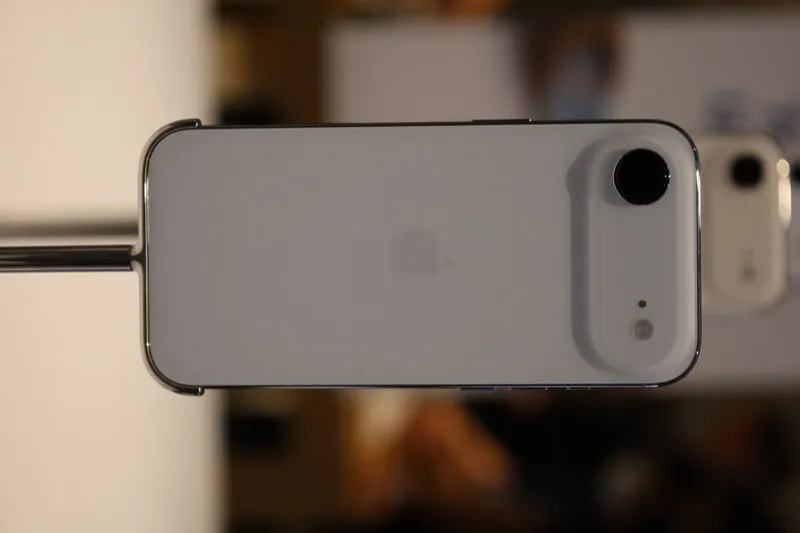
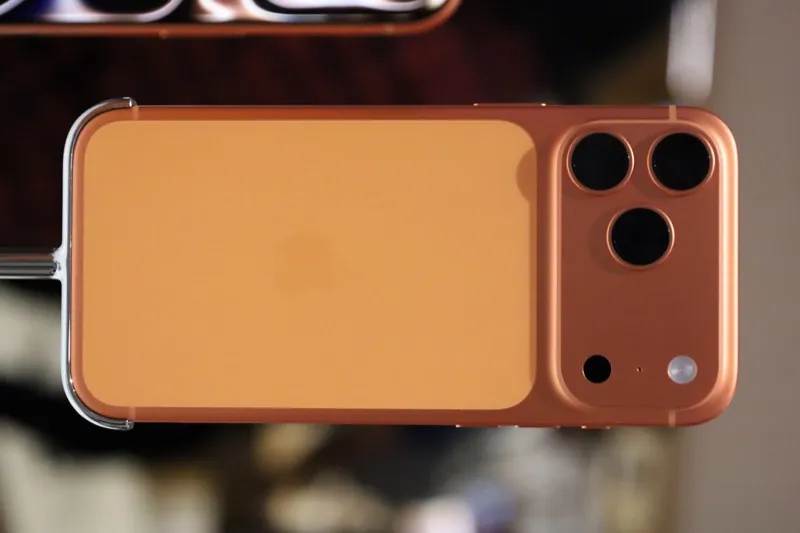
- The anodised aluminium chips at the camera plateau edges — iFixit's teardown found the anodisation layer too thin to bond properly to those sharp corners, so "scratchgate" was a real geometry flaw, not just hysteria
- 233g is the heaviest iPhone Apple has made, and reviewers consistently describe it as a brick next to the 16 Pro Max
- $1,199 starting price with no 128GB tier, and the 2TB configuration runs to $1,999
- Widespread iOS 26 complaints — battery drain, idle overheating, sluggish animations — have hit the Pro line hardest, undercutting the vapour chamber's gains
- Ultrawide and telephoto stay in the same resolution class as the 16 Pro Max despite the headline 48MP-everywhere spec
- eSIM only in US models, with no physical SIM tray
Android Hire Verdict — The best iPhone, with a finish that chips
The iPhone 17 Pro Max is the most complete phone Apple has built. The switch to a laser-welded aluminium unibody with a deionised-water vapour chamber delivers roughly 40% better sustained performance and runs about 6°C cooler under load, battery life reached a record 17:58h in testing, charging hit 50% in 20 minutes, and the periscope finally reaches a true 4x optical. Two caveats keep it from a perfect score. The anodised finish genuinely chips at the camera plateau edges — a confirmed engineering flaw Apple never addressed — and iOS 26's performance problems have hit the Pro line hardest. With the iPhone 18 Pro expected in September 2026, anyone not in a hurry should wait a few weeks before buying at full price.
Apple iPhone 17 Pro Max in depth
Scratchgate: what was real and what was overblown
This is the question most prospective buyers search for, and the answer requires separating two things that got conflated in the coverage.
The viral story — Apple Store demo units appearing scratched within days of launch — was largely a false alarm. Apple said the marks were material transferred from the demo stands, and they cleaned off. That part was genuinely overblown.
The underlying flaw is real, though. iFixit's microscope teardown found that the anodisation layer on the aluminium unibody is thin, and anodised aluminium bonds poorly to sharp edges — there simply isn't enough substrate at a hard corner to hold the aluminium oxide layer. The sharp edges of the camera plateau are exactly such a corner, and they genuinely chip against keys and coins. GSMArena's independent durability testing confirmed the vulnerability.
So: a real engineering trade-off, not a hoax, and not recall-level either. It is a geometry problem rather than a materials problem, it affects appearance rather than function, and Apple never issued a fix or service programme. If you buy one, a case over the camera plateau edges solves it entirely — and be aware that visible plateau chipping does reduce trade-in and resale value.
The vapour chamber: why the aluminium switch was worth it
Apple moved the Pro Max from titanium to an aluminium unibody this generation, which reads as a downgrade — titanium is stiffer and holds a finish better. The reason is thermal, and the engineering is more serious than the spec sheet suggests.
Aluminium conducts heat roughly four times better than titanium. Apple paired that with a genuine vapour chamber: deionised water sealed inside a chamber that is laser-welded into the forged aluminium unibody, replacing the graphite films of previous generations and offering roughly 300% better thermal conductivity.
The measured results back the claim. Apple states up to 40% better sustained CPU and GPU performance, and independent testing found the phone runs about 6°C cooler than the 16 Pro Max under load — surface temperatures of roughly 33°C versus 42°C during 4K60 recording. In practice that means benchmark scores hold up across repeated runs instead of collapsing, and long recording sessions no longer trigger thermal warnings.
One irony worth flagging: despite the best cooling hardware Apple has shipped, a significant number of owners report the 17 Pro Max running hot on iOS 26. That appears to be a software problem rather than a hardware one — see below.
The iOS 26 problem
A recurring complaint across the iPhone 17 Pro line, and one that spec sheets never capture: iOS 26 has been widely reported to cause rapid battery drain, overheating while idle, sluggish animations that worsen in Low Power Mode, delayed Face ID, and intermittent Wi-Fi drops.
The reporting suggests the Pro models are disproportionately affected — the 16 Pro and 17 Pro specifically — with the Liquid Glass interface raising baseline GPU load even on static screens, compounded by background Focus Filter syncing.
This matters for buying advice because it partially offsets the vapour chamber's gains. The hardware is excellent; the software has been undermining it. Apple has shipped incremental fixes through the iOS 26.x cycle, and if you buy one now you will be on a much later build than the launch reviews tested, but it's worth knowing the complaint is real and widespread rather than isolated.
Battery: the longest-lasting iPhone yet
GSMArena's testing recorded 17 hours 58 minutes of active use — the highest figure the outlet has measured on any iPhone. That comes from a larger 4823mAh cell (5088mAh on eSIM-only international units), the same A19 Pro efficiency gains found across the 17 lineup, and iOS 26's more aggressive background throttling.
Charging improved alongside capacity: 50% in 20 minutes wired, up from 30 minutes on the 16 Pro Max, using a new PD3.2/AVS profile that requires a compatible charger to hit peak speed. Wireless charging is 25W via MagSafe/Qi2 (15W in China).
Camera: the telephoto finally catches up
All three rear sensors are now 48MP, and the periscope telephoto's headline change is reaching 4x optical zoom at f/2.8 with 3D sensor-shift OIS — a genuine hardware upgrade over the 16 Pro Max's setup, not just a software crop. The main 48MP wide gets sensor-shift OIS and a slightly wider aperture at f/1.8.
Video capabilities are the deepest on any phone: ProRes RAW, Apple Log 2, Dolby Vision HDR up to 120fps, and 3D spatial video/audio capture, aimed squarely at users doing serious mobile filmmaking rather than casual shooting.
Apple iPhone 17 Pro Max benchmarks
GSMArena's tested figures for a retail iPhone 17 Pro Max. The 6-core GPU config (vs 5-core in the standard iPhone Air) is the main driver of its graphics lead — CPU scores are close to identical across the whole A19 Pro-equipped lineup.
Apple iPhone 17 Pro Max vs the competition
How the Apple iPhone 17 Pro Max compares against the Apple iPhone 18 Pro, the Apple iPhone 17 Pro and the Apple iPhone 18 Pro Max — its closest rivals in our directory.
| Spec | Apple iPhone 17 Pro Max | Apple iPhone 18 Pro | Apple iPhone 17 Pro | Apple iPhone 18 Pro Max |
|---|---|---|---|---|
| Launch price | $1,199 | $1,199 | $1,099 | $1,299 |
| Display | 6.9" LTPO OLED 120Hz | 6.3" LTPO OLED 120Hz | 6.3" LTPO Super Retina XDR OLED, 120Hz | 6.9" LTPO OLED 120Hz |
| Chipset | Apple A19 Pro (6-core GPU) | Apple A20 Pro (2nm) | Apple A19 Pro (3nm) | Apple A20 Pro (2nm) |
| Camera | 48MP triple, 4x tele | 48MP variable aperture | 48MP triple (wide + ultrawide + 4x telephoto), OIS | 48MP variable aperture |
| Battery | 4823mAh · 17:58h tested | Up to 36h video (eSIM) | 3998mAh · 25W wired / 25W MagSafe | Up to 45h video (eSIM) |
| AnTuTu 10 | ~2,600,000 | ~3,100,000 (est.) | ~2,430,000 | ~3,100,000 (est.) |
| Our score | 91/100 | 92/100 | 93/100 | 93/100 |
Apple iPhone 17 Pro Max full specifications
Launch
- Announced
- 2025, September 9
- Released
- 2025, September 19
- Status
- Available
Network
- Technology
- GSM / CDMA / HSPA / EVDO / LTE / 5G
- 5G bands
- Sub-6 and mmWave, varying by model (A3526 / A3257 / A3525 / A3527)
- Speed
- HSPA, LTE, 5G, EV-DO Rev.A 3.1 Mbps
Body
- Dimensions
- 163.4 x 78 x 8.8 mm
- Weight
- 233 g
- Build
- Ceramic Shield 2 front, aluminum frame, aluminum/glass back
- SIM
- Nano-SIM + eSIM + eSIM (international); eSIM only (USA); dual Nano-SIM (China)
- Durability
- IP68 dust-tight and water-resistant (immersible up to 6m for 30 min)
Display
- Type
- LTPO Super Retina XDR OLED, 120Hz ProMotion, HDR10, Dolby Vision
- Brightness
- 1000 nits (typ), 1600 nits (HBM), 3000 nits (peak)
- Size
- 6.9 inches (~90.7% screen-to-body ratio)
- Resolution
- 1320 x 2868 pixels, 19.5:9, ~460 ppi
- Protection
- Ceramic Shield 2, Mohs level 5, anti-reflective coating
Platform
- OS
- iOS 26, upgradable to iOS 26.6
- Chipset
- Apple A19 Pro (3nm)
- CPU
- Hexa-core (2x4.26 GHz & 4x2.60 GHz)
- GPU
- Apple GPU (6-core graphics)
Memory
- Card slot
- No
- Internal
- 256GB/512GB/1TB/2TB with 12GB RAM — 2TB exclusive to Pro Max
- Technology
- NVMe
Main Camera
- Setup
- Triple: 48 MP (wide) + 48 MP (periscope telephoto) + 48 MP (ultrawide)
- Wide
- 48 MP, f/1.8, 24mm, 1/1.28", 1.22µm, dual pixel PDAF, sensor-shift OIS
- Telephoto
- 48 MP, f/2.8, 100mm, 1/2.55", 0.7µm, PDAF, 3D sensor-shift OIS, 4x optical zoom
- Ultrawide
- 48 MP, f/2.2, 13mm, 120°, 1/2.55", 0.7µm, PDAF
- Depth
- TOF 3D LiDAR scanner
- Features
- Dual-LED dual-tone flash, HDR
- Video
- 4K@24/25/30/60/100/120fps, 1080p@25/30/60/120/240fps, Dolby Vision HDR (up to 120fps), ProRes, ProRes RAW, Apple Log 2, spatial video/audio
Selfie Camera
- Single
- 18 MP, f/1.9, 20mm (ultrawide), PDAF
- Biometrics
- SL 3D depth/biometrics sensor (Face ID)
- Video
- 4K@24/25/30/60fps, 1080p@25/30/60/120fps, gyro-EIS, spatial audio
Sound
- Loudspeaker
- Yes, with stereo speakers
- 3.5mm jack
- No
Comms
- Wi-Fi
- 802.11 a/b/g/n/ac/6e/7, tri-band, hotspot
- Bluetooth
- 6.0, A2DP, LE
- Positioning
- GPS (L1+L5), GLONASS, GALILEO, BDS, QZSS, NavIC
- NFC
- Yes
- USB
- USB Type-C 3.2 Gen 2, DisplayPort
Features
- Biometrics
- Face ID
- Sensors
- Accelerometer, gyro, proximity, compass, barometer
- Other
- Ultra Wideband (gen2); Emergency SOS, Messages and Find My via satellite
Battery
- Type
- Li-Ion 4823 mAh (Nano-SIM models) or 5088 mAh (eSIM-only models)
- Charging
- PD3.2/AVS wired (50% in 20 min), 25W MagSafe/Qi2 wireless, 4.5W reverse wired
- Tested endurance
- 17:58h active use (GSMArena)
Misc
- Colors
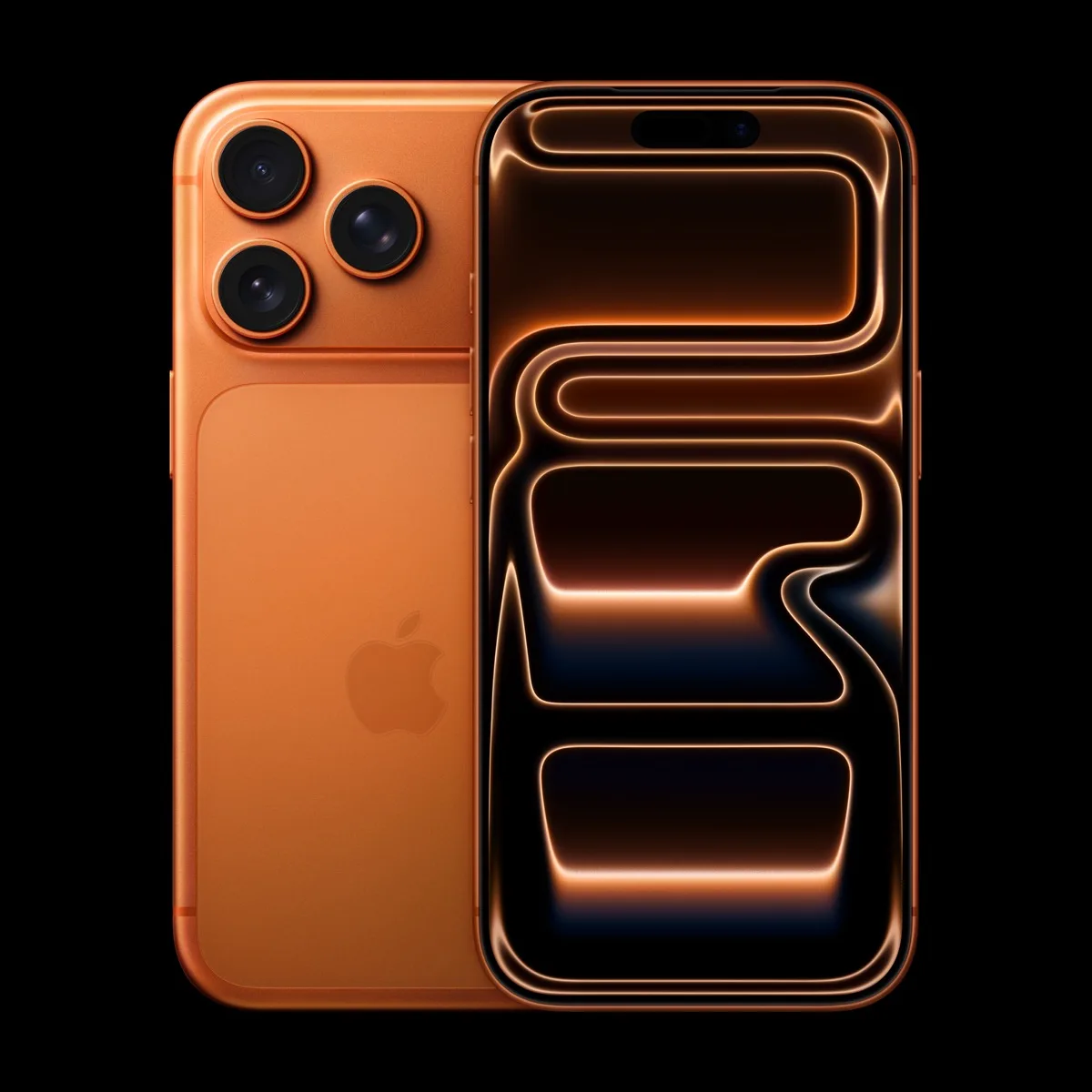
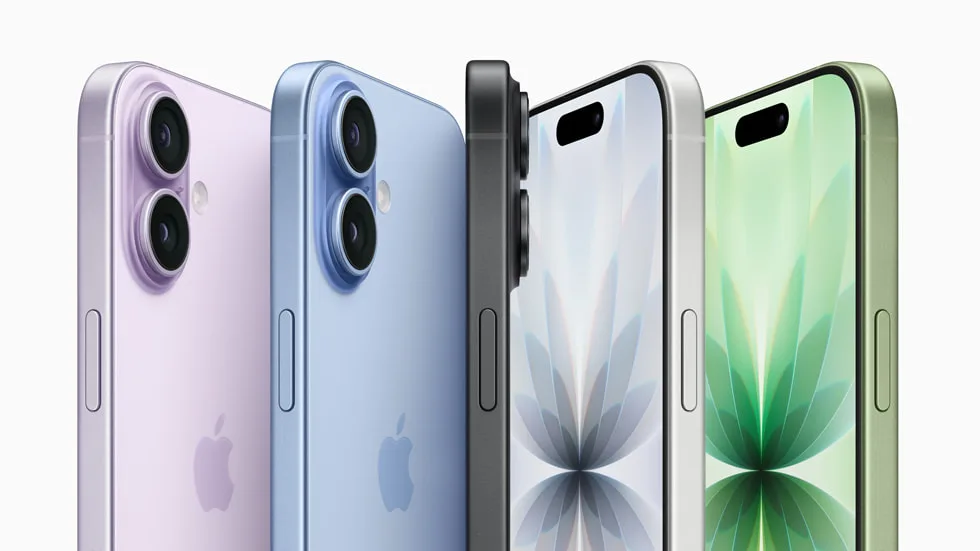
- Silver, Cosmic Orange, Deep Blue
- Models
- iPhone18,2 — A3526, A3257, A3527, A3525
- Price
- $1,199 US launch price (256GB); £1,199 UK; ₹1,49,900 India
Apple iPhone 17 Pro Max FAQ
Does the iPhone 17 Pro Max scratch easily? Was scratchgate real?
Partly. The viral story about scratched Apple Store demo units was overblown — Apple said those marks were material transferred from the display stands and they wiped off. But iFixit's microscope teardown confirmed a real underlying flaw: the anodisation layer is thin, and anodised aluminium bonds poorly to sharp edges, so the corners of the camera plateau genuinely chip against keys and coins. It affects appearance rather than function, Apple never issued a fix, and a case covering the plateau edges prevents it. Visible chipping does reduce trade-in value.
How much does the iPhone 17 Pro Max cost in the US?
It starts at $1,199 for 256GB — there is no 128GB tier. The 512GB model is $1,399, 1TB is $1,599, and a 2TB configuration exclusive to the Pro Max runs $1,999. Apple and US carriers offer trade-in credit that can meaningfully reduce the effective price for anyone upgrading from a recent iPhone.
How long does the iPhone 17 Pro Max battery last?
GSMArena measured 17 hours 58 minutes of active use — the longest of any iPhone the outlet has tested. The 4,823mAh cell (5,088mAh on eSIM-only international variants), A19 Pro efficiency, and the vapour chamber's improved thermals all contribute. Charging reaches 50% in about 20 minutes with a PD3.2/AVS-compatible charger.
Does the vapour chamber in the iPhone 17 Pro Max actually work?
Yes, measurably. It uses deionised water sealed in a chamber laser-welded into the aluminium unibody, offering roughly 300% better thermal conductivity than the graphite films it replaced. Apple claims up to 40% better sustained performance, and independent testing found the phone runs about 6°C cooler than the 16 Pro Max under load — roughly 33°C versus 42°C during 4K60 recording. That said, many owners still report the phone running warm on iOS 26, which appears to be a software issue rather than a hardware one.
Does the iPhone 17 Pro Max have a titanium frame?
No — Apple switched the Pro line to an aluminium unibody this generation, after two years of titanium on the 15 Pro and 16 Pro. Aluminium conducts heat roughly four times better, which enabled the vapour chamber and the sustained-performance gains. The trade-off is the finish: anodised aluminium chips more readily at the camera plateau edges than titanium did.
Should I buy the iPhone 17 Pro Max now or wait for the iPhone 18 Pro?
If you can wait a few weeks, wait. Apple is expected to announce the iPhone 18 Pro and 18 Pro Max in September 2026, alongside its first foldable iPhone. Reported changes include a 2nm A20 chip roughly 15% faster, a smaller Dynamic Island, a variable-aperture main camera, a 24MP selfie camera, and Apple's C2 modem. Even if you prefer the 17 Pro Max, waiting typically brings a price cut or better trade-in terms once the new generation lands.
What optical zoom does the iPhone 17 Pro Max camera have?
The periscope telephoto reaches 4x optical zoom (100mm equivalent) at f/2.8 with 3D sensor-shift OIS, an upgrade from the 16 Pro Max. Combined with the 48MP wide and 48MP ultrawide, all three rear sensors are now the same resolution class for the first time.
Is the iPhone 17 Pro Max eSIM only in the US?
Yes. US models ship without a physical SIM tray, using eSIM only, matching the rest of the iPhone 17 lineup sold domestically. International models retain a Nano-SIM slot alongside eSIM in most regions, and China units use dual Nano-SIM.
Explore other phones