Apple iPhone Air
Specs, US price, release date, and Android Hire verdict
The thinnest iPhone Apple ever built at 5.6mm — and its worst-selling modern flagship. Discontinued after roughly 700,000 activations, it is now a genuinely tempting phone at a steep discount, with caveats worth understanding first.
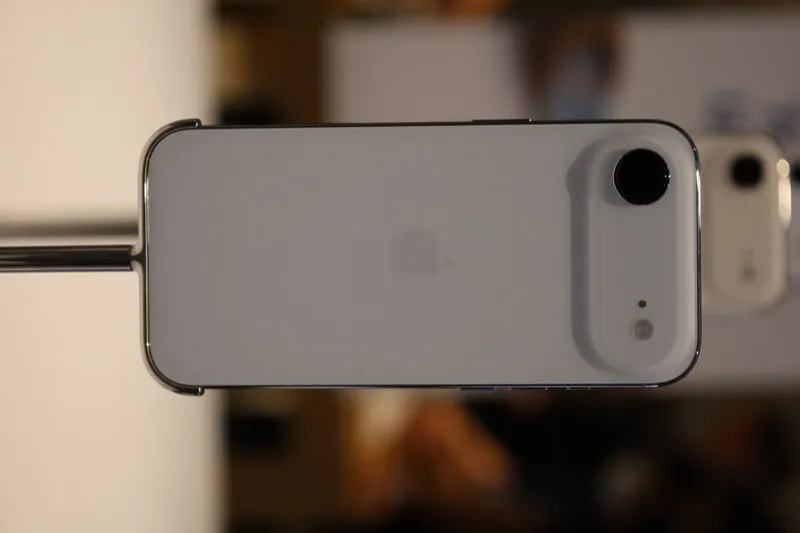
- 5.6mm and 165g — no other flagship comes close, and the difference is obvious the moment you hold it
- Full A19 Pro silicon, not a cut-down chip: the same CPU as the iPhone 17 Pro, with a 5-core rather than 6-core GPU
- 6.5-inch LTPO Super Retina XDR at 120Hz ProMotion with 3,000-nit peak brightness and Ceramic Shield 2 at Mohs level 5
- Grade 5 titanium frame and IP68 to 6m — the thinness does not come with a durability compromise
- 12GB RAM across all storage tiers, and 256GB as the base configuration
- 12:44h measured active use, which beats several much thicker phones despite a 3,149mAh cell
- Discontinued — Apple no longer sells it directly, so you are buying remaining retail, third-party, or refurbished stock
- One rear camera: no ultrawide, no telephoto, no macro, and all zoom is a digital crop
- A single speaker rather than stereo — the most-cited complaint in reviews, noticeably quieter and awkward for voice notes
- Battery lasts a day but with no reserve; Apple tacitly conceded this by reviving a MagSafe battery pack specifically for the Air
- The worst resale value of any iPhone since 2022 at the 1TB tier, and steep depreciation across the range
- eSIM only worldwide, USB-C capped at 2.0 data speeds, and a 5-core GPU that throttles sooner than the 17 Pro's
Android Hire Verdict — Brilliant object, failed product, decent bargain
The iPhone Air is the rare phone whose engineering is more impressive than its record. At 5.6mm and 165g it genuinely startles people who pick it up, the titanium frame resisted the bendgate everyone predicted, and a full A19 Pro means it is fast. It also failed commercially in a way few Apple products ever have — analysts reported production cuts above 80% within two months of launch, sales are estimated at roughly 700,000 activations, and Apple has stopped selling it. At $999 the compromises were indefensible. At the $700-850 the Air fell to, the calculus genuinely changes: if you shoot almost entirely at 1x, rarely rely on speakers, and want the most pleasant object to carry that Apple has made, it is a bargain. Just buy it knowing it is a discontinued product with weak resale and an uncertain successor.
Apple iPhone Air in depth
How Apple got to 5.6mm
Three decisions made the thickness possible. First, a grade 5 titanium frame — stiffer per millimetre than the aluminium used in the iPhone 17, which matters enormously when the chassis is this thin and bending is the obvious failure mode. Second, a single rear camera, which removes the lens stack depth that forces every multi-camera phone into a thicker body or a taller bump. Third, eSIM only: deleting the SIM tray frees a surprising amount of internal volume in a phone with this little depth to work with.
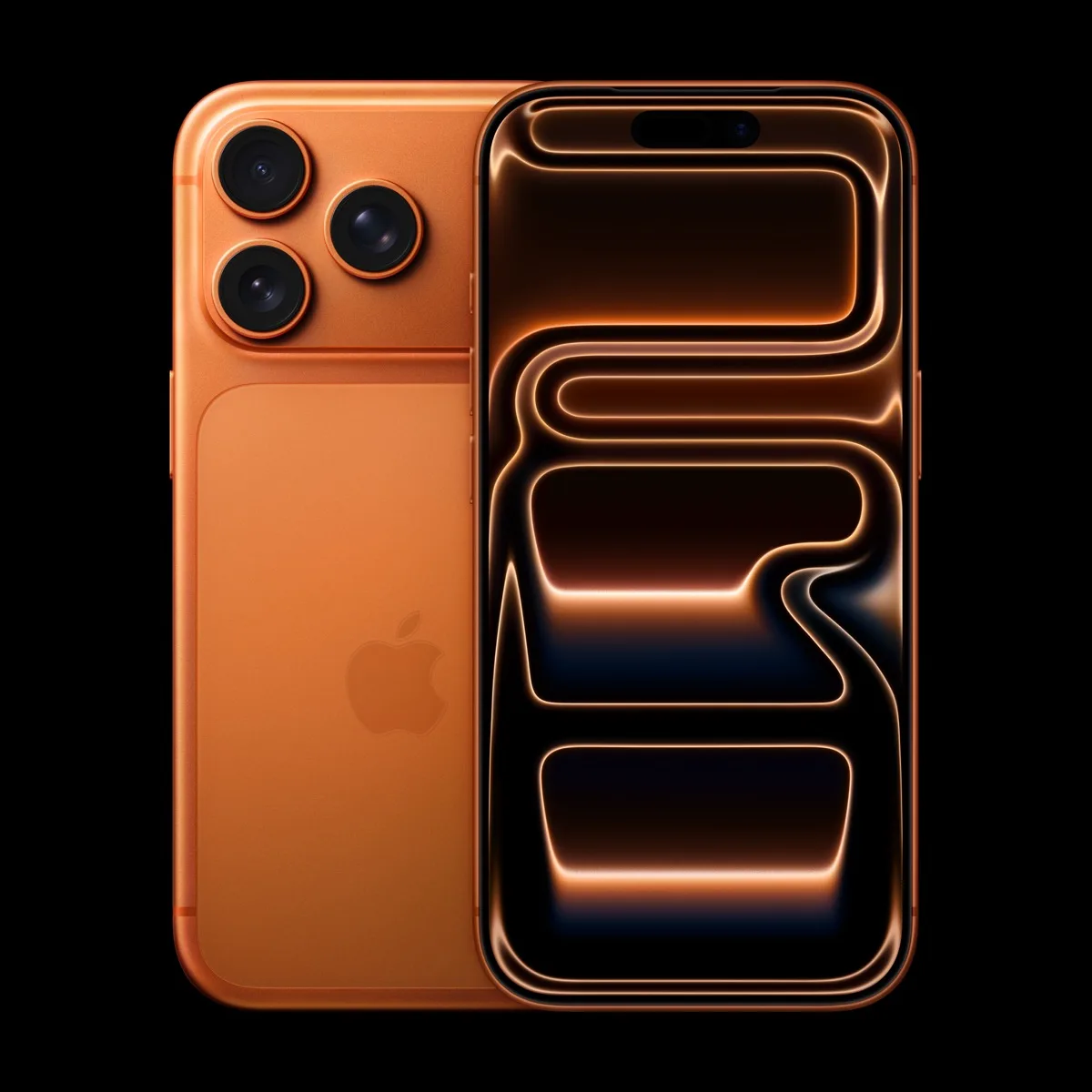
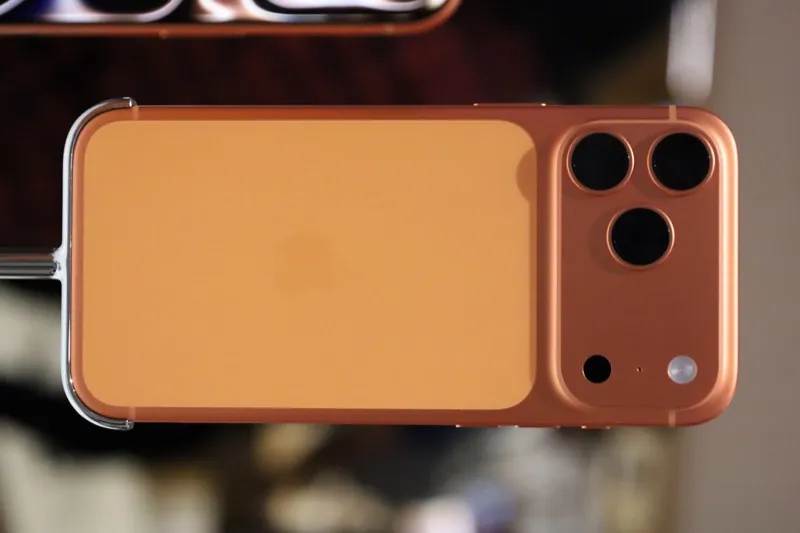
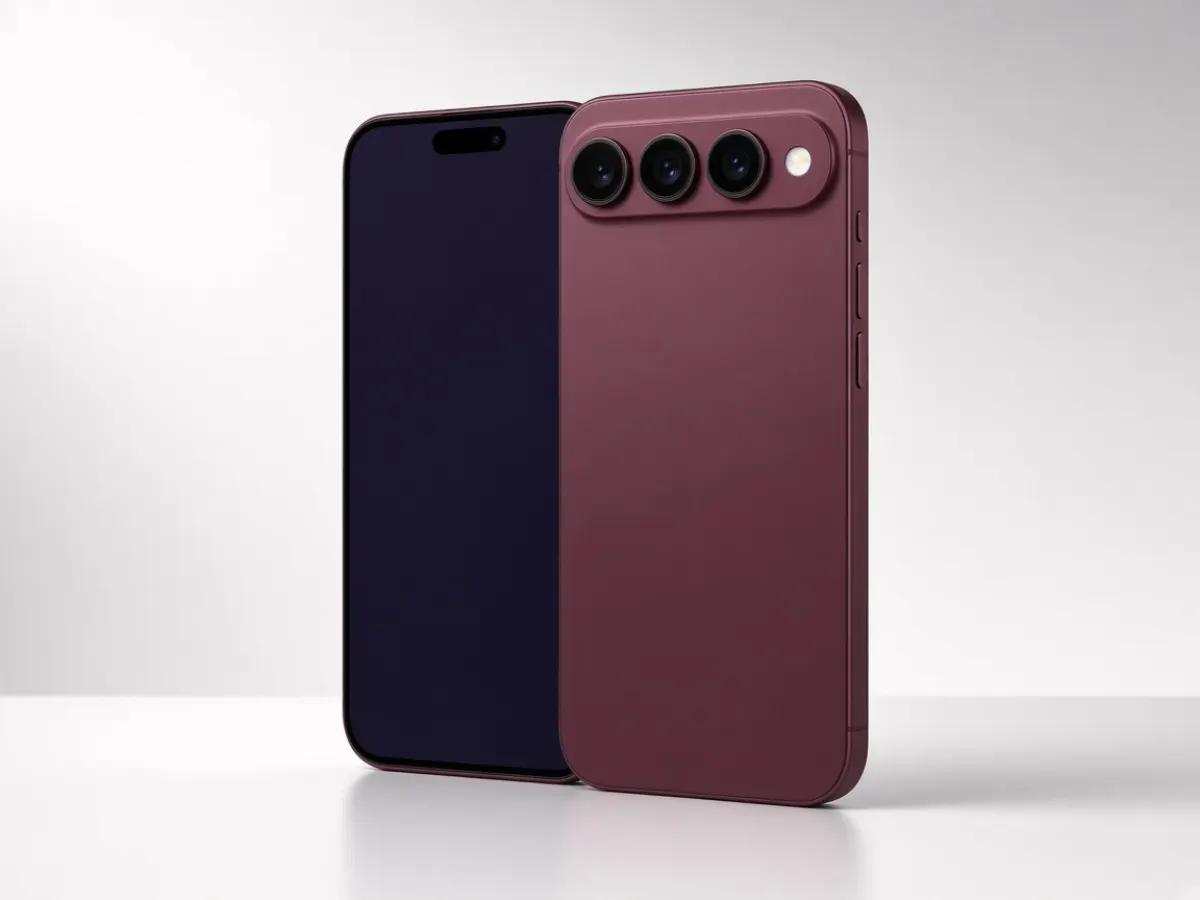
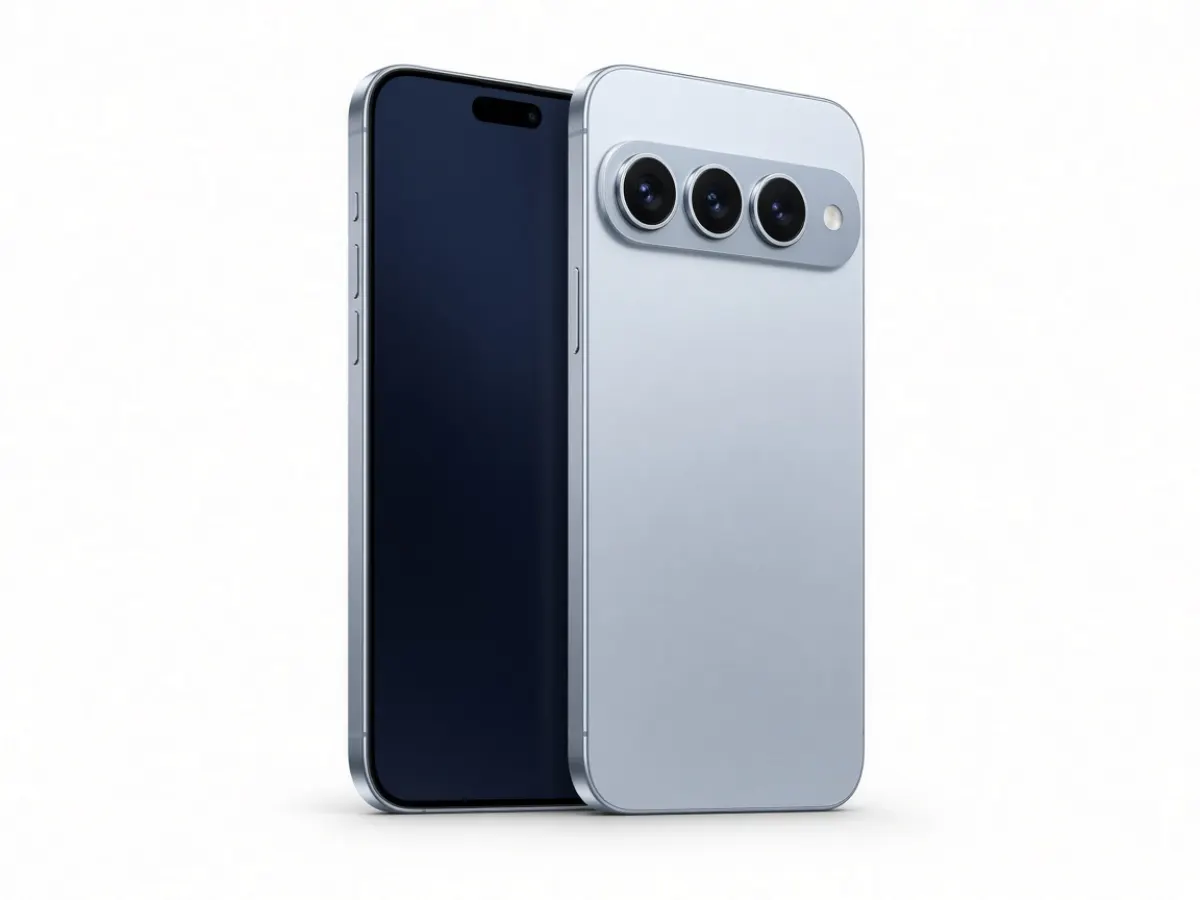
The camera plateau across the top of the back is where the remaining depth went. It houses the 48MP module, the A19 Pro, and the N1 wireless silicon, leaving the rest of the body free for battery. It is a visually divisive design, but it is the reason the phone measures 5.6mm across most of its area rather than only at the edges.
The result weighs 165g. For reference, that is lighter than the iPhone 17 and dramatically lighter than any Pro Max, and the 6.5-inch screen is only marginally smaller than the biggest iPhones.
Battery: 3,149mAh should not last a day, and yet
On paper the Air's cell looks alarming — around 30% smaller than what a comparably sized Android flagship carries. GSMArena's testing returned 12 hours 44 minutes of active use, which is genuinely respectable and better than several thicker phones.
That comes from efficiency rather than capacity. The A19 Pro is a 3nm design, the LTPO panel drops to very low refresh rates when static, and Apple's N1 chip handles Wi-Fi and Bluetooth at lower power than the third-party silicon it replaces. iOS 26's adaptive power management also throttles background work more aggressively on this model than on other iPhones.
The caveat is headroom. A normal day is fine; a heavy day — sustained navigation, hotspot, video capture, long gaming — will run the Air down faster than an iPhone 17 Pro, and there is no reserve to absorb it. Apple's answer is a MagSafe battery pack built specifically for the Air, which tells you the company knows this is the trade.
One camera: what you actually lose
The rear system is a single 48MP f/1.6 sensor at 26mm equivalent, 1/1.56", with dual pixel PDAF and sensor-shift OIS. It is a good main camera and it shoots 4K60 Dolby Vision.
What is missing is everything either side of 1x. There is no ultrawide, so no 0.5x landscapes, no close-focus macro, and no wide group shots in tight rooms. There is no telephoto, so 2x is a centre crop of the 48MP sensor — usable in daylight, soft indoors — and anything beyond that degrades quickly.
The 18MP front camera is more interesting than usual: it is multi-aspect with Center Stage, meaning it can shoot landscape framing while you hold the phone in portrait, and it automatically widens for group selfies.
The realistic assessment: if you review your camera roll and nearly everything is shot at 1x, you lose almost nothing. If you regularly use 0.5x or 3x, you are giving up a lot of the iPhone camera system for a thinner phone.
What happened: why Apple discontinued the iPhone Air
The iPhone Air is the clearest commercial failure in Apple's recent flagship history, and understanding why matters if you are considering buying one now.
Within roughly six weeks of the September 2025 launch, supply-chain analysts reported the collapse. Ming-Chi Kuo said Apple had asked suppliers to cut capacity by more than 80% through Q1 2026 and to discontinue long-lead components by the end of 2025. Nikkei reported November orders running at under 10% of September volume. Mizuho Securities noted Apple cut roughly a million Air units while simultaneously raising orders for every other iPhone 17 model — the Air was the sole weak point in an otherwise strong cycle. A KeyBanc survey described "virtually no demand."
By late October 2025, Foxconn had reportedly dismantled its Air assembly lines and Luxshare had stopped production. Estimates published in 2026 put lifetime sales at roughly 700,000 activations, reached only after repeated discounting. Apple no longer sells the Air directly.
Two important caveats. First, all of this is analyst and supply-chain reporting — Apple has never publicly commented on Air sales, and at least one outlet has questioned whether the cuts happened exactly as described. Second, a credible counter-reading exists: several analysts argue the Air was always partly a manufacturing rehearsal for Apple's foldable iPhone, proving out ultra-thin components at retail scale. On that view it was less a failed phone than an expensive dress rehearsal.
The industry consequence was real regardless. Samsung's comparable Galaxy S25 Edge sold around 1.31 million units and Samsung shelved its ultra-thin roadmap; several rivals dropped similar projects. The Air did not just fail — it closed the category.
Should you buy a discontinued iPhone Air in 2026?
This is now the only question that matters, and the answer is more positive than the sales record suggests.
The case against is straightforward. It is discontinued, so you are buying remaining or refurbished stock with no guarantee of easy replacement. Resale value has collapsed — the 1TB model has depreciated worse than any iPhone since 2022. The single speaker and single camera are permanent limitations, not things a software update fixes. And the successor picture is murky: reporting on an iPhone Air 2 is contested, with Bloomberg's Mark Gurman indicating it was never planned for 2026 and spring 2027 alongside the standard iPhone 18 being the most credible target.
The case for is the price. At $999 the compromises were genuinely hard to justify against a $799 iPhone 17 that had two cameras and stereo speakers. At the $700-850 the Air fell to, you are getting a titanium-framed phone with a full A19 Pro, a 120Hz LTPO display, 12GB of RAM, 256GB of storage, and IP68 to 6m — for less than a base iPhone 17 cost at launch. Software support is not a concern; Apple supports iPhones for many years regardless of commercial performance.
The honest recommendation: audit your own camera roll first. If nearly every photo is shot at 1x and you rarely rely on phone speakers, the Air at a discount is one of the better value buys in Apple's recent range and a genuinely lovely object to carry. If you regularly shoot ultrawide, zoom, or watch video without headphones, buy an iPhone 17 instead — the compromises will annoy you daily regardless of what you paid.
The single speaker, and why reviewers kept mentioning it
Almost every published review flags the same thing, and it is the compromise most buyers underestimate. The iPhone Air has one speaker, located in the earpiece. The grilles along the bottom edge are microphones, not a second driver.
In practice this means noticeably lower maximum volume than any other current iPhone, no stereo separation when watching video in landscape, and audio that is easy to muffle with a hand. Accessibility reviewers have raised a further point: because the only speaker is the earpiece, users listening to voice notes or speakerphone audio sometimes hold the phone in unexpected positions to hear it clearly.
It is not a defect and it is not fixable — the driver space simply did not exist in a 5.6mm chassis. But if you regularly watch video, listen to podcasts, or take speakerphone calls without headphones, this will affect you more often than the missing ultrawide camera will.
iPhone Air vs iPhone 17 vs iPhone 17 Pro
At launch the Air sat awkwardly: $200 above the iPhone 17, which offered a dual-camera system with an ultrawide, stereo speakers, and a larger battery in a body still thin by normal standards. That gap is what sank it.
Discounted, the comparison inverts. An Air at $750-850 undercuts a full-price iPhone 17 while offering the A19 Pro instead of the standard A19, 12GB of RAM instead of 8GB, 256GB of storage instead of 128GB, and a titanium rather than aluminium frame. You still give up the ultrawide and the second speaker.
The iPhone 17 Pro remains the choice if you want the complete package — a vapour chamber for sustained performance, a 6-core GPU, and three 48MP cameras including a 4x telephoto — and will accept substantially more weight and cost for it.
Apple iPhone Air benchmarks
Figures reflect typical published A19 Pro results for the iPhone Air's 5-core GPU configuration; the 6-core GPU in the iPhone 17 Pro scores meaningfully higher in graphics tests. CPU performance is effectively identical to the 17 Pro, but the Air lacks the Pro's vapour chamber, so sustained scores fall further under prolonged load.
Apple iPhone Air vs the competition
How the Apple iPhone Air compares against the Apple iPhone 17 Pro Max, the Apple iPhone 18 Pro and the Apple iPhone 17 Pro — its closest rivals in our directory.
| Spec | Apple iPhone Air | Apple iPhone 17 Pro Max | Apple iPhone 18 Pro | Apple iPhone 17 Pro |
|---|---|---|---|---|
| Launch price | $999 | $1,199 | $1,199 | $1,099 |
| Display | 6.5" LTPO OLED 120Hz | 6.9" LTPO OLED 120Hz | 6.3" LTPO OLED 120Hz | 6.3" LTPO Super Retina XDR OLED, 120Hz |
| Chipset | Apple A19 Pro | Apple A19 Pro (6-core GPU) | Apple A20 Pro (2nm) | Apple A19 Pro (3nm) |
| Camera | 48MP single, sensor-shift OIS | 48MP triple, 4x tele | 48MP variable aperture | 48MP triple (wide + ultrawide + 4x telephoto), OIS |
| Battery | 3149mAh · 20W MagSafe | 4823mAh · 17:58h tested | Up to 36h video (eSIM) | 3998mAh · 25W wired / 25W MagSafe |
| AnTuTu 10 | — | ~2,600,000 | ~3,100,000 (est.) | ~2,430,000 |
| Our score | 74/100 | 91/100 | 92/100 | 93/100 |
Apple iPhone Air full specifications
Launch
- Announced
- 2025, September 9
- Released
- 2025, September 19
- Status
- Discontinued — no longer sold by Apple; available via third-party and refurbished stock
Network
- Technology
- GSM / CDMA / HSPA / EVDO / LTE / 5G
- 5G bands
- Sub-6 and mmWave, varying by model (A3517 / A3260 / A3518)
- Speed
- HSPA, LTE, 5G, EV-DO Rev.A 3.1 Mbps
Body
- Dimensions
- 156.2 x 74.7 x 5.6 mm
- Weight
- 165 g
- Build
- Ceramic Shield 2 front, grade 5 titanium frame, glass back
- SIM
- eSIM only (8 or more profiles, max 2 active) — no physical SIM tray
- Durability
- IP68 dust-tight and water-resistant (immersible up to 6m for 30 min)
Display
- Type
- LTPO Super Retina XDR OLED, 120Hz ProMotion, HDR10, Dolby Vision
- Brightness
- 1000 nits (typ), 1600 nits (HBM), 3000 nits (peak)
- Size
- 6.5 inches (~89.9% screen-to-body ratio)
- Resolution
- 1260 x 2736 pixels, 19.5:9, ~460 ppi
- Protection
- Ceramic Shield 2, Mohs level 5, anti-reflective coating
Platform
- OS
- iOS 26, upgradable to iOS 26.6
- Chipset
- Apple A19 Pro (3nm)
- CPU
- Hexa-core (2x4.26 GHz & 4x2.60 GHz)
- GPU
- Apple GPU (5-core graphics)
Memory
- Card slot
- No
- Internal
- 256GB 12GB RAM, 512GB 12GB RAM, 1TB 12GB RAM
- Technology
- NVMe
Main Camera
- Setup
- Single: 48 MP (wide)
- Wide
- 48 MP, f/1.6, 26mm, 1/1.56", 1.0µm, dual pixel PDAF, sensor-shift OIS
- Zoom
- 2x via sensor crop — no ultrawide, no telephoto
- Features
- Dual-LED dual-tone flash, HDR, Photonic Engine
- Video
- 4K@24/25/30/60fps, 1080p@25/30/60/120/240fps, HDR, Dolby Vision HDR
Selfie Camera
- Single
- 18 MP multi-aspect, f/1.9, 20mm (ultrawide), PDAF, Center Stage
- Biometrics
- SL 3D depth/biometrics sensor (Face ID)
- Video
- 4K@24/25/30/60fps, 1080p@25/30/60/120fps, gyro-EIS
Sound
- Loudspeaker
- Yes — single speaker, not stereo
- 3.5mm jack
- No
Comms
- Wi-Fi
- 802.11 a/b/g/n/ac/6e/7, tri-band, hotspot (Apple N1 chip)
- Bluetooth
- 6.0, A2DP, LE
- Positioning
- GPS, GALILEO, GLONASS, QZSS, BDS, NavIC
- NFC
- Yes
- USB
- USB Type-C 2.0
Features
- Biometrics
- Face ID
- Sensors
- Accelerometer, gyro, proximity, compass, barometer
- Other
- Ultra Wideband (gen2); Emergency SOS, Messages and Find My via satellite
Battery
- Type
- Li-Ion 3149 mAh, non-removable
- Charging
- Wired PD2.0 (50% in 30 min), 20W MagSafe/Qi2 wireless, 4.5W reverse wired
- Tested endurance
- 12:44h active use (GSMArena)
Misc
- Colors
- Space Black, Cloud White, Light Gold, Sky Blue
- Models
- iPhone18,4 — A3517, A3260, A3518, A3516
- Price
- $999 US launch price (256GB); £999 UK; ₹1,19,900 India
Apple iPhone Air FAQ
Did the iPhone Air get discontinued, and why?
Yes. Apple no longer sells the iPhone Air directly, and it is believed to be out of production. Supply-chain analysts reported Apple cutting production capacity by more than 80% within about six weeks of the September 2025 launch, with November orders running below 10% of September volume. Estimated lifetime sales are around 700,000 activations — extremely low for an Apple flagship — reached only after repeated discounts. Apple has never publicly commented, so this rests on analyst and supply-chain reporting rather than official confirmation.
Is the iPhone Air still worth buying in 2026?
At a discount, yes — with conditions. The original $999 price made its compromises hard to justify against a $799 iPhone 17. At the $700-850 range it fell to, you get a titanium frame, a full A19 Pro, a 120Hz LTPO display, 12GB of RAM, and 256GB of storage for less than a base iPhone 17 cost new. Buy it if you shoot almost entirely at 1x and rarely rely on phone speakers. Avoid it if you regularly use ultrawide or zoom, or watch video without headphones. Software support is not a concern — Apple supports iPhones for years regardless of sales.
How much does the iPhone Air cost now?
It launched at $999 for 256GB (rising to $1,399 for 1TB), with no 128GB tier and 12GB of RAM across every configuration. Prices fell sharply and repeatedly: UK pricing dropped from £999 to £799 by February 2026, and US retail reached about $850 at Best Buy by May 2026. Since Apple stopped selling it directly, remaining stock comes via third-party retailers and refurbished channels, generally lower still.
Why does the iPhone Air only have one speaker?
There was no room for a second driver in a 5.6mm chassis. The Air's only speaker is in the earpiece — the grilles along the bottom edge are microphones. The practical effects are noticeably lower maximum volume than other iPhones, no stereo separation in landscape video, and audio that's easy to muffle with a hand. It's the single most frequently raised complaint across published reviews.
How thin is the iPhone Air, and does it bend?
It measures 5.6mm at its thinnest point and weighs 165g, making it the thinnest iPhone Apple has ever shipped. It uses a grade 5 titanium frame specifically to resist bending; independent stress testing has found it substantially stiffer than the aluminium-framed iPhone 17 despite being much thinner.
Does the iPhone Air have a physical SIM slot?
No. The iPhone Air is eSIM-only in every market, including regions where other iPhones still ship with a SIM tray. It supports eight or more stored eSIM profiles with two active at once. Removing the tray was one of the design changes that made the 5.6mm thickness possible.
How many cameras does the iPhone Air have?
One on the back: a 48MP f/1.6 wide with sensor-shift OIS and dual pixel PDAF. There is no ultrawide and no telephoto, so 0.5x shots are not possible and 2x zoom is a crop from the main sensor. The front camera is an 18MP multi-aspect unit with Center Stage that can shoot landscape framing while the phone is held upright.
Is the iPhone Air's battery life actually good?
Better than the 3,149mAh capacity suggests. Independent testing measured about 12 hours 44 minutes of active use, thanks to the efficient 3nm A19 Pro, an LTPO panel that drops to low refresh rates when idle, and Apple's own N1 wireless chip. It is a comfortable single day for typical use, but there is little reserve for heavy days — Apple sells a dedicated MagSafe battery pack for the Air.
Is the iPhone Air waterproof?
It carries an IP68 rating certified to 6m for 30 minutes — the same as the rest of the iPhone 17 family, and deeper than most Android flagships. The thin chassis does not come with any water-resistance compromise. The display is Ceramic Shield 2 at Mohs level 5 with an anti-reflective coating.
Explore other phones