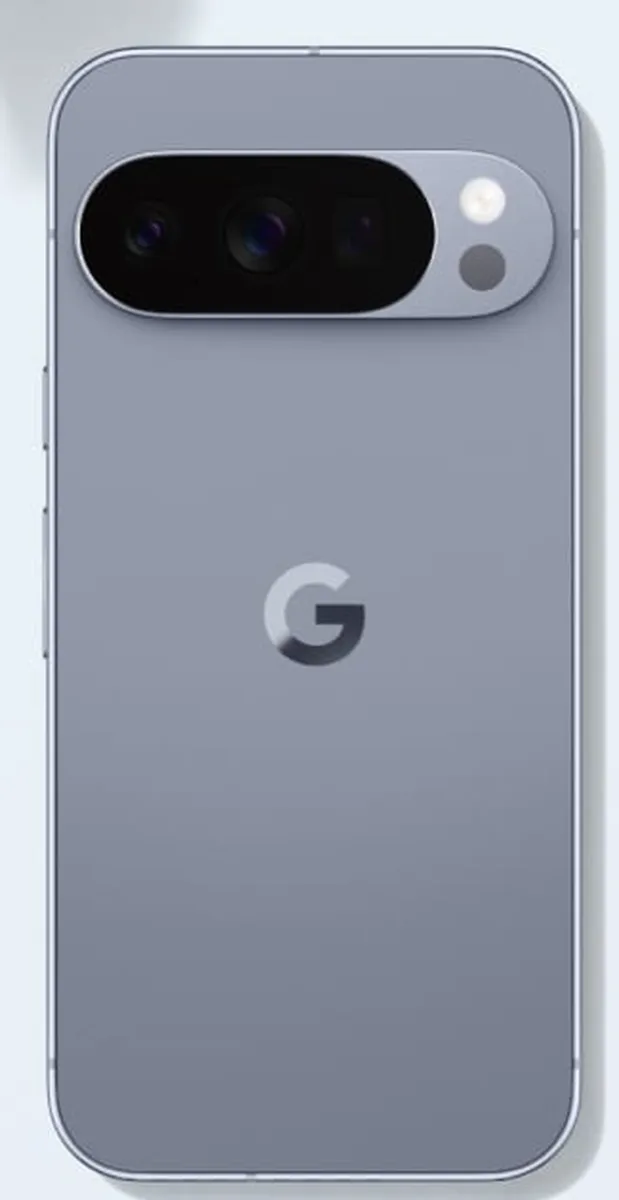
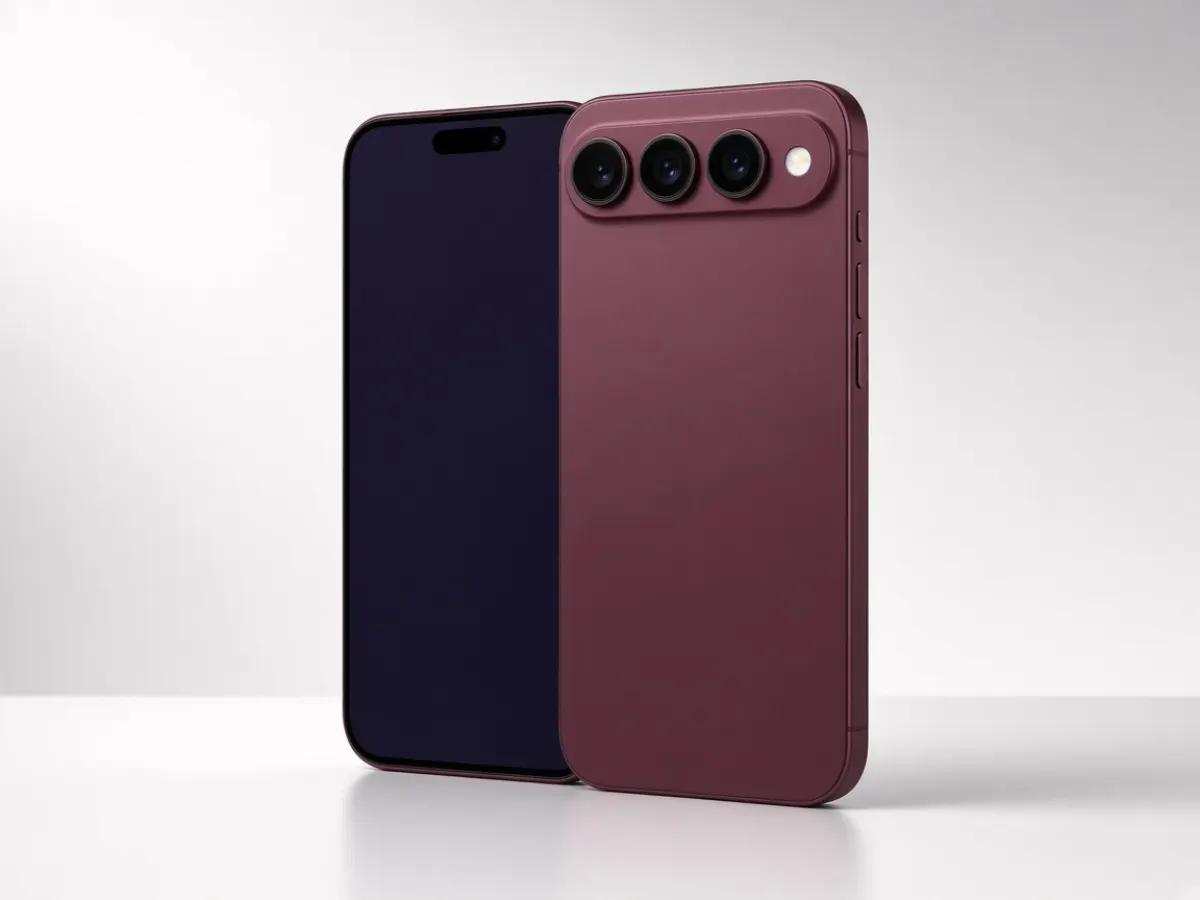
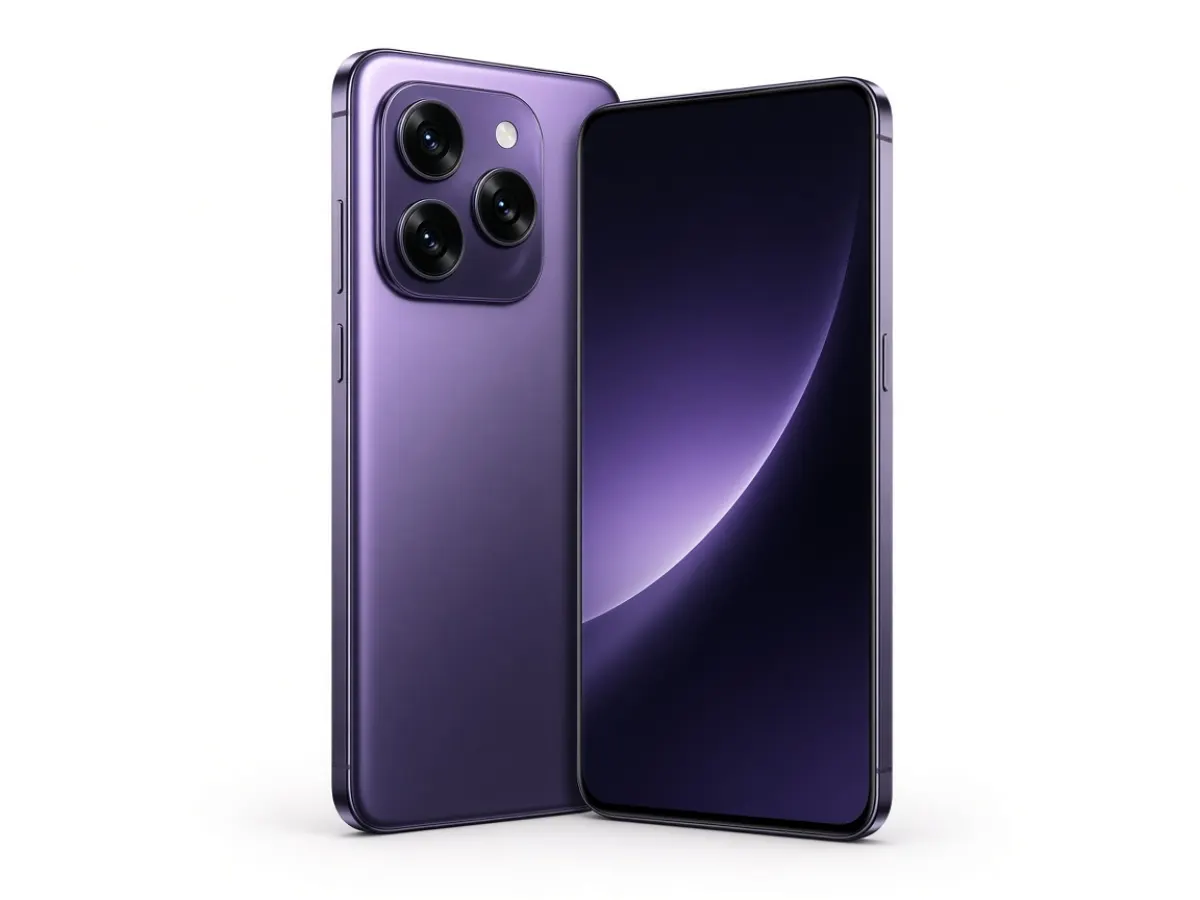
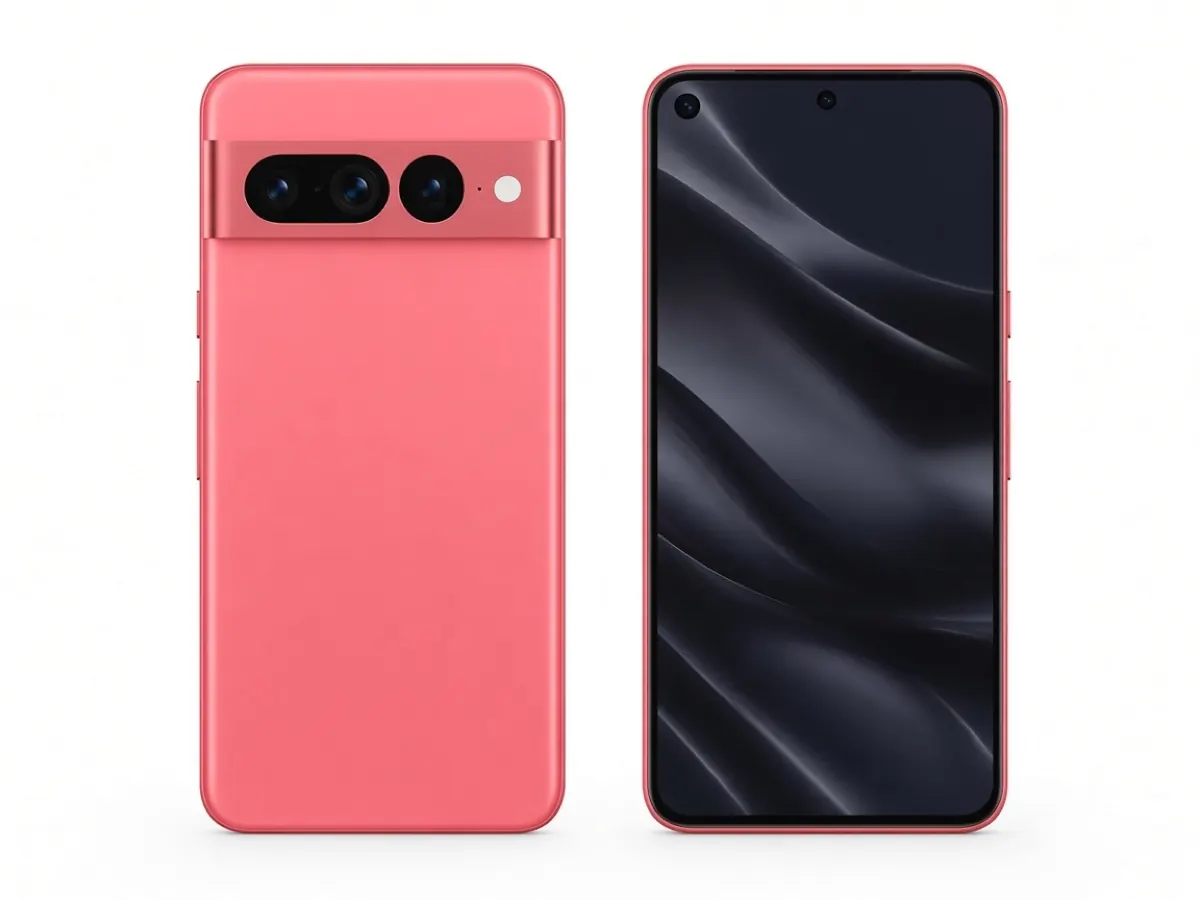
Google Pixel 10 Pro XL
Specs, US price, release date, and Android Hire verdict
Google's biggest Pixel gains a true 5x periscope telephoto across the whole Pro lineup, a 5200mAh battery, and Tensor G5 — the first Tensor chip built on TSMC's process instead of Samsung's.

- 5x periscope telephoto (113mm) with dual pixel PDAF and OIS is a genuine reach upgrade over the 10 Pro's shared sensor generation
- 16GB RAM is now standard across every storage tier, including the base 256GB model
- 5200mAh battery with 45W wired charging — the fastest Google has shipped, though independent testing lands nearer 64% in 30 minutes than the advertised 70%
- Pixelsnap puts real magnets inside the phone — unlike Samsung's "Qi2 Ready" flagships, which need a magnetic case to use Qi2 accessories at all
- 3300 nits peak display brightness and a measured 2,340 nits in GSMArena's lab test — genuinely class-leading outdoor visibility
- 7 years of guaranteed OS and security updates, and the AI features (Magic Cue, Camera Coach, Call Notes) are the real generational upgrade over the Pixel 9 series
- Tensor G5 still trails Snapdragon 8 Elite by roughly 30% on single-core, and the TSMC move did not fix sustained load — the CPU starts throttling after about two minutes and settles near 61% of peak
- The GPU is the weak point and a full year of updates has not fixed it; sustained gaming remains poor for a $1,199 phone
- 45W is a ceiling, not a rate — real-world peak lands around 37-39W, GSMArena measured 64% in 30 minutes against Google's 70% claim, and there's no charger in the box
- The bigger 5,200mAh battery delivers no meaningful endurance advantage over the smaller Pixel 10 Pro — 12:29h tested is mid-pack for the price
- 232g and 8.5mm is heavy and thick, and the design is visually unchanged from the Pixel 9 Pro XL
- Reported Exynos 5400 modem issues — dropped calls and slow network reacquisition — persist from the Pixel 9 generation
Android Hire Verdict — Camera and updates carry it; the silicon doesn't
The Pixel 10 Pro XL is the best camera phone Google has made and, thanks to Pixelsnap magnets and a seven-year update promise, one of the easiest Android flagships to live with long-term. It is not the fastest phone at $1,199, and the gap is not just a benchmark abstraction: Tensor G5 throttles hard under sustained load, the GPU is a genuine weak point that a year of updates hasn't fixed, and charging falls short of its own advertised figure. Buy it for the 5x periscope, the computational photography, and the update runway. If you play demanding games or want the fastest silicon per dollar, a Snapdragon 8 Elite phone beats it comfortably — and with the Pixel 11 due imminently, discounted stock is now the smartest way to buy this one.
Google Pixel 10 Pro XL in depth
Pixel 10 Pro XL vs Pixel 10 Pro: the honest answer is "buy the smaller one"
This is the comparison most Pixel buyers are actually weighing, and it has a clearer answer than Google would like. The two phones share the same Tensor G5, the same 16GB of RAM, the same triple camera system, and the same seven-year update promise. The XL adds a 6.8-inch display instead of 6.3, a 5,200mAh battery instead of 4,870mAh, and faster charging.
The problem is that the larger battery does not translate into longer use. GSMArena measured 12:29h of active use on the XL — effectively the same as the smaller Pro, because the bigger, brighter panel consumes the extra capacity it gains. Reviewers have converged on this point repeatedly: there is no endurance advantage to the XL.
That leaves screen size and charging speed as the only real differentiators, for a $100-200 premium and 25g of extra weight. If you want a big screen, buy the XL. If you were buying it expecting better battery life, buy the Pro and save the money.
Tensor G5: what the TSMC move did and didn't fix
Tensor G5 is the first Google chip built by TSMC rather than Samsung Foundry, on a 3nm process. That change was widely expected to close the gap with Qualcomm and Apple. It partly did — everyday thermals improved and the phone runs cooler than Tensor G4 devices — but the headline problems remain.
Single-core CPU performance still sits roughly 30% behind Snapdragon 8 Elite and Dimensity 9400. More importantly, sustained performance did not improve as much as the foundry change implied: in extended CPU throttling tests the G5 begins dropping after about two minutes and settles near 61% of its peak, attempting a partial recovery around the eight-minute mark before fading again.
The GPU is the sharper failure. Google paired the new CPU with an Imagination-derived GPU that underperforms its price class, and a full year of Android feature drops has not resolved sustained gaming performance. If you play demanding titles, this is the specification that will disappoint you.
What Tensor G5 does do well is the job Google actually built it for: running on-device AI models for computational photography, Magic Cue, Call Notes, and live translation. Judge it on that and it succeeds. Judge it as flagship silicon at a flagship price and it does not.
Charging: why you won't see 45W
Google advertises up to 45W wired charging on the Pro XL and claims 70% in 30 minutes. Independent testing does not reach that. GSMArena measured 64% in 30 minutes with a full charge taking about 1 hour 22 minutes, and multiple outlets put real-world peak draw closer to 37-39W rather than the headline 45W.
The reason is thermal gating. The Pixel 10 series throttles charging more aggressively than previous Pixels once the battery passes roughly 38°C, so the peak figure is a brief ceiling rather than a sustained rate. This is a specification ceiling, not a defect — Google has not revised the claim and there was no recall or correction.
Two practical notes before you buy. There is no charger in the box, and reaching anywhere near peak speed requires a USB Power Delivery PPS charger rated 30W or higher plus a 60W-rated cable. Budget for that separately.
Pixelsnap: the magnet advantage over Samsung
Every Pixel 10 model, including the Pro XL, has magnets physically built into the phone — Google's Pixelsnap system, making it the first major Android manufacturer to ship true Qi2 hardware rather than a compatibility promise.
The contrast with Samsung is direct and worth understanding before you buy accessories. Samsung's Galaxy S25 and S26 flagships are labelled "Qi2 Ready," which means they support the standard's charging speeds but contain no magnets. To use a Qi2 charger, magnetic power bank, wallet, or car mount with a Galaxy, you must buy a case with magnets in it. With a Pixel 10 Pro XL, those accessories simply attach.
The Pro XL is also the only Pixel 10 model with Qi2.2 at 25W; the standard Pixel 10 and 10 Pro cap out at 15W. One caveat from testing: hitting the full 25W requires close alignment, and being a few millimetres off drops the rate substantially.
Google Pixel 10 Pro XL benchmarks
GSMArena's tested figures for a retail Pixel 10 Pro XL with Tensor G5. The gap to Snapdragon 8 Elite devices is largest in sustained GPU work — 3DMark sits roughly half the Galaxy S25+'s score — while single-core CPU performance is closer, since Tensor G5's job is mostly AI and camera pipeline acceleration rather than raw throughput.
Google Pixel 10 Pro XL vs the competition
How the Google Pixel 10 Pro XL compares against the Google Pixel 10 Pro, the Google Pixel 11 Pro and the Google Pixel 11 Pro XL — its closest rivals in our directory.
| Spec | Google Pixel 10 Pro XL | Google Pixel 10 Pro | Google Pixel 11 Pro | Google Pixel 11 Pro XL |
|---|---|---|---|---|
| Launch price | $1,199 | $999 | $1,099 | $1,299 |
| Display | 6.8" LTPO OLED 120Hz | 6.3" LTPO OLED 120Hz | 6.3" LTPO OLED 120Hz | 6.8" LTPO OLED 120Hz |
| Chipset | Google Tensor G5 | Google Tensor G5 | Google Tensor G6 | Google Tensor G6 |
| Camera | 50MP + 48MP 5x + 48MP UW | 50MP OIS + 5x telephoto | 50MP + 48MP 5x + 48MP UW | 50MP + 48MP 5x + 48MP UW |
| Battery | 5200mAh · 45W wired | 4870mAh · 30W | 4850mAh · 30W / 25W Qi2.2 | 5115mAh · 45W / 25W Qi2.2 |
| AnTuTu 10 | ~1,423,000 | ~1,300,000 | ~1,460,000 | ~1,611,000 |
| Our score | 86/100 | 86/100 | 88/100 | 89/100 |
Google Pixel 10 Pro XL full specifications
Launch
- Announced
- 2025, August 20
- Released
- 2025, August 28
- Status
- Available
Network
- Technology
- GSM / HSPA / LTE / 5G
- 5G bands
- Bands 1-79, SA/NSA/Sub6/mmWave (varies by region and model)
- Speed
- HSPA, LTE, 5G
Body
- Dimensions
- 162.8 x 76.6 x 8.5 mm
- Weight
- 232 g
- Build
- Gorilla Glass Victus 2 front and back, aluminum frame
- SIM
- Nano-SIM + eSIM or dual eSIM (8+ profiles, max 2 active; US)
- Durability
- IP68 dust-tight and water-resistant (immersible up to 1.5m for 30 min)
Display
- Type
- LTPO OLED, 120Hz, HDR10+, 2200 nits (HBM), 3300 nits (peak)
- Size
- 6.8 inches (~88% screen-to-body ratio)
- Resolution
- 1344 x 2992 pixels, 20:9, ~486 ppi
- Protection
- Corning Gorilla Glass Victus 2, Mohs level 4
Platform
- OS
- Android 16; 7 major OS updates and 7 years of security updates guaranteed
- Chipset
- Google Tensor G5 (3nm, TSMC)
- CPU
- Octa-core (1x3.78 GHz Cortex-X4, 5x3.05 GHz Cortex-A725, 2x2.25 GHz Cortex-A520)
- GPU
- PowerVR DXT-48-1536
Memory
- Card slot
- No
- Internal
- 256GB/512GB/1TB, 16GB RAM across all tiers
- Technology
- UFS 4.0
Main Camera
- Setup
- Triple: 50 MP (wide) + 48 MP (periscope telephoto) + 48 MP (ultrawide)
- Wide
- 50 MP, f/1.7, 25mm, 1/1.31", 1.2µm, dual pixel PDAF, OIS
- Telephoto
- 48 MP, f/2.8, 113mm, 1/2.55", dual pixel PDAF, OIS, 5x optical zoom
- Ultrawide
- 48 MP, f/1.7, 123°, 1/2.55", dual pixel PDAF
- Features
- Multi-zone laser AF, LED flash, Pixel Shift, Ultra-HDR, Best Take, Zoom Enhance
- Video
- 8K@30fps (cloud upscaling), 4K@24/30/60fps, 1080p@24/30/60/120/240fps, gyro-EIS, OIS, 10-bit HDR
Selfie Camera
- Single
- 42 MP, f/2.2, 17mm (ultrawide), PDAF
- Features
- HDR, panorama
- Video
- 4K@30/60fps, 1080p@30/60fps
Sound
- Loudspeaker
- Yes, with stereo speakers
- 3.5mm jack
- No
Comms
- Wi-Fi
- 802.11 a/b/g/n/ac/6e/7, tri-band
- Bluetooth
- 6.0, A2DP, LE, aptX HD
- Positioning
- GPS (L1+L5), GLONASS, GALILEO, BDS, QZSS, NavIC
- NFC
- Yes
- USB
- USB Type-C 3.2
Features
- Fingerprint
- Under-display, ultrasonic
- Sensors
- Accelerometer, gyro, proximity, compass, barometer, skin thermometer
- Other
- Ultra Wideband (UWB), satellite SOS service
Battery
- Type
- Li-Ion 5200 mAh, non-removable
- Charging
- 45W wired peak (PD3.0/PPS; Google claims 70% in 30 min, GSMArena measured 64%), 25W Qi2.2 wireless with built-in Pixelsnap magnets, reverse wired, bypass charging
- Tested endurance
- 12:29h active use (GSMArena)
Misc
- Colors
- Moonstone, Jade, Porcelain, Obsidian
- Models
- G45RY, GUL82, GYPW4
- Price
- $1,199 US launch price (16GB + 256GB); £999 UK; ₹1,29,999 India
Google Pixel 10 Pro XL FAQ
Is the Pixel 10 Pro XL worth it over the Pixel 10 Pro?
Only if you specifically want the larger screen. The two share the same Tensor G5, the same 16GB RAM, and the same cameras. Critically, the XL's larger 5,200mAh battery delivers no meaningful endurance advantage — GSMArena measured 12:29h active use, essentially matching the smaller Pro, because the bigger and brighter display consumes the extra capacity. If you were paying the premium expecting longer battery life, you won't get it.
How much does the Google Pixel 10 Pro XL cost?
It launched at $1,199 for 256GB, $1,319 for 512GB, and $1,549 for 1TB, with 16GB RAM standard on every tier and no 128GB option. Since launch, discounts have been steep — Amazon has run the 256GB model at $300 off — and with the Pixel 11 generation arriving, discounted Pixel 10 Pro XL stock is now the most sensible way to buy one.
Does the Pixel 10 Pro XL overheat or throttle?
Everyday thermals improved over Tensor G4 thanks to the move to TSMC's 3nm process, and the phone runs cooler in normal use. Sustained load is a different story: in extended CPU testing Tensor G5 begins throttling after roughly two minutes and settles near 61% of peak performance. Gaming is where this shows most, and a year of software updates has not resolved it.
Does the Pixel 10 Pro XL have magnets for MagSafe-style accessories?
Yes. Google's Pixelsnap system puts magnets physically inside the phone, making the Pixel 10 line the first major Android range with true built-in Qi2 hardware. Magnetic chargers, power banks, wallets, and car mounts attach directly with no special case required — unlike Samsung's "Qi2 Ready" Galaxy flagships, which need a magnetic case. The Pro XL is also the only Pixel 10 model supporting Qi2.2 at 25W.
Is Tensor G5 good for gaming?
No — this is the Pixel 10 Pro XL's clearest weakness. The Imagination-derived GPU scores around 3,332 in 3DMark Wild Life Extreme, roughly half what Snapdragon 8 Elite phones manage, and sustained frame rates drop as the chip throttles. Google optimised Tensor G5 for on-device AI and camera processing rather than graphics throughput. For demanding games at this price, a Snapdragon 8 Elite phone is substantially better.
How long does the Pixel 10 Pro XL get software updates?
Google guarantees 7 years of major Android OS upgrades, security patches, and Pixel Feature Drops from its August 2025 launch — support running through 2032. That matches Samsung's Galaxy S line and Apple's iPhone support window, and it is now arguably the strongest single argument for buying a Pixel.
How fast does the Pixel 10 Pro XL charge?
45W is a peak ceiling rather than a sustained rate. Google advertises 70% in 30 minutes, but GSMArena measured 64%, with a full charge taking about 1 hour 22 minutes — and independent testing puts real-world peak draw closer to 37-39W. You also need to supply your own charger: there's none in the box, and you need a USB-PD PPS unit rated 30W or higher to approach those speeds. Wireless is 25W Qi2.2 with magnets built into the phone.
Explore other phones