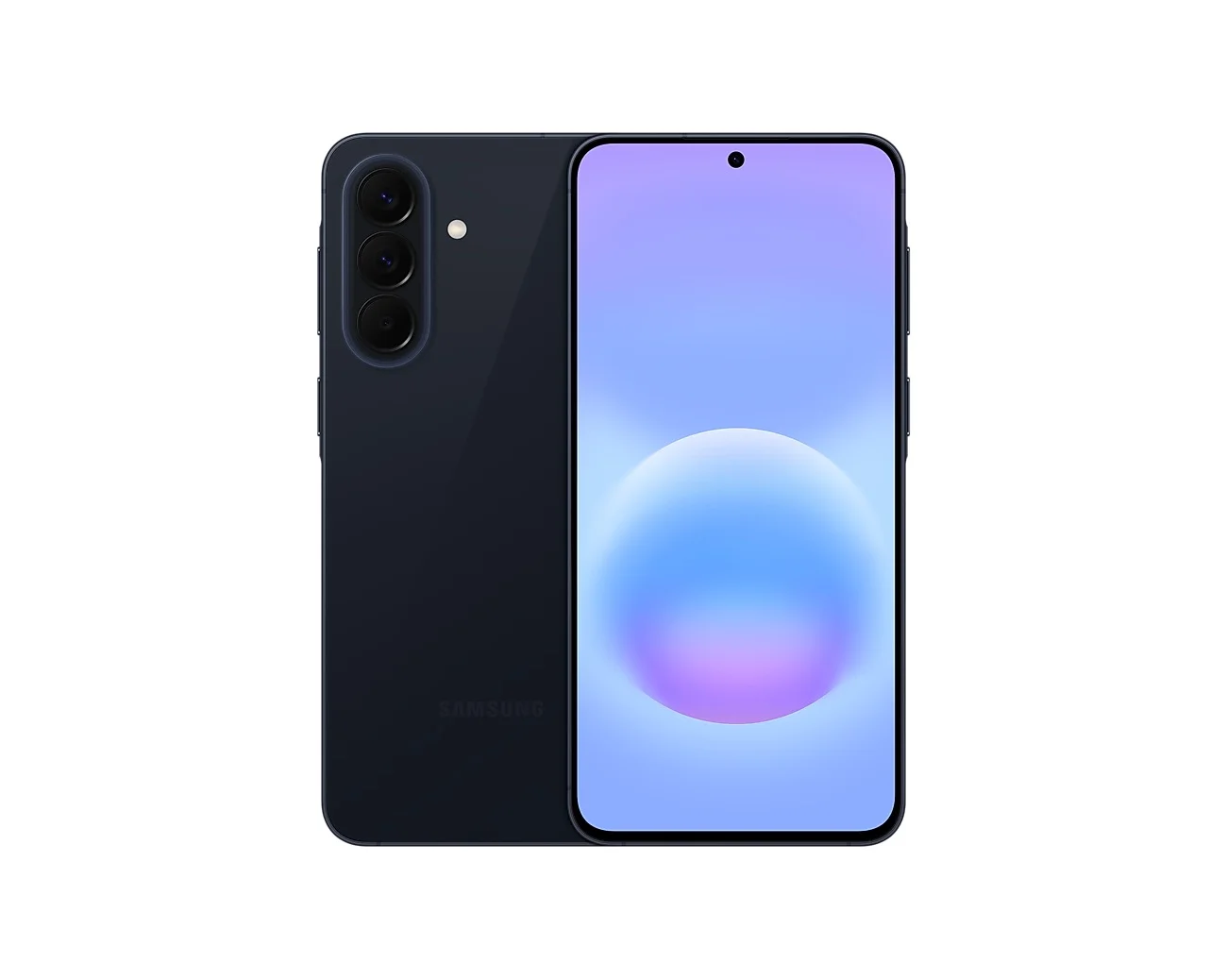
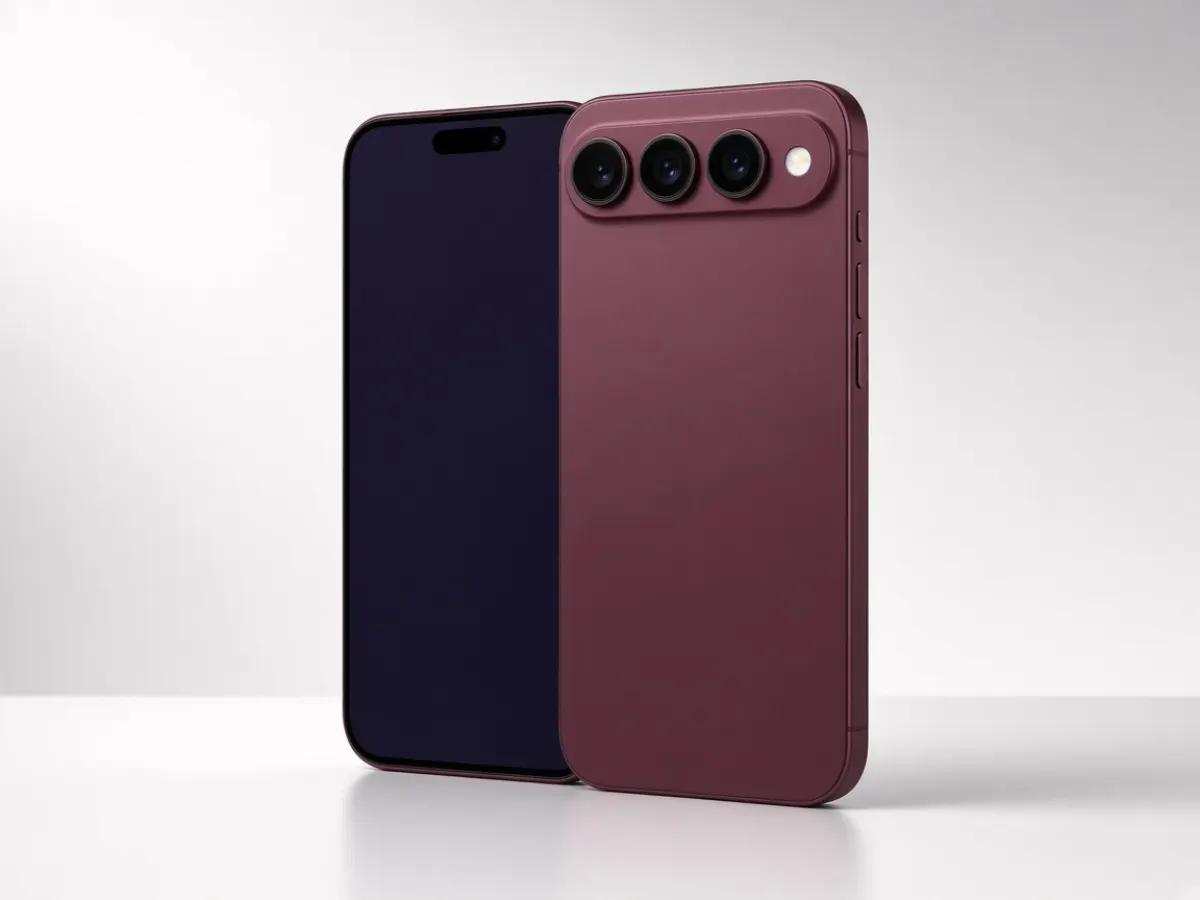
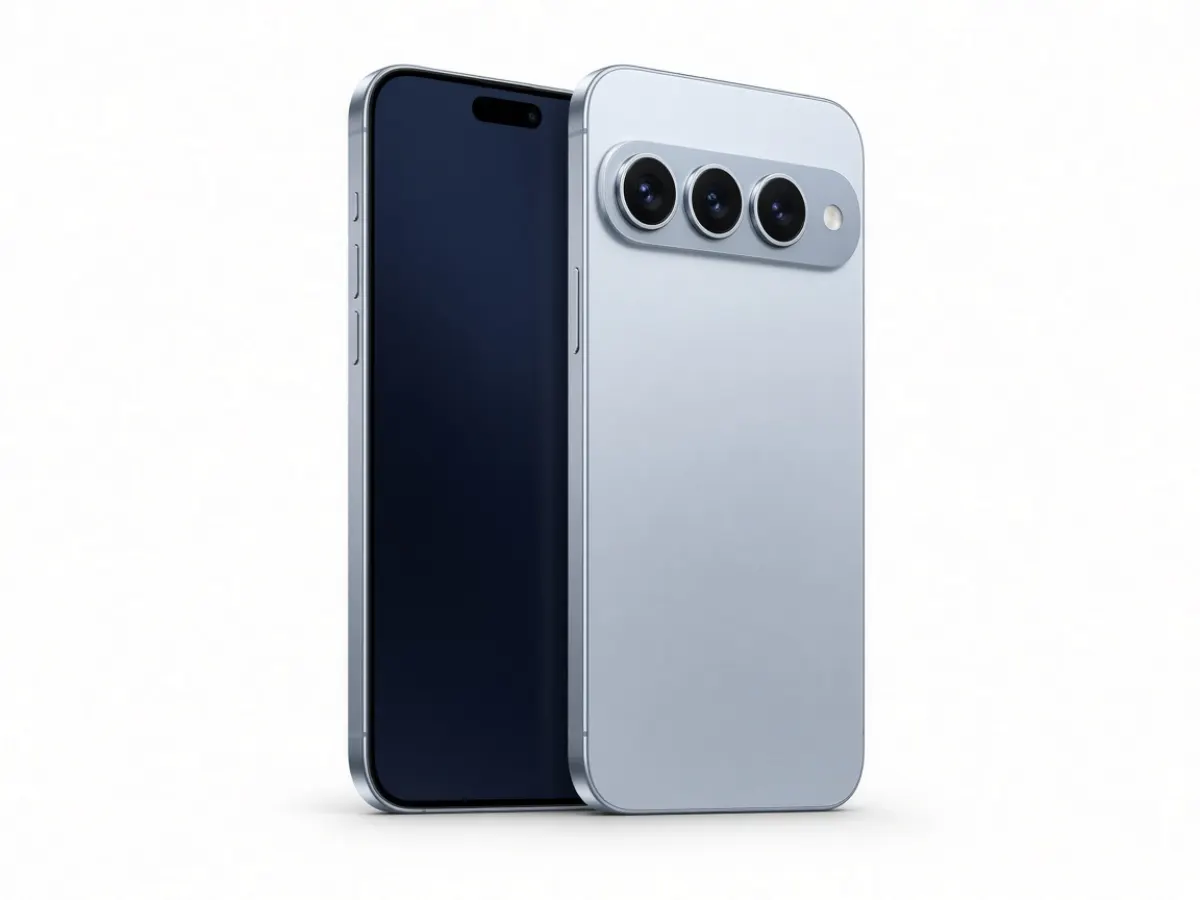
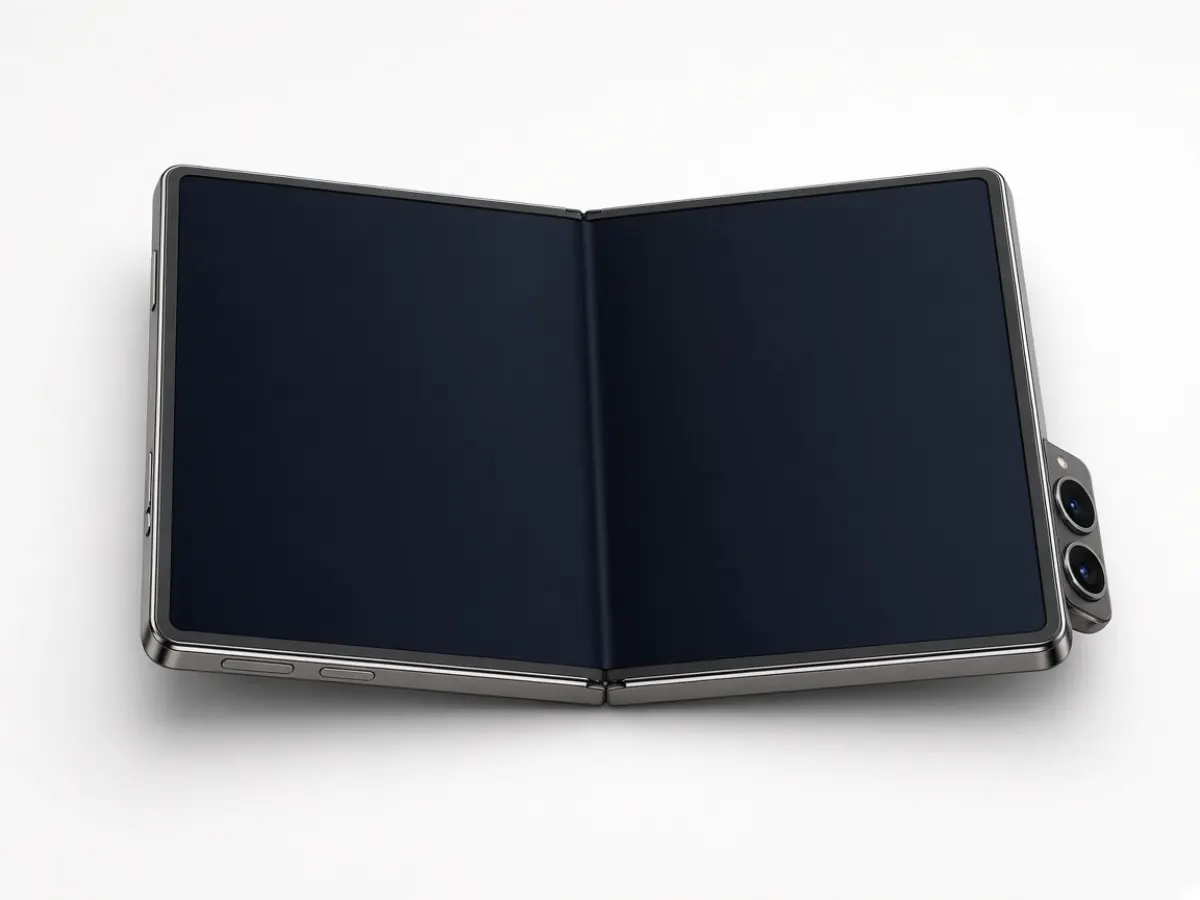
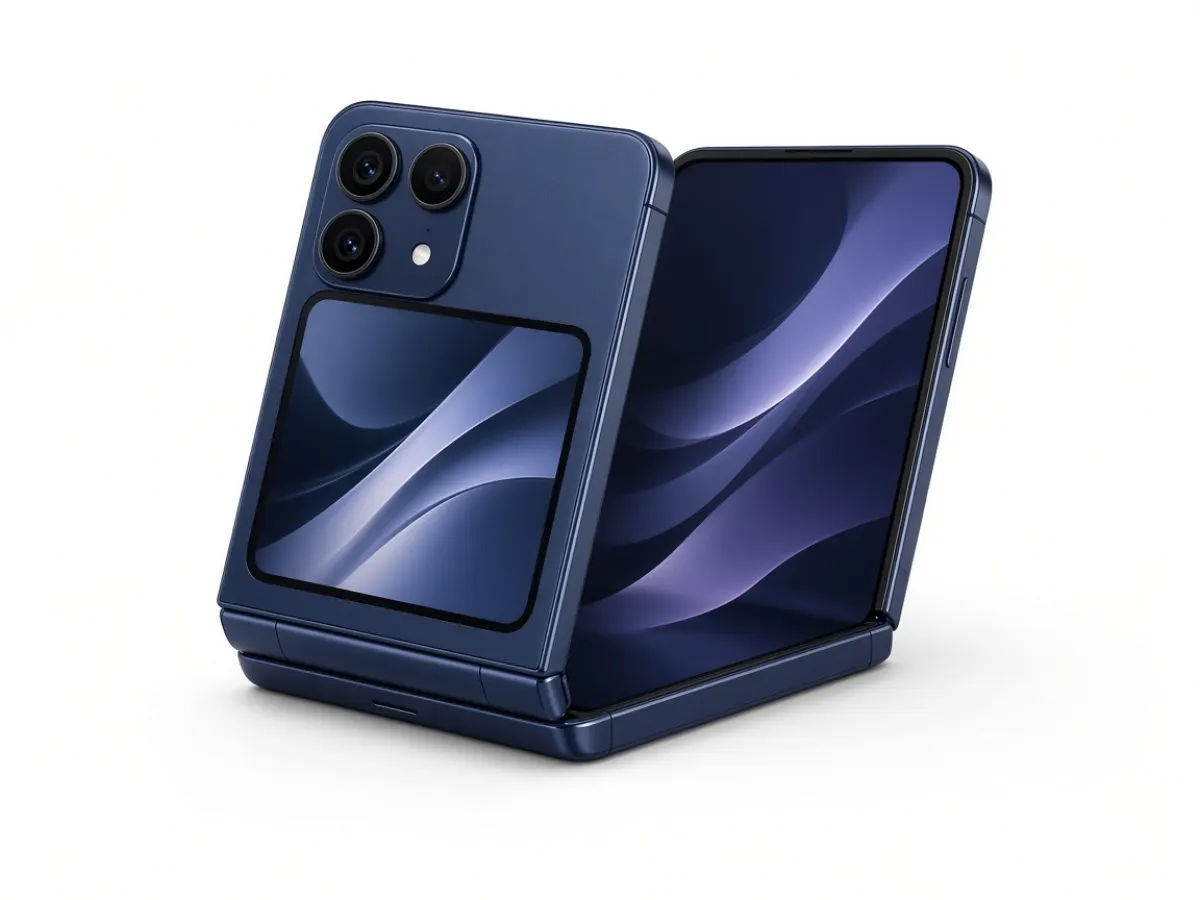
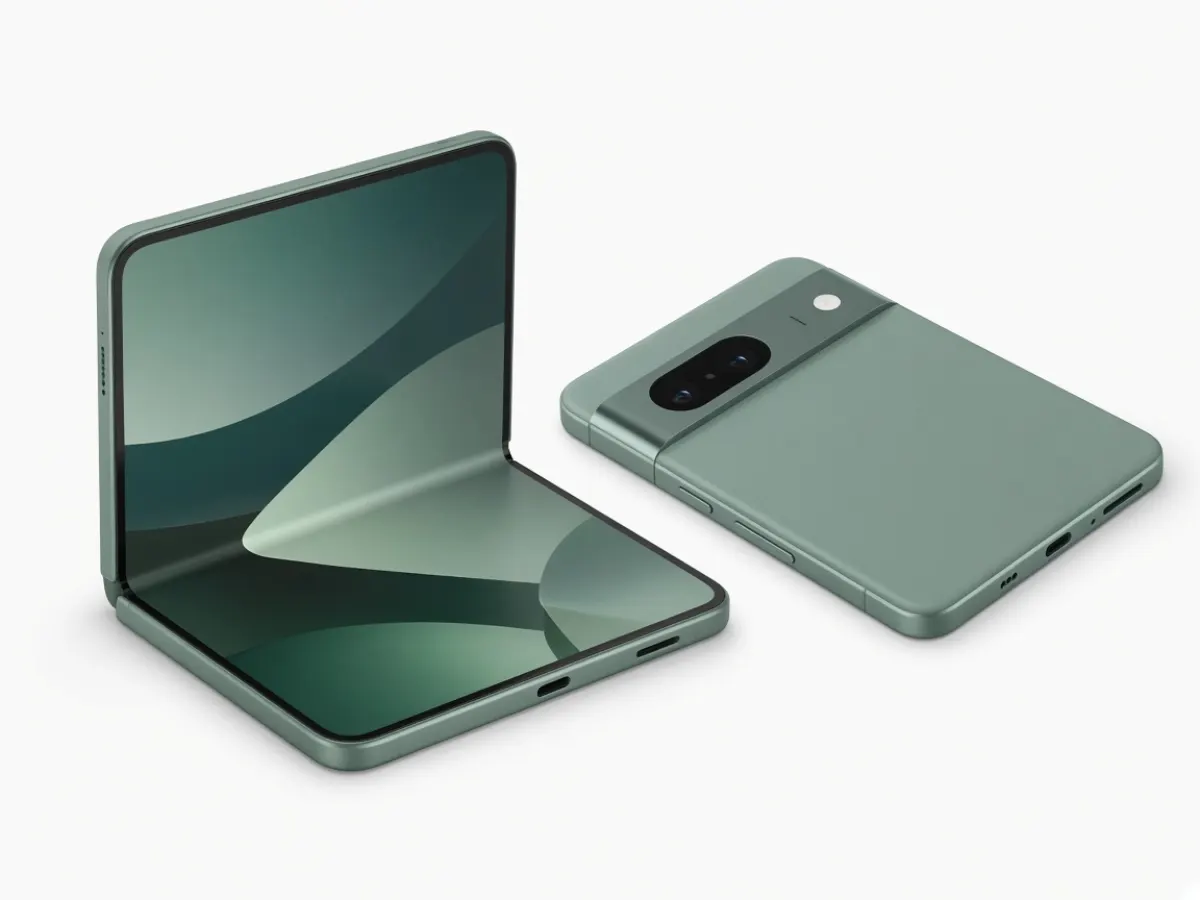
Samsung Galaxy Z Flip7
Specs, US price, release date, and Android Hire verdict
The best cover-screen hardware on any clamshell, running software that still doesn't do it justice — now around $849 while the Flip 8 asks $1,199.
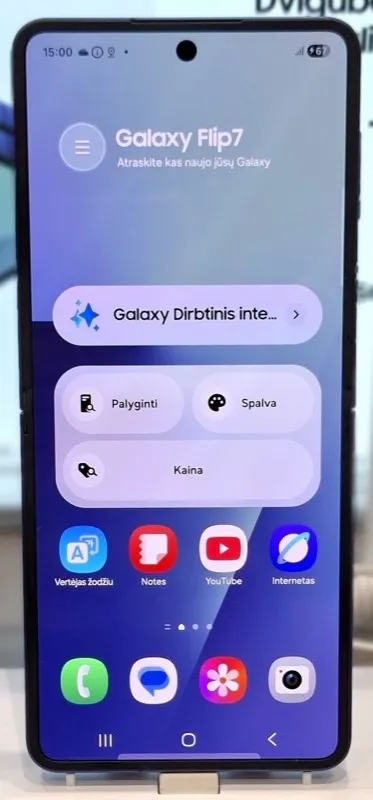
- 4.1-inch edge-to-edge cover screen is the first Flip outer display that genuinely replaces opening the phone
- 6.9-inch inner panel is the largest on any clamshell, at 2600 nits peak with a barely visible crease
- 6.5mm unfolded and 188g — thinner and lighter than most non-folding flagships
- 4,300mAh battery is the biggest Samsung has fitted to a Flip, and GSMArena measured 11:52h active use
- Seven major Android OS upgrades — no other clamshell foldable comes close
- Flex Mode and the big cover screen make it the most genuinely useful phone on the market for hands-free video and selfies
- Samsung shipped the hardware but not the experience — running arbitrary apps on the cover screen still needs Good Lock and MultiStar workarounds, and Motorola's Razr does this far better out of the box
- 4,300mAh battery is unchanged and charging is slower than the Razr Ultra's, the two most common ownership complaints
- Exynos 2500 trails the Snapdragon 8 Elite in the Z Fold7 by roughly 25% in AnTuTu and runs warmer under sustained load
- Two cameras only, with no telephoto; low-light performance is the weakest part of the imaging system
- No LTPO on the cover display, unlike Motorola's competing flip
- IP48 leaves the hinge uncertified against fine dust and sand, and the inner display is Mohs level 1 plastic
Android Hire Verdict — Great hardware, software that wastes it
The Z Flip7 has the best cover-screen hardware in the clamshell category — 4.1 inches running edge to edge around the cameras — and a year of reviews has settled on the same conclusion: Samsung didn't build the software to match. Running arbitrary apps on it still means reaching for Good Lock and MultiStar, while Motorola's Razr delivers a better out-of-box cover experience on smaller hardware. Everything else is solid: One UI 8.5 is excellent, build quality is reassuring, the camera edges out the Razr Ultra, and seven years of updates is unmatched in the category. At its $1,099.99 launch price it was hard to recommend over a Razr. At the roughly $849 it now sells for — with the Flip 8 asking $1,199 — it becomes one of the better value foldables you can buy.
Samsung Galaxy Z Flip7 in depth
The cover screen: brilliant hardware, frustrating software
Samsung's previous Flips put a folder-shaped cutout around the camera lenses, so the outer display was a rectangle with a bite taken out and most Android apps refused to run on it properly. The Flip7's 4.1-inch panel wraps around the cameras instead, presenting a continuous 948 x 1048 surface at 120Hz and 2600 nits peak. On hardware alone it is the best cover screen in the clamshell category.
The software is where a year of reviews has landed its sharpest criticism, and it is the single most important thing to understand before buying. Samsung's own FlexWindow experience covers widgets, replies, media controls, navigation, and camera framing well enough. But running arbitrary third-party apps still requires installing Good Lock and the MultiStar module and enabling them manually — a process most buyers will never discover.
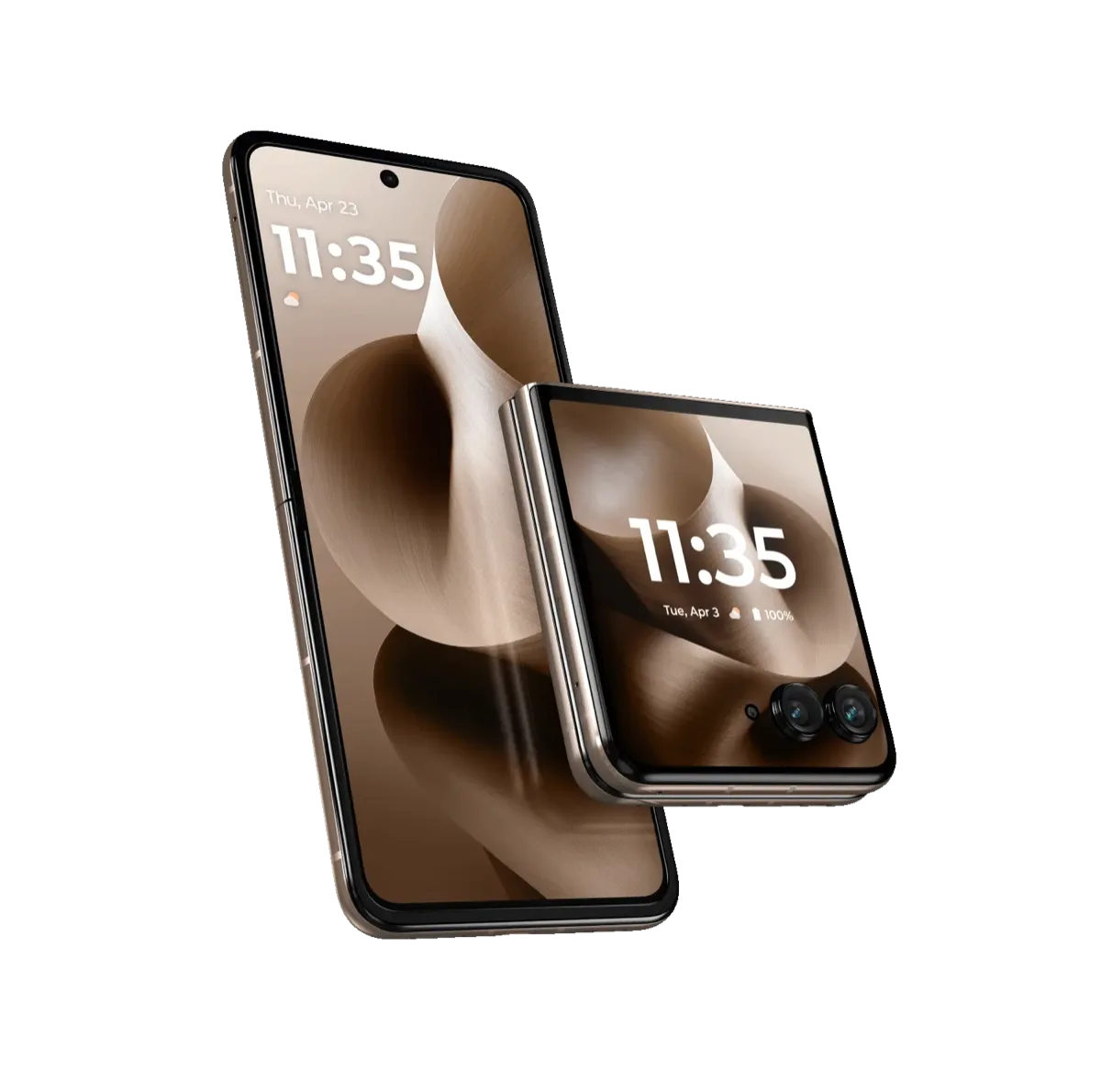
The comparison that keeps coming up is Motorola. The Razr line ships with a full, unrestricted app experience on its cover screen by default, on hardware that is technically smaller. Reviewers have repeatedly described Samsung as having built the better panel and the worse experience, and the fix everyone wants is for Samsung to fold those Good Lock capabilities into One UI natively.
There is a real battery benefit either way: driving a 4.1-inch cover panel for quick interactions costs far less than lighting the 6.9-inch inner display, which is part of why endurance improved despite only a 300mAh capacity bump.
Exynos 2500: how much does the chipset swap cost you?
Samsung fitted its own Exynos 2500 rather than the Snapdragon 8 Elite for Galaxy that powers the Z Fold7 and the S25 line. It is a 3nm ten-core design — one Cortex-X5 at 3.3GHz, seven A725 cores, two A520 cores — with an Xclipse 950 GPU built on AMD RDNA architecture.
In benchmarks the gap is measurable: about 1.51M AnTuTu against the Fold7's 1.99M, and 7,433 Geekbench 6 multi-core against 9,152. In everyday use — messaging, browsing, camera, social apps — you will not notice it. In sustained load, you will: the Exynos runs warmer, and a 6.5mm clamshell has very little room for a vapour chamber, so long gaming sessions throttle harder than on a bar-style flagship.
The realistic framing is that the Flip7 is a fast phone with a chipset one tier below the best available. If that bothers you at $1,099.99, the objection is legitimate — but the Flip has never been the phone you buy for benchmark scores.
Cameras: two lenses, no telephoto
The Flip7 ships a 50MP f/1.8 main sensor with dual pixel PDAF and OIS, plus a 12MP f/2.2 ultrawide at 123°. There is no dedicated telephoto, so 2x zoom is a crop from the centre of the 50MP sensor — good in daylight, visibly softer indoors and at night.
The compensating advantage is structural: because the phone folds, you can use the main 50MP camera for selfies with the cover screen as a viewfinder, and you can stand the phone half-open on any flat surface for hands-free shots and video calls. Nothing in a bar-style phone at this price does either. In practice the Flip7's best selfies come from the rear sensor, not the 10MP inner camera.
Video tops out at 4K60 on the main camera with HDR10+, and 4K60 on the selfie camera. There is no 8K mode.
Galaxy Z Flip7 vs Motorola Razr Ultra: the comparison that actually matters
This is the decision most clamshell buyers are weighing, and the two phones are closer than their spec sheets suggest.
The Razr Ultra launched $200 higher at $1,299 and wins on several measurable points: a 7-inch main display at 165Hz with 4,500 nits peak against the Flip7's 6.9-inch 120Hz panel, a Snapdragon 8 Elite with 16GB of RAM, 512GB of base storage, better battery life, and faster charging. It also offers materials the Flip7 doesn't — wood and Alcantara finishes — and a silicone-polymer back that is noticeably less slippery in hand than the Flip7's glass.
The Flip7 wins on camera quality, on thinness and weight (11g lighter), on price, and decisively on software support with seven years of updates against Motorola's shorter commitment. Its 4.1-inch cover screen is also marginally larger than the Razr's 4 inches.
Where it gets interesting is that overall review scores land very close, with the Razr Ultra generally a nose ahead — and the deciding factor is almost never a specification. It is cover-screen software, where Motorola's out-of-box experience is simply better.
The practical answer in late 2026: at clearance pricing around $849, the Flip7 is the better value and the better camera. If you want the best flip experience regardless of price and don't need seven years of updates, the Razr Ultra remains the more polished device.
Should you buy the Flip7 or the Flip 8?
Samsung launched the Galaxy Z Flip 8 in July 2026 at $1,199 — a price increase over the Flip7's $1,099.99 launch. Meanwhile the Flip7 has fallen to roughly $849, with used units on Swappa closer to $454.
The Flip 8 addresses the Flip7's most-cited weaknesses: it is lighter, uses a revamped hinge that opens more easily, and — most importantly — offers a more customisable cover-screen interface. That last change is Samsung finally responding to the criticism that defined the Flip7's reception.
So the question is whether a better cover-screen experience and a lighter body are worth roughly $350. If the cover screen is central to why you want a flip phone, the Flip 8 is the better device and the premium is defensible. If you mainly want a compact, well-supported clamshell with a good camera and will happily install Good Lock to unlock the cover screen's potential, the discounted Flip7 is the smarter buy.
One further consideration worth knowing: there is persistent reporting that the Flip 8 may be Samsung's last clamshell foldable. If long-term ecosystem continuity matters to you, factor that in — though seven years of guaranteed updates on the Flip7 means software support is secure regardless.
Samsung Galaxy Z Flip7 benchmarks
GSMArena's tested figures for a retail Z Flip7 with the Exynos 2500. The gap to the Snapdragon 8 Elite is real — roughly 25% in AnTuTu and about 19% in Geekbench multi-core — but the 3DMark graphics result is much closer, so the practical difference shows up in sustained CPU work and thermals rather than in gaming frame rates.
Samsung Galaxy Z Flip7 vs the competition
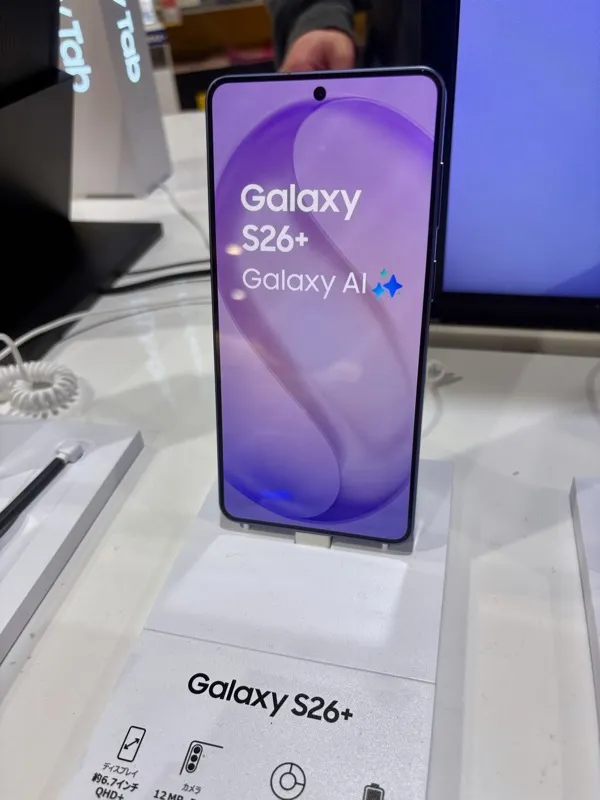
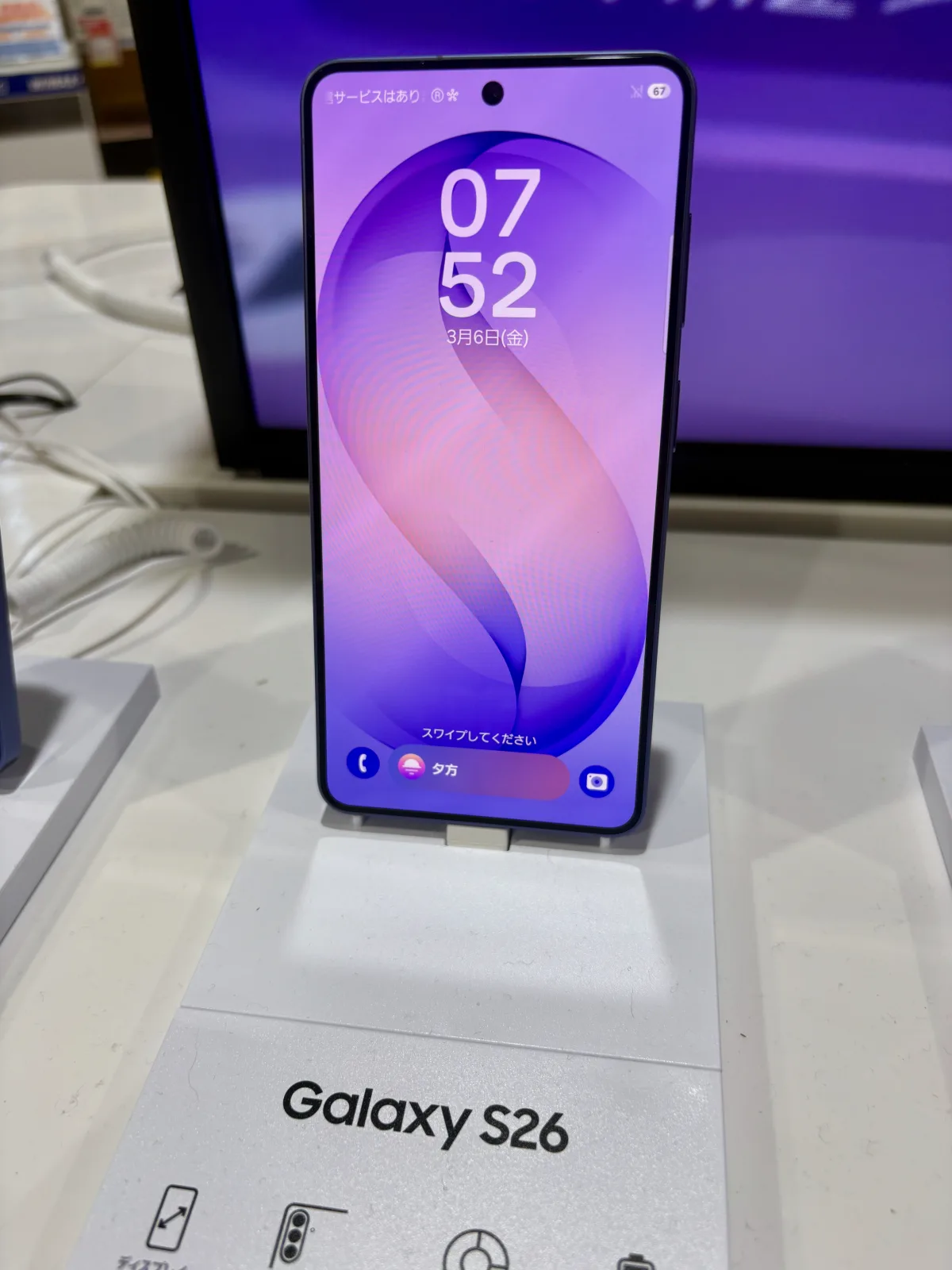
How the Samsung Galaxy Z Flip7 compares against the Samsung Galaxy Z Fold7, the Samsung Galaxy S26+ and the Samsung Galaxy S26 — its closest rivals in our directory.
| Spec | Samsung Galaxy Z Flip7 | Samsung Galaxy Z Fold7 | Samsung Galaxy S26+ | Samsung Galaxy S26 |
|---|---|---|---|---|
| Launch price | $1,099.99 | $1,999.99 | $1,099.99 | $899.99 |
| Display | 6.9" foldable LTPO 120Hz | 8" foldable LTPO 120Hz | 6.7" flat AMOLED 120Hz | 6.3" AMOLED 120Hz |
| Chipset | Exynos 2500 | Snapdragon 8 Elite for Galaxy | Snapdragon 8 Elite Gen 5 | Snapdragon 8 Elite Gen 5 |
| Camera | 50MP wide + 12MP ultrawide | 200MP + 10MP 3x + 12MP UW | 50MP + 10MP 3x + 12MP UW | 50MP + 10MP 3x + 12MP UW |
| Battery | 4300mAh · 25W wired | 4400mAh · 25W wired | 4900mAh · 45W wired | 4300mAh · 25W wired |
| AnTuTu 10 | ~1,513,000 | ~1,995,000 | ~2,459,000 | ~2,441,000 |
| Our score | 81/100 | 87/100 | 84/100 | 86/100 |
Samsung Galaxy Z Flip7 full specifications
Launch
- Announced
- 2025, July 9
- Released
- 2025, July 25
- Status
- Available
Network
- Technology
- GSM / CDMA / HSPA / EVDO / LTE / 5G
- 5G bands
- 1, 2, 3, 5, 7, 8, 12, 20, 25, 26, 28, 38, 39, 40, 41, 66, 71, 77, 78 SA/NSA; US models add 257/260/261 mmWave
- Speed
- HSPA, LTE, 5G
Body
- Dimensions
- Unfolded 166.7 x 75.2 x 6.5 mm; folded 85.5 x 75.2 x 13.7 mm
- Weight
- 188 g
- Build
- Plastic inner display, Gorilla Glass Victus 2 back and cover, Armor Aluminium frame
- SIM
- Nano-SIM + dual eSIM (max 2 active)
- Durability
- IP48 dust- and water-resistant (solids >1mm; immersible up to 1.5m for 30 min)
Display
- Main type
- Foldable Dynamic LTPO AMOLED 2X, 120Hz, HDR10+, 2600 nits (peak)
- Main size
- 6.9 inches (~88.7% screen-to-body ratio)
- Main resolution
- 1080 x 2520 pixels, 21:9, ~397 ppi
- Cover type
- Super AMOLED, 120Hz, 2600 nits (peak), 4.1 inches, 948 x 1048 pixels
- Protection
- Inner panel Mohs level 1; cover Gorilla Glass Victus 2
Platform
- OS
- Android 16 with One UI 8; 7 major OS upgrades and 7 years of security updates guaranteed
- Chipset
- Samsung Exynos 2500 (3nm)
- CPU
- Deca-core (1x3.3 GHz Cortex-X5 & 2x2.74 GHz Cortex-A725 & 5x2.36 GHz Cortex-A725 & 2x1.8 GHz Cortex-A520)
- GPU
- Xclipse 950
Memory
- Card slot
- No
- Internal
- 256GB 12GB RAM, 512GB 12GB RAM
- Technology
- UFS 4.0
Main Camera
- Setup
- Dual: 50 MP (wide) + 12 MP (ultrawide)
- Wide
- 50 MP, f/1.8, 23mm, 1/1.57", 1.0µm, dual pixel PDAF, OIS
- Ultrawide
- 12 MP, f/2.2, 13mm, 123°, 1/3.2", 1.12µm
- Features
- LED flash, HDR, panorama
- Video
- 4K@30/60fps, 1080p@60/120/240fps, HDR10+
Selfie Camera
- Single
- 10 MP, f/2.2, 23mm, 1/3.0", 1.22µm
- Features
- HDR; main camera usable for selfies via cover screen
- Video
- 4K@30/60fps
Sound
- Loudspeaker
- Yes, with stereo speakers
- 3.5mm jack
- No
- Other
- High-bitrate audio support
Comms
- Wi-Fi
- 802.11 a/b/g/n/ac/6e/7, tri-band, Wi-Fi Direct
- Bluetooth
- 5.4, A2DP, LE
- Positioning
- GPS, GALILEO, GLONASS, BDS, QZSS
- NFC
- Yes
- USB
- USB Type-C 3.2, OTG
Features
- Fingerprint
- Side-mounted, capacitive
- Sensors
- Accelerometer, gyro, proximity, compass, barometer
- Other
- Samsung DeX desktop mode, Flex Mode
Battery
- Type
- Li-Po 4300 mAh, non-removable
- Charging
- 25W wired (QC2.0, 50% in 30 min), 15W wireless, 4.5W reverse wireless
- Tested endurance
- 11:52h active use (GSMArena)
Misc
- Colors
- Blue Shadow, Jetblack, Coralred, Mint
- Models
- SM-F766B, SM-F766B/DS, SM-F766U, SM-F766U1
- Price
- $1,099.99 US launch price (12GB + 256GB), $1,299.99 (512GB); £1,049 UK; ₹1,09,999 India
Samsung Galaxy Z Flip7 FAQ
Is the Galaxy Z Flip7 still worth buying in 2026?
At clearance pricing it's one of the better foldable values available. The Flip7 launched at $1,099.99 and has fallen to roughly $849, while its Flip 8 successor launched at $1,199. You get the largest cover screen in the class, a camera that beats the Motorola Razr Ultra's, and seven years of guaranteed updates. The caveat is cover-screen software — running arbitrary apps still requires Good Lock and MultiStar. If you'll do that setup, it's a strong buy; if you want it working perfectly out of the box, the Flip 8 or a Razr is better.
Can you run any app on the Galaxy Z Flip7 cover screen?
Not by default. Samsung's FlexWindow handles widgets, replies, media, navigation, and camera framing natively, but running arbitrary third-party apps requires installing the Good Lock app plus its MultiStar module and enabling the feature manually. This is the Flip7's most-criticised limitation — Motorola's Razr allows full app use on its cover screen out of the box, on smaller hardware.
How much does the Samsung Galaxy Z Flip7 cost?
It launched in the US at $1,099.99 for 12GB + 256GB and $1,299.99 for 512GB. Since then, prices have dropped sharply — around $849 new at clearance and roughly $454 used on marketplaces like Swappa. Samsung and US carriers discount the Flip line more aggressively than any other Galaxy flagship.
Does the Galaxy Z Flip7 use Snapdragon or Exynos?
Every Galaxy Z Flip7 uses Samsung's own Exynos 2500, including US units — unlike the Z Fold7, which ships with the Snapdragon 8 Elite for Galaxy worldwide. The Exynos 2500 is a 3nm ten-core chip that scores roughly 1.51M in AnTuTu, about 25% behind the Fold7, though everyday performance feels comparable.
How big is the Galaxy Z Flip7 cover screen and what can it do?
It is 4.1 inches at 948 x 1048 and 120Hz, running edge to edge around the camera lenses rather than being cut out around them. Closed, it handles full-keyboard replies, navigation, media controls, widgets, camera framing with the main 50MP sensor, and a supported set of third-party apps — enough that most short interactions never require opening the phone.
Is the Galaxy Z Flip7 water resistant?
It carries an IP48 rating: immersible in fresh water up to 1.5m for 30 minutes, but only certified against solid objects larger than 1mm. That means rain and spills are fine, while fine dust and beach sand remain a genuine risk to the hinge — the same caveat that applies to every folding phone currently sold.
How long does the Galaxy Z Flip7 battery last?
The 4,300mAh cell is the largest Samsung has fitted to a Flip, and GSMArena measured 11 hours 52 minutes of active use — comfortably a full day of mixed use, and a clear improvement on the Flip6. Charging is unchanged at 25W wired (50% in about 30 minutes), 15W wireless, and 4.5W reverse wireless.
Does the Galaxy Z Flip7 have a telephoto camera?
No. It has a 50MP f/1.8 main camera with OIS and a 12MP ultrawide, and its 2x zoom is a crop from the main sensor rather than a dedicated lens. Zoomed shots hold up in daylight but soften noticeably in low light. The offsetting advantage is that you can shoot selfies with the 50MP main camera using the cover screen as a viewfinder.
Explore other phones